TBI – Survivors, Caregivers, Family, and Friends

Archive for May, 2014

SPEAK OUT! NewsBit . . . . . . . . . . . Rapid Transit for Some TBI Survivors?

Rapid Transit for Some TBI Survivors?

Newsboy th

Some TBI survivors have a walking disability that causes them to walk slowly. My husband does, but the primary reason for him is lack of balance. He could walk faster if he could hold onto something (or someone). Available this summer, a new product from Japan might help. It’s a tricycle scooter that is powered by an electric motor and can go up to 15 mph. The electric motor is charged by a standing rider stepping on special pedals. Note the handrails, which will provide a balance aid. Don’t forget to wear a helmet! (Full story)


SPEAK OUT! NewsBits . . . . . . . . . . . Longevity Gene Enhances Brain Function

Newsboy thLongevity Gene Enhances Brain Function

 Recent research showed that a longevity gene variant is probably responsible for enhanced memory and higher IQ. Scientists want to understand how the protein coded for by this gene enhances these brain functions. There is much excitement about this protein, which is found circulating in the blood. Once it is known how the protein works in the brain, it may be possible to design therapeutic drugs that mimic the action of the variant longevity protein. Lots of interest is for the treatment of Alzheimer’s Disease, but such a drug might also help to restore memories or elevate IQ in some TBI and stroke survivors. (Full story)

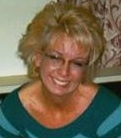
Caregivers SPEAK OUT! Diane Caldwell

SPEAK OUT! – Diane Caldwell

by

Donna O’Donnell Figurski

1. What is your name? (last name optional)Diane Caldwell

Diane Caldwell

2. Where do you live? (city and/or state and/or country)     Email? (optional)

Columbus, Ohio, USA     ladydi147@yahoo.com

3. What caused your survivor’s TBI?

Car accident – Sept. 24, 2010

4. On what date did you begin care for your TBI survivor? Are you the main caregiver? How old were you when you began care?

I started caring for my daughter after she was sent home from Dodd Hall, OSU, an In-patient rehabilitation facility, in December 2010. I was 53 years old. My daughter was 28.

5. Were you caring for anyone else at that time? (e.g., children, parents, etc.)

Yes. I was caring for my grandson – my daughter’s son.

6. Were you employed at the time of your survivor’s TBI? If so, were you able to continue working?

Yes. I was employed and somehow managed to keep my job, mainly because I have had the same employer for a 20-plus years. My daughter still required 24×7 care, but I was able to work from home for about 6 months until she could be left alone at home. She was bed-ridden and wheelchair-bound during that time.

7. Did you have any help? If so, what kind and for how long?

No. Occasionally her brother would stay with her while I went to the store, but her behavior was a little scary to him (i.e., she would be talking coherently one minute, and the next she wouldn’t know who he was).

8. When did your support of the survivor begin? (e.g., immediately – in hospital, when survivor returned home, etc.)

Immediately. She was life-flighted from the accident scene and was on life support in critical condition for several days. I went to the hospital daily.

9. Was your survivor in a coma? If so, what did you do at that time?

Yes. I went to the hospital every day, but at that time, the doctors thought she had a slim chance of making it. I still cared for my grandson. I prayed.

10. Did your survivor have rehab? If so, what kind of rehab? (i.e., In-patient and/or Out-patient and Occupational, Physical, Speech, and/or Other) How long was the rehab? Where were you when this was happening?

Yes. She had In-patient rehab (occupational, physical, and speech therapy), and then she had Out-patient rehab when she was sent home. Her rehab totaled about 5 months. I usually went with her to her appointments, as she required special transportation (due to the wheelchair) and was often left waiting for a return ride home. She was afraid to be left alone.

11. What problems or disabilities of your TBI survivor required your care, if any?

Short-term memory problems, emotional swings and instability, suicidal actions, personal safety issues

12. How has your life changed since you became a caregiver? Is it better? Is it worse?

My life is just different now. Some things are better, some things worse.  My life changed dramatically, as I was living alone previously. We walked through some dark days together, so it was very rough at first. My daughter’s personality changed, and her IQ dropped into the mildly retarded range. My daughter knew she was not who she used to be, and she didn’t embrace who she was after the accident for about 18 months. Today, my life is better. My relationship with my daughter has reached a depth most people never get to experience. I learned a lot about myself too, and I became a much more spiritual person. I believe in miracles!

13. What do you miss the most from pre-TBI life?

Time to myself, freedom to travel

14. What do you enjoy most in post-TBI life?

Sleeping!

15. What do you like least about TBI?

How it impacts relationships. For a while, I felt like I lost my daughter, even though she was alive. Everyone works through it differently.

16. Has anything helped you to accept your survivor’s TBI?

Yes. I got connected with OSU TBI Network.

17. Has your survivor’s injury affected your home life and relationships and, if so, how?

Yes. My daughter and grandson live with me and rely on me as a result of the TBI. It’s like being a single mom again.

18. Has your social life been altered or changed and, if so, how?

Yes. I am unable to attend functions where I will be away overnight. I don’t like leaving my daughter alone since she started having seizures.

19. What are your plans? What do you expect/hope to be doing ten years from now?

I guess I don’t really think about that too much. I would like to be retired by then and do some fun things with my daughter and grandson.

20. What advice would you offer other TBI survivor caregivers? Do you have any other comments that you would like to add?

Don’t isolate yourself! Learn as much as you can about TBI. Reach out for help. (I didn’t do that enough.) Be patient, loving, and caring. Take it one day at a time.DIane C. daughter


Thank you, Diane, for taking part in this interview. I hope that your experience will offer some hope, comfort, and inspiration to my readers.


If you would like to be a part of this project, please go to TBI Caregiver Interview Questionnaire for a copy of the questions and the release form.

(Photo compliments of Diane.)

Disclaimer: The views or opinions in this post are solely that of the interviewee.

TBI Tales: Dancer Extraordinaire

(Reposted from my other blog – Donna O’Donnell Figurski’s Blog Sep. 3, 2012)

Meet Paula Nieroda 

Paula was David’s dance instructor for almost two years. She not only guided him through his dance steps, but she assessed his every movement to help him regain his balance.

Paula is much more than a dance instructor.

She is a wonderfully sensitive and compassionate young woman.

David and I took lessons with Paula once a week for nearly two years.


We learned a number of ballroom dances, including the Cha-Cha, the Tango, and the Swing – all very quick dances, which we did not do so quickly. We learned the Waltz and the Fox Trot, too. We stumbled around the dance floor amid the elegant contestants who were preparing for their next performance. They twirled and glided and dipped and swooped with feet barely touching the floor, while we firmly planted one foot and then the other in slow succession hoping that we would not topple over. We never did.

Paula taught David form – focusing on his posture. “Renew! Renew! Renew!” was her mantra – the reminder to David to stand taller.

When Paula moved to another studio, too far from us, we did not continue our lessons because we knew we could never replace her.

Paula is also a performance dancer and has competed and won many dance contests.  In the video below you will see Paula in action. In a pink fairy-princess gown, she glides over the floor with her partner, George Valasquez, who performs an amazing routine with only one leg.

Paula is truly an inspiration.

Watch this video to see what I mean. Truly AMAZING!!!!!


If you have a story to tell, please contact me at donnaodonnellfigurski@gmail.com

(Pictures compliments of ME.)

(Video compliments of YouTube.)


As I say after each post:

Please leave a comment by clicking the blue words “Leave a Comment” below this post.anim0014-1_e0-1

Please follow my blog. Click on “Follow” on the lower right corner of your screen. (It’s nice to know there are readers out there.)

If you like my blog, share it with your friends. It’s easy! Click the “Share” buttons below.

If you don’t like my blog, “Share” it with your enemies. I don’t care!

Feel free to “Like” my post.

Permission granted to “Reblog” my post.


SPEAK OUT! NewsBits . . . . . . . . . . . Yoga May Help TBI Survivors

Yoga May Help TBI Survivors

Newsboy th


Janna Leyde, whose father had a TBI when she was a teen, found help for herself in yoga. Later, as a yoga instructor, she decided to work with her father. They both saw that yoga seemed to bring significant benefits to him. Janna started a yoga program for people with TBIs, including many veterans. The Military is so convinced that yoga has helped soldiers returning from Iraq and Afghanistan with TBIs that they employ a yoga instructor full-time. (Full story)


Survivors SPEAK OUT! Joyce Hoffman

Joyce Hoffman – Before her TBI

SPEAK OUT! – Joyce Hoffman

by

Donna O’Donnell Figurski


1. What is your name? (last name optional)

Joyce Hoffman

2. Where do you live? (city and/or state and/or country) Email (optional)

New Jersey, USA

3. When did you have your TBI? At what age?

April 8, 2009

4. How did your TBI occur?

Hemorrhagic stroke, i.e., a blood vessel erupted

5. When did you (or someone) first realize you had a problem?

I started to convulse at 4 am. My partner saw it, and he called 911.

6. What kind of emergency treatment, if any, did you have?
(e.g., surgery, tracheotomy, G-peg)

Tracheotomy

7. Were you in a coma? If so, how long?

Yes. 8 days

8. Did you do rehab? What kind of rehab (i.e., In-patient or Out-patient and Occupational, Physical, Speech, Other)?
How long were you in rehab?

In-patient rehab for 15 weeks, and then Out-patient rehab 2 or 3 times a year

9. What problems or disabilities, if any, resulted from your TBI?
(e.g., balance, perception, personality, etc.)

Right-sided weakness. Paralyzed arm. I use a quad cane for walking.

10. How has your life changed? Is it better? Is it worse?

Better—I wrote my 2nd book, “The Tales of a Stroke Patient,” with one hand, all 265 pages, within 2 years.

Worse—I miss my career as a senior technical trainer and writer for legal applications, and I go slowly now – one step at a time.

11. What do you miss the most from your pre-TBI life?

Total independence

12. What do you enjoy most in your post-TBI life?

Reading and computing

Getting together with friends and family

13. What do you like least about your TBI?

My speaking slowly when I want to talk faster

14. Has anything helped you to accept your TBI?

Time heals all, but I’m not completely there yet.

15. Has your injury affected your home life and relationships and, if so, how?

My partner had to take over, whereas I did most everything domestic before.

16. Has your social life been altered or changed and, if so, how?

A few friends remain. Most of them headed “for the hills.”

17. Who is your main caregiver? Do you understand what it takes to be a caregiver?

Cece is my main caregiver. She understands my dilemmas.

18. What are your future plans? What do you expect/hope to be doing ten years from now?

Doing the same thing I am now—plus more time for lectures

19. What advice would you offer to other TBI survivors

Patience

20. Do you have any other comments that you would like to add?

I am starting to NOT resent people who have the ability to go the beach or to run fast. I used to be a runner. My book tells it all. Click the link to buy it

The Tales of a Stroke Patient (from the publisher)

The Tales of a Stroke Patient (from Amazon)

The Tales of a Stroke Patient (Barnes & Noble)


Joyce Hoffman - After her TBI

Joyce Hoffman – After her TBI

Thank you, Joyce, for taking part in this interview. I hope that your experience will offer some hope, comfort, and inspiration to my readers.

(Disclaimer: The views or opinions in this post are solely that of the interviewee.)


If you would like to be a part of the SPEAK OUT! project, please go to TBI Survivor Interview Questionnaire for a copy of the questions and the release form.

Survivors SPEAK OUT! Pauline Southern

SPEAK OUT! – Pauline Southern

by

Donna O’Donnell Figurski

Pauline with her TBI


1. What is your name? (last name optional)

Pauline

2. Where do you live? (city and/or state and/or country) Email (optional)

South Carolina, USA

3. When did you have your TBI? At what age?

6/22/2012    52 years old

4. How did your TBI occur?

Another 18-wheeler hit the 18-wheeler my husband was driving. I was asleep in the sleeper in the back and got tossed around like a rag doll.

5. When did you (or someone) first realize you had a problem?

I’m not sure who first realized it. Just to name a few issues – I had a problem remembering old friends, finding words, and doing math. I had a shortened attention span and a panic attack every time I got into a car. I was distracted all the time and slept a lot. There is much more. I just can’t remember them all.

6. What kind of emergency treatment, if any, did you have?
(e.g., surgery,

tracheotomy, G-peg)

I was taken by ambulance to an emergency room in a little town in Iowa. I don’t have much of a memory of what went on, other than that I was treated for nausea and for pain for rib injuries. I don’t remember anything else.

7. Were you in a coma? If so, how long?

No

8. Did you do rehab? What kind of rehab (i.e., In-patient or Out-patient and Occupational, Physical, Speech, Other)?
How long were you in rehab?

Yes. I did Out-patient physical therapy, occupational therapy, and speech therapy. I spoke with a psychologist. Now I am doing PTSD (post-traumatic stress disorder) therapy. I’ve also had vision therapy for double vision and blurry vision. It’s been a year and counting.

9. What problems or disabilities, if any, resulted from your TBI?
(e.g., balance, perception, personality, etc.)

I can’t control angry outbursts. I have no patience, have panic attacks in the car, cannot tolerate people who don’t understand what I’m going through. I have balance and vision problems. I cannot multitask. I have memory loss (short-term and some long-term). I can’t read more than one chapter in a book, and then I don’t remember what I read. I used to be able to cook for hundreds of people, and now I have trouble cooking for two.

10. How has your life changed? Is it better? Is it worse?

I’m not able to do things I used to do – bookkeeping, quilting, reading. I can’t drive a car for more than one hour. I need a GPS to find my way to my destination and back home.

11. What do you miss the most from your pre-TBI life?

Happiness, laughing, and my friends

12. What do you enjoy most in your post-TBI life?

Nothing yet. I’m still trying to find something I like.

13. What do you like least about your TBI?

The way that it has changed my personality. I used to be fun-loving, happy, and

smiling. Now I’m sad and angry all the time.

14. Has anything helped you to accept your TBI?

Not yet. I’m still trying to accept it.

15. Has your injury affected your home life and relationships and, if so, how?

Yes. It has brought me closer to my husband. He is my caregiver, and my love for him has grown tremendously. But on the other hand, it has put a distance between me and the rest of the family. They don’t understand me. They get angry with me, and I get very angry with them for not wanting to understand me.

16. Has your social life been altered or changed and, if so, how?

Yes. Because of the accident, we have lost our home and had to move to a new state. I have no friends – no one who I can hang out with and do things with. I don’t like to go out in public. I feel very alone. I cannot follow conversations, and I don’t like crowds, loud noises, or lights.

17. Who is your main caregiver? Do you understand what it takes to be a caregiver?

My husband. He does a great job. I don’t think I understand how he does it. He is a very strong person and helps me with my memory. He goes to doctor appointments because I don’t remember what was said during those discussions. I have no idea what it takes to be a caregiver to someone like me. I used to be a caregiver for my elderly in-laws, so I know what it takes to be a caregiver – but not for someone as bad as me.

18. What are your future plans? What do you expect/hope to be doing ten years from now?

To learn more about the loss of the old me and to accept the new me. To have a life again.

19. What advice would you offer to other TBI survivors?

Sit back. Buckle your seatbelt. It’s a long, bumpy road ahead. It will have highs and lows and good and bad days. Just hang in there. Don’t give up. There’s a reason we were given these injuries. Find your purpose in life.

20. Do you have any other comments that you would like to add?

I wish there was more interest and more programs that teach non-TBI survivors what it’s like to be in our heads. I guess I’m trying to say I would like the rest of the world to understand we are still people. We just do things differently.

Pauline before her TBI

Thank you, Pauline, for taking part in this interview. I hope that your experience will offer some hope, comfort, and inspiration to my readers.

(Disclaimer: The views or opinions in this post are solely that of the interviewee.)


If you would like to be a part of the SPEAK OUT! project, please go to TBI Survivor Interview Questionnaire for a copy of the questions and the release form.

SPEAK OUT! NewsBits . . . . . . . . . . . . Could This Help TBI Brains?

Newsboy thA new study by Stanford scientists has shown that blood from young mice can improve brain function in old mice. This simple experiment produced a surprise result. The scientists haven’t identified the factor (or factors) yet, but it is inactivated by heat. Earlier work from this lab showed that, after receiving blood from young mice, old mice produced more nerve cells than they did previously. One of the scientists formed a company to look at therapy for brain dysfunction, including Alzheimer’s Disease. (Full story)


Two soon-to-be-published studies by Harvard scientists show that GDF11, a protein found in both mice and humans, can improve muscle and brain. One idea is that GDF11 improves blood flow. Another idea (not necessarily exclusive of the first idea) is that GDF11 helps stem cells. Stem cells from muscle can form new muscle cells, whereas stem cells from the brain can form new neurons. Both muscle function and brain function were improved in old mice after GDF11 injections. Maybe the result of this research will be new therapeutic drugs for humans. The scientists are hopeful that funds will be available for establishing pre-clinical trials to test GDF11 in humans. (Full story)

Caregivers SPEAK OUT! Trish Herzog

SPEAK OUT! – Trish Herzog

by

Donna O’Donnell Figurski

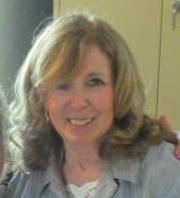
Herzog Trish 042314  photo


1. What is your name? (last name optional)

Trish Herzog

2. Where do you live? (city and/or state and/or country)     Email? (optional)

Platte City, Missouri, USA         herzogtrish@gmail.com

3. What caused your survivor’s TBI?

An auto-racing accident

4. On what date did you begin care for your TBI survivor? Are you the main caregiver? How old were you when you began care?

June 6, 1998     I was the main caregiver.     I was 33.

5. Were you caring for anyone else at that time? (e.g., children, parents, etc.)

No

6. Were you employed at the time of your survivor’s TBI? If so, were you able to continue working?

No. I was a housewife.

7. Did you have any help? If so, what kind and for how long?

Yes – in-home caregivers for 11 years, until my husband passed away in 2009 as a result of complications from his TBI.

8. When did your support of the survivor begin? (e.g., immediately – in hospital, when survivor returned home, etc.)

Immediately – in the hospital

9. Was your survivor in a coma? If so, what did you do at that time?

Yes – for 6 days. I cried, prayed, journaled, and read books and pamphlets about TBI to educate myself about the condition as much as possible.

10. Did your survivor have rehab? If so, what kind of rehab? (i.e., In-patient and/or Out-patient and Occupational, Physical, Speech, and/or Other) How long was the rehab

In-patient for 3 months

Out-patient for over a year and off and on, as needed in the years

Where were you when this was happening?

I was with my husband during most therapies, except for speech. They suggested against my being there, as I was too much of a distraction for him. He didn’t filter things as well after he suffered the TBI.

11. What problems or disabilities of your TBI survivor required your care, if any?

My husband was full-care. He was paralyzed from the waist down and remained in a wheelchair for the remaining 11 years of his life. He suffered memory issues and speech dysphasia issues initially. His motor skills were also affected. He had significant spasticity in his legs. He had a shunt put in due to hydrocephalus. He suffered a few strokes after his TBI over the years. We spent quite a bit of time in and out of the hospital for various infections and health issues

12. How has your life changed since you became a caregiver? Is it better? Is it worse?

My husband died in 2009. I cared for him and managed his care in our home from 1998-2009. It was exhausting at times, but I wouldn’t have had him anywhere else. After he passed, it was quite an adjustment period for me. Losing him and losing the chaos of daily life, with therapists and caregivers in your home, was quite the change

13. What do you miss the most from pre-TBI life?

I missed our intimacy. We were still able to cuddle and be affectionate, but I became the stronger role in our relationship after he was injured. I missed my protector, my confidante, etc. We still had that together, but the dynamic was somewhat changed. He was still my best friend.

14. What do you enjoy most in post-TBI life?

I can’t explain how, because my husband was my best friend and we were so close, but, in the years after he was injured, we became even closer at deeper levels. We were in this together, and we fought the battles of day-to-day TBI life together.

15. What do you like least about TBI?

It took away the husband I loved and married and left me with a different one. I loved him just as much, but in some ways very differently.

16. Has anything helped you to accept your survivor’s TBI?

We saw humor in so many things on a day-to-day basis. You have to find the humor in the basic things. Our general positive outlook on life and love for each other helped us survive and thrive in the shadow of TBI.

17. Has your survivor’s injury affected your home life and relationships and, if so, how?

It changed our dynamic completely. I took on more of a motherly role with my husband. My parents, seeing everything I was dealing with and managing, developed a greater respect and appreciation for me as an adult and not just as their little girl. I was making life-and-death decisions and handling rather scary things.

18. Has your social life been altered or changed and, if so, how?

Yes. It was isolating, to a certain extent. Life moves on for others after the initial traumatic occurrence, but you are still dealing with the day-to-day of your new TBI life. The real friends and family will hang around. You find out who your diehard friends are.

19. What are your plans? What do you expect/hope to be doing ten years from now?

I am doing it now. As I said, my husband died in 2009. I have been rediscovering who I am for over four years now. It’s still a process. I was a caregiver for so many years. It was who I was, and when he passed away, my entire purpose and reason for existence went away too. I had to figure out what I wanted to do with my life and re-invent myself…solo. It’s an ongoing process.

20. What advice would you offer other TBI survivor caregivers? Do you have any other comments that you would like to add?

You have to take care of yourself. If you are going to be in it for the long haul, respite is a must! In the years of dealing with a loved one with a TBI, there were ups and downs, sadness, laughter, eureka moments, and exhaustive moments. It was all worthwhile, every minute of it. I am a far better person today because of the hand my husband and I were dealt back in 1998. I have a much greater appreciation for many things we often take for granted – life, love, health, all of them. I miss my husband, and I wish I still had him with me…TBI or no TBI.


Thank you, Trish, for taking part in this interview. I hope that your experience will offer some hope, comfort, and inspiration to my readers.


If you would like to be a part of this project, please go to TBI Caregiver Interview Questionnaire for a copy of the questions and the release form.

(Photo compliments of Trish.)

Disclaimer: The views or opinions in this post are solely that of the interviewee.

TBI Tales: …………………………………. A Fork in the Road to Recovery

(Reposted from my other blog – Donna O’Donnell Figurski’s Blog May 14, 2010)

A Fork in the Road to Recovery

I woke up a few weeks ago with an astounding revelation. (Aren’t they all?) But, this one really was. Though trying to sell my brilliant idea to my husband, David, would take some fancy footwork.

As our family and friends know, David is still on the long road to recovery after suffering a Traumatic Brain Injury (TBI) more than five years ago at 7:06 AM on January 13th, 2005. His TBI left his body compromised. His recovery is a balancing act – literally.

Though David’s balance has improved somewhat through the years, it is still seriously impaired. Each step David takes is deliberate, well-planned, and thought out. He is consciously adjusting his balance at every footfall. His brain constantly generates new neurons and reconnects the old in an attempt to reestablish alternate pathways to help him relearn what he already learned easily and quite well when he was a mere fourteen-month-old toddler. It’s amazing how those little tykes can balance atop their plump, squatty legs. Even more amazing that they can move them from place to place – but they do. And if they can do it … well so can David – right?

David works hard every minute of every day to relearn to walk. It’s not as easy as the two-year-olds make it look. So I had an idea to make the process easier – at  least, I hope it will.

The germ of my idea was unwittingly sown in October 2009 when I first began my salsa lessons. I admit, it was a slow-growing seed, since it took six months for it to finally hit me over the head.

On a recent morning as I pondered my first days of salsa, I recounted how difficult it was for me to make my feet and my body go where my instructor guided. He made it look easy, and I wanted my mind to comply, but my feet simply would not cooperate. I tried and tried, but the only thing I was successful at was tripping and stumbling over my own feet – not to mention my dance partner’s feet. I felt like a total  klutz. I was convinced I would never be able to do the steps. I would never learn salsa – let alone become proficient at it.  As the weeks went by and my instructor introduced the right and left turn, the hammerlock, and the cross-body lead, my mind went into swirl. No, I would never learn – I was sure of it. But, as more weeks passed, I did learn. It took time and it took practice, and after six months I can do each of those steps and I’m not too bad at it. I have even moved on to the advanced class.

What I understood on that morning of my revelation was that as I concentrated so intensely on learning each step, nothing else occupied my mind. I was entirely focused. During my lessons, it seemed that my brain rewired to accommodate the strange and foreign steps I was being asked to do. Realizing this, set the light bulb flashing. I reasoned that if my mind could overcome my dance challenge, why couldn’t David’s overcome his walking challenge?

That’s when I had my astounding revelation. It made sense to me. I had to choose the perfect time to present my idea to David, though I knew no time would be good. I knew that as soon as I uttered the words, I want you to take dance lessons. David’s immediately answer would be, “NO!”

So, I started my conversation like this … David, I have a really, really good idea. (I thought two reallys might be more convincing.) I need you to listen to my whole idea before you say anything. I don’t want you to make up your mind before I finish.” He looked skeptical. Well anyone would with that opening, but he nodded and I went on. “David, I want you to take dance lessons.” His immediate reply was “NO!” No surprise there.

I presented my ideas. He listened. One by one I ticked off all of the reasons that I thought dance lessons would be beneficial to him. He listened. I explained how I thought that the process of intense concentration might help him to overcome his balance issues as it had helped me to conquer my dance steps. He listened. I threw in the neurons and the brain-rewiring ideas. He listened. Then I told him I wanted to speak with my instructor to arrange for private dance lessons. I held my breath as I waited for his reply. He said, “Okay!”

It took a few weeks to set the lessons up, but last Monday night David had his first dance lesson with Oscar. I took the lesson with David. As we clung to each other, (He was holding on to me for dear life.) we waltzed around the room 1, 2, 3.- 1, 2, 3. Okay … so we didn’t really waltz around the room. We stayed in about a three-foot square. But at least it is a start!

When the lesson was over, I figured David would bolt. So I was really surprised when he asked to schedule the next lesson. He actually liked it. Yeah!


If you have a story to tell, please contact me at donnaodonnellfigurski@gmail.com

(Clip Art compliments of Bing.)

(Photos compliments of ME.)


As I say after each post:

Please leave a comment by clicking the blue words “Leave a Comment” below this post.

Feel free to follow my blog. Click on “Follow” on the lower right corner of your screen.anim0014-1_e0-1

If you like my blog, share it with your friends. It’s easy! Click the “Share” buttons below.

If you don’t like my blog, “Share” it with your enemies. I don’t care!

Feel free to “Like” my post.

Permission granted to “Reblog” my post.


diemodi jewelry

uniquely hand-crafted jewelry by donna

Welcome to Harmony Kent Online

The home of all things books

Pete Springer

Passionate Teacher and Future Children's Author

HOPE TBI

Helping Other People Excel - To Be Independent

For the Love of Books, Old and New

Katie Fischer, Writer and Reader of Stories

Charlie Bown

Children's Author

Jessica Hinrichs

“We write to taste life twice, in the moment and in retrospect.” ― Anais Nin

VIVIAN KIRKFIELD - Writer for Children

Picture Books Help Kids Soar

Mindy’s Writing Wonderland

For authors, parents, teachers & everyone who loves children’s books.

Kaitlyn Leann Sanchez

Literary Agent

Surviving Traumatic Brain Injury

TBI - Survivors, Caregivers, Family, and Friends

The Care Factor

Loving someone with a Traumatic Brain Injury

Brain Injury Support Group of Duluth-Extension

Brain Injury Information and SUPPORT

Brain Aneurysm Global Insight

Brain Aneurysm, cerebral hemorrhaging, hemorrhage stroke