TBI – Survivors, Caregivers, Family, and Friends

Archive for April, 2014

Brain Injury Resources . . . . . . . . . . . I Forgot To Remember

I Forgot to Remember cvr9781451685817_9781451685817_lg

I Forgot To Remember

by

Su Meck

with Daniel de Visé 


Su was a young mom doing what young moms do – she was playing with her child. When she swung him in the air, she never thought his feet would kick the overhead fan. She never knew that it would fall on her head. But, it did, and then she “never knew.”

In her book, “I Forgot to Remember” (2014), Su recounts her story with a lot of help from doctors’ reports, her family, and her friends because, when the fan hit Su’s head, she lost her memory. Read Su’s story to see how, for years, she struggled to put the pieces of her life back together again.


As I say after each post:

Feel free to leave a comment by clicking the blue words “Leave a Comment” below this post.

Please follow my blog. Click on “Follow Me Via eMail” on the right sidebar of your screen.anim0014-1_e0-1

If you like my blog, click the “Like” button under this post.

If you REALLY like my blog, share it with your friends. It’s easy! Click the “Share” buttons below.

If you don’t like my blog, “Share” it with your enemies. That works for me too!


(Clip Art compliments of Bing.)


Brain Injury Resources . . . . . . . . . . Gabby: A Story of Courage and Hope

GABBY gabby-a-story-of-courage-and-hope

Gabby: A Story of Courage and Hope

by

Gabrielle Giffords
&
Mark Kelly


Who hasn’t heard of Congresswoman Gabrielle Giffords and her “Congress on Your Corner” meetings with her Arizona constituents? Who hasn’t heard of the bullet she took to the head causing a Traumatic Brain Injury when a deranged young man attempted to assassinate her? Gabby was struck down on that January day in 2011, but that bullet will not keep this strong, persistent, and dedicated woman down. With her health care providers and the love of her husband, Mark Kelly, Gabby is moving on while advocating for gun control. You can read Gabby’s story in her book, “Gabby: A Story of Courage and Hope” (2011).


As I say after each post:

Feel free to leave a comment by clicking the blue words “Leave a Comment” below this post.

Please follow my blog. Click on “Follow Me Via eMail” on the right sidebar of your screen.anim0014-1_e0-1

If you like my blog, click the “Like” button under this post.

If you REALLY like my blog, share it with your friends. It’s easy! Click the “Share” buttons below.

If you don’t like my blog, “Share” it with your enemies. That works for me too!


(Clip Art compliments of Bing.)


Brain Injury Resources . . . . . . . . . . In an Instant: A Family’s Journey of Love and Healing

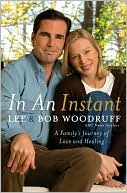
In An Instant in-an-instant-62477896

 In an Instant: A Family’s Journey of Love and Healing

by

Lee Woodruff & Bob Woodruff

reviewed by

Donna O’Donnell Figurski


Lee and Bob Woodruff wrote “In an Instant: A Family’s Journey of Love and Healing.” It’s a book about Bob, a news corespondent for ABC News, the TBI he received while on assignment in Taji, Iraq when a bomb struck the tank in which he was riding, and his journey to regain his life. It’s a love story about Bob and Lee and their children and how they pieced together their lives after his traumatic brain injury.


As I say after each post:

Feel free to leave a comment by clicking the blue words “Leave a Comment” below this post.

Please follow my blog. Click on “Follow Me Via eMail” on the right sidebar of your screen.anim0014-1_e0-1

If you like my blog, click the “Like” button under this post.

If you REALLY like my blog, share it with your friends. It’s easy! Click the “Share” buttons below.

If you don’t like my blog, “Share” it with your enemies. That works for me too!


(Clip Art compliments of Bing.)


TBI Caregivers SPEAK OUT! – Questionnaire

TBI Caregivers SPEAK OUT! Questionnaire

I have developed a TBI Caregiver Interview page on my blog, Surviving Traumatic Brain Injury. My interview consists of 20 questions that can be answered easily. I hope the page will provide information, inspire other TBI survivors, and connect people.

If you’d like take part in this project, please visit my site at TBI Caregivers SPEAK OUT! – Questionnaire. You can copy and paste the questions and your answers into your email program and send your interview to me at donnaodonnellfigurski@gmail.com. I will do my best to publish every interview. (I will only edit obvious typos, punctuation, for clarity, and to fit the format.)

If possible, please send a photo to include with your interview (optional, but preferred).

You will also need to fill out the release form so I can publish your interview on my “Surviving Traumatic Brain Injury” blog.


RELEASE FORM:

I, ____(FULL NAME)____, on this date (e.g., 04/01/2014), ____________, give Donna O’Donnell Figurski permission to use my interview on her “Surviving Traumatic Brain Injury” blog. (Your first and last name must be included on the Release Form, even if you do not want it posted on the web.)

Please put an “X” before the statement you agree with.
____I give Donna O’Donnell Figurski permission to use my last name.
____I do not give Donna O’Donnell Figurski permission to use my last name.


Please answer as many questions as you feel comfortable with. Your answers can be very brief; but, if long, your answer should be no more than 100 words. You may send your answers to me at donnaodonnellfigurski@gmail.com.


QUESTIONNAIRE for a TBI Caregivers SPEAK OUT!


1. What is your name? (last name optional)

2. Where do you live? (city and/or state and/or country) Email? (optional)

Questionnaire th-9

3. What is the brain-injury survivor’s relationship to you? How old was the survivor when he/she had the brain injury? What caused your survivor’s brain injury?

4. On what date did you begin care for your brain-injury survivor? Were you the main caregiver? Are you now? How old were you when you began care?

5. Were you caring for anyone else at that time (e.g., children, parents, etc.)?

6. Were you employed at the time of your survivor’s brain injury? If so, were you able to continue working?

7. Did you have any help? If so, what kind and for how long?

8. When did your support of the survivor begin (e.g., immediately – in the hospital; when the survivor returned home; etc.)?

9. Was your survivor in a coma? If so, what did you do during that time?

10. Did your survivor have rehab? If so, what kind of rehab (i.e., inpatient and/or outpatient and occupational, physical, speech, and/or other)? How long was the rehab? Where were you when your survivor was getting therapy?

11. What problems or disabilities of your brain-injury survivor required your care, if any?

12. How has your life changed since you became a caregiver? Is it better? Is it worse?

13. What do you miss the most from pre-brain-injury life?

14. What do you enjoy most in post-brain-injury life?

15. What do you like least about brain injury?

16. Has anything helped you to accept your survivor’s brain injury?

17. Has your survivor’s injury affected your home life and relationships and, if so, how?

18. Has your social life been altered or changed and, if so, how?

19. What are your plans? What do you expect/hope to be doing ten years from now?

20. What advice would you offer other caregivers of brain-injury survivors? Do you have any other comments that you would like to add?


Survivors SPEAK OUT! – Lauren

SPEAK OUT! – Lauren

by

Donna O’Donnell Figurski

Lauren - about 4 days post TBI surgery

Lauren – about 4 days post TBI surgery

1. What is your name? (last name optional)

Lauren

2. Where do you live? (city and/or state and/or country) Email address? (optional)

Belfast, Northern Ireland

3. When did you have your TBI? At what age?

September 2012. I was 35

4. How did your TBI occur?

Playing roller derby

5. When did you (or someone) first realize you had a problem?

It was very sudden, I felt something wasn’t right in my head, then my vision went and I collapsed.

6. What kind of emergency treatment, if any, did you have? (e.g., surgery, tracheotomy, G-peg)

Ambulance to Accident and Emergency.
A CT scan, then a craniotomy

7. Were you in a coma? If so, how long?

4 days. It was medically induced because I kept wanting to wake up!

8. Did you do rehab? What kind of rehab (i.e., In-patient and/or Out-patient; Occupational, Physical, Speech, and/or Other)? How long were you in rehab?

No rehab to speak of, Out-patient appointments with Neuro every few months. I’m now discharged.

9. What problems or disabilities, if any, resulted from your TBI? (e.g., balance, perception, personality, etc.)

Initially I had palsy of the left eye. Most of my problems have been psychological. I also had fatigue for a long time. (It’s still here but not as strong.)

10. How has your life changed? Is it better? Is it worse?

How do you put this into words? My life has changed in many ways, I was very independent. Now I rely on my partner a lot, mainly due to anxiety and depression.

There are things that are better – the ability to let small things slide is easy. I have an appreciation of life. I know what I DONT want anymore. My BS detector is much improved.

The bad – feeling scared for no reason. Crying a lot

11. What do you miss the most from your pre-TBI life?

My independence

12. What do you enjoy most in your post-TBI life?

The slower pace; the ability to filter stressful people

13. What do you like least about your TBI?

Anxiety anxiety anxiety

14. Has anything helped you to accept your TBI?

Time, patience, writing, lots of reading and meeting other survivors

15. Has your injury affected your home life and relationships and, if so, how?

It has made us a lot closer. It’s not an easy ride. It can get rough, but we’ve learnt to communicate in a much more meaningful and honest way.

16. Has your social life been altered or changed and, if so, how?

Yes, I’ve become more isolated. My social circle reduced a lot post-injury. That hurt at first, but I’ve accepted it now. More contact with others would be nice though.

17. Who is your main caregiver? Do you understand what it takes to be a caregiver?

My partner, he’s great. He’s put up with so much. I have an idea of what he’s been through, but I’ll never truly understand how it feels. It is difficult and tiring.

18. What are your future plans? What do you expect/hope to be doing 10 years from now?

I hope to study again. I want to complete a Psychology or counselling course so I can help others. I want to be out in the world again, and most of all I hope to have my joy back.

19. What advice would you offer to other TBI survivors?

It’s hard but it will pass
What you feel is normal
Be kind to yourself, and you will also need plenty of patience!

20. Do you have any other comments that you would like to add?

Good luck to all TBI/ABI survivors. Remember you are never alone.

Lauren celebrating her birthday about 16 months post-TBI

Lauren celebrating her birthday about 16 months post-TBI


Thank you, Lauren, for taking part in this interview. I hope that your experience will offer some hope, comfort, and inspiration to my readers.


If you would like to be a part of this project, please go to TBI Survivor Interview Questionnaire for a copy of the questions and the release form.

(Photos compliments of Lauren.)

Brain Injury Resources . . . . . . . . . . Traumatic Brain Injury Facts

Here’s a great site that answers a lot of questions about Traumatic Brain Injury. I’ve condensed the article to show the quick facts about TBI, but feel free to visit the site for a more comprehensive report.

CDC Centers for Disease Control and Prevention

Traumatic Brain Injury in the United States: Fact Sheet

Did You Know th1.     Traumatic brain injury (TBI) is a major cause of death and disability in the United States, contributing to about 30% of all injury deaths.

2.     Every day, 138 people in the United States die from injuries that include TBI.

3.     The severity of a TBI may range from “mild” (i.e., a brief change in mental status or consciousness) to “severe” (i.e., an extended period of unconsciousness or memory loss after the injury).

4.     In 2010, about 2.5 million Emergency Room visits, hospitalizations, or deaths were associated with TBI.

5.     In 2010, TBI contributed to the deaths of more than 50,000 people.

6.     From 2006–2010, falls were the leading cause of TBI, accounting for 40% of all TBIs in the United States that resulted in an Emergency Room visit, hospitalization, or death.

7.     Among TBI-related deaths in 2006–2010, men were nearly three times as likely to die as women.

8.     Among non-fatal TBI-related injuries for 2006–2010, men had higher rates of TBI hospitalizations and Emergency Room visits than women.

9.     Among non-fatal TBI-related injuries for 2006–2010, falls were the leading cause of TBI-related Emergency Room visits for every age group.


As I say after each post:

Feel free to leave a comment by clicking the blue words “Leave a Comment” below this post.

Please follow my blog. Click on “Follow Me Via eMail” on the right sidebar of your screen.anim0014-1_e0-1

If you like my blog, click the “Like” button under this post.

If you REALLY like my blog, share it with your friends. It’s easy! Click the “Share” buttons below.

If you don’t like my blog, “Share” it with your enemies. That works for me too!


(Clip Art compliments of Bing.)


Survivors SPEAK OUT! David Figurski

SPEAK OUT! – David Figurski

by

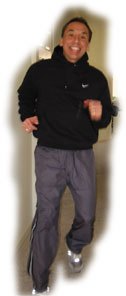
david-running-in-hall

David about 3 weeks before his TBI – in brand new running outfit. David ran about 20 miles per week.

Donna O’Donnell Figurski

1.    What is your name? (last name optional)

David Figurski

2.    Where do you live? (city and/or state) Email (optional)

Arizona           dhfdmf@aol.com

3. When did you have your TBI? At what age?

January 13, 2005           Age 57

4. How did your TBI occur?

It was induced by my doing chin-ups.

5. When did you (or someone) first realize you had a problem?

I realized I had a problem when my vision deteriorated after doing chin- ups.  I knew I had a serious problem a couple of minutes later when I was talking to my wife.  I felt fluid filling my skull, and there was a lot of pain in my face.

6. What kind of emergency treatment, if any, did you have?
(e.g., surgery, tracheotomy, G-peg)

Ambulance from a 9-1-1 call.
Three surgeries
1. to evacuate the blood
2. to remove an aneurysm that was discovered in the first surgery
3. to remove an AVM (Arterial Venous Malformation) that was discovered in the second surgery.
Tracheotomy
G-Peg

7. Were you in a coma? If so, how long?

Yes, a little more than two weeks.

8. Did you do rehab? What kind of rehab (i.e., In-patient or Out-patient and Occupational, Physical, Speech, Other)? How long were you in rehab?

In-Patient rehab for almost two months (phys., occup., speech)
Out-Patient rehab for almost sixteen months (phys., occup., speech)
Private physical therapy 2 hours/week for seven years

9. What problems or disabilities, if any, resulted from your TBI?
(e.g., balance, perception, personality, etc.)

Balance (can hobble indoors, but cannot walk outdoors unassisted)
Double vision (one image is tilted relative to the other)
Difficulty swallowing
Partly paralyzed tongue
Ataxic right arm/hand
Left arm/hand is not ataxic, but it’s not as good as it was pre-TBI
Less feeling in my right leg
Paralysis of the right side of my face

10. How has your life changed? Is it better? Is it worse?

Better –  life is slower
more time to spend with people
Worse – loss of independence
loss of mobility
unable to do things that I once did

11. What do you miss the most from your pre-TBI life?

Walking, running, driving, writing, reading, drawing

12. What do you enjoy most in your post-TBI life?

My computer, movies at home courtesy of Netflix, audiobooks

13. What do you like least about your TBI?

Because of paralysis of my mouth, I bite my lip or tongue many times each meal.

14. Has anything helped you to accept your TBI?

The positive attitude of my wife and all my doctors and therapists

15. Has your injury affected your home life and relationships and, if so, how?

My wife and I have always had a close relationship, but now I have more time to spend with her.

16. Has your social life been altered or changed and, if so, how?

Yes.  Though my wife and I go out less, we socialize a lot more at home.  I have more time now, so I have more friends.

17. Who is your main caregiver? Do you understand what it takes to be a caregiver?

My wife is my main caregiver.  She is also my cheerleader.  Yes, I know how much my wife has sacrificed to do what she does for me.

18. What are your future plans? What do you expect/hope to be doing ten years from now?

I plan to be able to walk outside unassisted.  My dream is to walk a 5K race in less than an hour.

19. What advice would you offer to other TBI survivors?

Have a positive attitude.
Be aware of the love of other people.
Do what you can.
Be patient with yourself.

20. Do you have any other comments that you would like to add?

You will probably never be able to do all that you once did, but life can be satisfying

David - 9 years and 3 months after his TBI

David – 9 years and 3 months after his TBI


Thank you, David, for taking part in this interview. I hope that your experience will offer some hope, comfort, and inspiration to my readers.


(Disclaimer: The views or opinions in this post are solely that of the interviewee.)

If you would like to be a part of this project, please go to TBI Survivor Interview Questionnaire for a copy of the questions and the release form.

(Photos compliments of ME.)

TBI Survivors SPEAK OUT! – Questionnaire –

TBI Survivors SPEAK OUT! Questionnaire

I have developed a TBI Survivor Interview page on my blog, Surviving Traumatic Brain Injury. My interview consists of 20 questions that can be answered easily. I hope the page will provide information, inspire other TBI survivors, and connect people.

If you’d like take part in this project, please visit my site at TBI Survivors SPEAK OUT! – Questionnaire. You can copy and paste the questions and your answers into your email program and send your interview to me at donnaodonnellfigurski@gmail.com. I will do my best to publish every interview. (I will only edit obvious typos, punctuation, for clarity, and to fit the format.)

If possible, please send a photo or two (before/after) to include with your interview (optional, but preferred).

You will also need to fill out the release form so I can publish your interview on my “Surviving Traumatic Brain Injury” blog.


RELEASE FORM:

I, ____(FULL NAME)____, on this date (e.g., 04/01/2014), ____________, give Donna O’Donnell Figurski permission to use my interview on her “Surviving Traumatic Brain Injury” blog. (Your first and last name must be included on the Release Form, even if you do not want it posted on the web.)

Please put an “X” before the statement you agree with.
____I give Donna O’Donnell Figurski permission to use my last name.
____I do not give Donna O’Donnell Figurski permission to use my last name.


Please answer as many questions as you feel comfortable with. Your answers can be very brief; but, if long, your answer should be no more than 100 words. You may send your answers to me at donnaodonnellfigurski@gmail.com.


QUESTIONNAIRE for a TBI Survivor SPEAK OUT!

1. What is your name? (last name optional)

2. Where do you live? (city and/or state and/or country) Email (optional)

Questionnaire th-9

3. On what date did you have your brain injury? At what age?

4. How did your brain injury occur?

5. When did you (or someone) first realize you had a problem?

6. What kind of emergency treatment, if any, did you have?

7. Were you in a coma? If so, how long?

8. Did you do rehab? What kind of rehab (i.e., inpatient or outpatient and occupational and/or physical and/or speech and/or other)? How long were you in rehab?

9. What problems or disabilities, if any, resulted from your brain injury
(e.g., balance, perception, personality, etc.)?

10. How has your life changed? Is it better? Is it worse?

11. What do you miss the most from your pre-brain-injury life?

12. What do you enjoy most in your post-brain-injury life?

13. What do you like least about your brain injury?

14. Has anything helped you to accept your brain injury?

15. Has your injury affected your home life and relationships and, if so, how?

16. Has your social life been altered or changed and, if so, how?

17. Who is your main caregiver? Do you understand what it takes to be a caregiver?

18. What are your plans? What do you expect/hope to be doing ten years from now?

19. Are you able to provide a helpful hint that may have taken you a long time to learn, but which you wished you had known earlier? If so, please state what it is to potentially help other survivors with your specific kind of brain injury.

20. What advice would you offer to other brain-injury survivors? Do you have any other comments that you would like to add?


TBI Tales: . . . . . . . . . . . . . . . . . . . . . Dancing-in-the-Rain Happy

One of the mediators of a Traumatic-Brain-Injury group to which I belong posed a question to all the members. She asked – What makes YOU happy, deliriously happy, sing-out-loud happy+cartoon+girlhappy, dance-in-the-rain happy? It’s a question not often asked of us caregivers.

I thought for a second. That’s easy. Then my fingers flew over the keyboard as I typed my answer. But, before I hit the “Send” button, I stopped. I thought again. I let the idea roll around my brain for a few moments and reconsidered the question. What makes YOU happy, deliriously happy, whoop-to-the-moon happy? Was this a trick question?

I knew what would make me over-the-top happy. That would be for my husband, David, to be better – for me to wake up one morning and see him walk and run and drive again, hear him talk without his raspy voice, and never again fear that he will aspirate his food. Yes, that would make me crazy-happy. But, I knew that was not what she meant. I can almost guarantee that every one of us caregivers would have offered a version of the same answer. And, then her question would have become rather boring.

I considered some possibilities. I know many women take solace in going to the salon, to be pampered – a new haircut, a mani/pedi, a spa day with massage and facial. But for me, those are chores. In fact, I did do a mani/pedi today, and I couldn’t wait to get out of the salon. I know! Most would think I’m nuts. So, I pondered a while longer. What would make me gloriously happy???? Something just for me! And I knew! I knew from the moment my fingers first hit the keys. (I’m glad I didn’t delete my answer.) Having my book published! That would do it! That would make me deliriously happy, sing-out-loud happy, dance-in-the-rain happy. It would make me whoop-to-the-moon happy. Seeing my book, “Prisoner Without Bars: Conquering Traumatic Brain Injury,” in print on the shelves next to Lee and Bob Woodruff’s Book shelf banner“In An Instant,” Su Meck’s “I Forgot To Remember,” Gabriele Gifford and Mark Kelly’s “Gabby,” or Trisha Meile’s “I Am The Central Park Jogger” would make me gloriously, over-the-top happy. I bet you’d hear me whooping all the way to Nova Scotia and all parts in between.

In the meantime, I can be very happy when I finish writing a really good blog post (like this one), and folks stop by to read it, offer comments, and share it with their friends. Yep, that would make me happy too … but not as happy as a book contract.

As I say after each post:

Please leave a comment by clicking the blue words “Leave a Comment” below this post.

Feel free to follow my blog. Click on “Follow” on the lower right corner of your screen.anim0014-1_e0-1

If you like my blog, share it with your friends. It’s easy! Click the “Share” buttons below.

If you don’t like my blog, “Share” it with your enemies. I don’t care!

Feel free to “Like” my post.

Permission granted to “Reblog” my post.

(Clip Art compliments of Bing.)

Brain Injury Resources . . . . . . . . . . TBI – More Than a Million

1660592_10203400148983396_2119524038_n


Chances are you know someone who has suffered a traumatic brain injury (TBI.) More than 1.7 million Americans each year sustain a TBI. I personally know five people who are living with some form of TBI. In fact, I’m living with one of them.

My husband, David, had his TBI in 2005. A professor friend of ours from Brigham Young University has one. So do my nephew, an actor/director friend from my local community theater, and the husband of my friend, Judy.

A TBI can occur in the blink of an eye. It is not discriminating. It cares not about color, race, or creed. It can happen to a child or an octogenarian and everyone in between. A child may fall off his bike or off her swing. A teenager may meet up with a TBI on the soccer or football field or a gymnastic mat. Car and motorcycle accidents are common causes of TBIs. An assault in a dark alley or domestic abuse in your home can result in a TBI too. One can even have a TBI while exercising (e.g., while doing chin ups in the wee hours of the morning after doing Tai Chi while listening to Deuter or some other new age CD). David did!1911631_10152299104437354_1744766119_n

Like snowflakes, no two TBIs are the same. Each survivor is different too, and each method of healing is unique to the person who is struggling to regain some of his or her former life. With a lot of hard work, patience, and persistence many survivors can enjoy a “new normal” life. While they have very different problems, each one of the five people I know is trying hard to lead a “normal” and productive life.


As I say after each post:

Feel free to leave a comment by clicking the blue words “Leave a Comment” below this post.

Please follow my blog. Click on “Follow Me Via eMail” on the right sidebar of your screen.anim0014-1_e0-1

If you like my blog, click the “Like” button under this post.

If you REALLY like my blog, share it with your friends. It’s easy! Click the “Share” buttons below.

If you don’t like my blog, “Share” it with your enemies. That works for me too!


(Clip Art compliments of Bing.)


diemodi jewelry

uniquely hand-crafted jewelry by donna

Welcome to Harmony Kent Online

The home of all things books

Pete Springer

Passionate Teacher and Future Children's Author

HOPE TBI

Helping Other People Excel - To Be Independent

For the Love of Books, Old and New

Katie Fischer, Writer and Reader of Stories

Charlie Bown

Children's Author

Jessica Hinrichs

“We write to taste life twice, in the moment and in retrospect.” ― Anais Nin

VIVIAN KIRKFIELD - Writer for Children

Picture Books Help Kids Soar

Mindy’s Writing Wonderland

For authors, parents, teachers & everyone who loves children’s books.

Kaitlyn Leann Sanchez

Literary Agent

Surviving Traumatic Brain Injury

TBI - Survivors, Caregivers, Family, and Friends

The Care Factor

Loving someone with a Traumatic Brain Injury

Brain Injury Support Group of Duluth-Extension

Brain Injury Information and SUPPORT

Brain Aneurysm Global Insight

Brain Aneurysm, cerebral hemorrhaging, hemorrhage stroke