TBI – Survivors, Caregivers, Family, and Friends

Posts tagged ‘TBI Survivor’

Survivors SPEAK OUT! . . . . . . . . . Michael J. Kline

SPEAK OUT! – Michael J. Kline

by

Donna O’Donnell Figurski

Kline, MIchael unknown


1. What is your name? (last name optional)

Michael J. Kline

2. Where do you live? (city and/or state and/or country) Email (optional)

Franklin, Pennsylvania, USA         9lt308@gmail.com

3. When did you have your TBI? At what age?

November 18, 2011   09:35 am         Age 41

4. How did your TBI occur?

While on duty as a firefighter, I fell from a standing position to a concrete floor.

5. When did you (or someone) first realize you had a problem?

I knew immediately that there was a problem because of the sound when I hit the floor. The fall was not witnessed.

6. What kind of emergency treatment, if any, did you have (e.g., surgery,

tracheotomy, G-peg)?


I was intubated. I had induced paralysis and an induced coma due to combativeness and the need to fly me to a trauma center in Pittsburgh.

7. Were you in a coma? If so, how long?

My coma lasted 5 days.

8. Did you do rehab? What kind of rehab (i.e., In-patient or Out-patient and Occupational, Physical, Speech, Other)?
How long were you in rehab?

I had occupational therapy. I don’t recall the length. I think it was about 3 months.

9. What problems or disabilities, if any, resulted from your TBI
(e.g., balance, perception, personality, etc.)?

I have 100% loss of taste and smell, and a 40% hearing deficit in my left ear. I have positional vertigo. I am unable to control my verbal filter at times. I have personality changes – I am a rogue or “lone wolf.” I do not drop my guard, and I protect myself ferociously with my words.

10. How has your life changed? Is it better? Is it worse?

My life has changed in many ways. I enjoy the Earth much more because I do not take anything for granted like I used to. It is worse because I am very misunderstood. I look the same, but people don’t understand that the pre-injury Mike is not here anymore. I am judged by the words that I say and the way I protect myself from harm. I have a very hard time letting people close to me. I feel like everyone is out to see if I am truly different or making it up.

11. What do you miss the most from your pre-TBI life?

I miss having fear. The only thing that I am afraid of is people seeing me as disabled or a worse person because of my injury. People just cannot grasp the change that has happened and continues to happen and bothers me every morning when I wake up.

12. What do you enjoy most in your post-TBI life?

I love my new-found love for the outdoors. Everything on this Earth has a purpose, and I am able to see that now. I enjoy speaking to other survivors and caregivers. I enjoy educating others and making them aware of this relentless hidden injury.

13. What do you like least about your TBI?

I don’t like the burden that I have placed on my family and friends. I am no longer the father with an “S” on his chest, even though I try so hard. My focus and concentration are nowhere near what they used to be. I feel like I have aged 20 years because of this injury.

14. Has anything helped you to accept your TBI?

I do not accept this injury at all. I have spent my entire life helping people. It may sound selfish, but I did not deserve this. I have lived a very fulfilling life in my effort to help others. I have lost some of that ability, and it pisses me off.

15. Has your injury affected your home life and relationships and, if so, how?

I am no longer the “King of the Castle” who can solve anything quickly. I can see it in my family’s eyes. They love me unconditionally, but I can see how they view me a little differently. I want to be the bulletproof man in the house like I used to be.

16. Has your social life been altered or changed and, if so, how?

My social life has changed tremendously. I have lost many friends because they do not understand me like they used to. I have gained other friends in some of the support groups, and they are AWESOME people. I feel like I do not fit in the way I used to because I have been beaten up by this injury. I am a very positive thinker, but sometimes I have to put up a facade to prove it.

17. Who is your main caregiver? Do you understand what it takes to be a caregiver?

My wife and daughters take care of me and keep me in check when needed. I wish I knew what it is like to be in their shoes. I know I can be a bear at times, and I know that everything they do is best for me. I don’t always agree with it, but they do not give up, and I am thankful for that.

18. What are your future plans? What do you expect/hope to be doing ten years from now?

My plans are to retire from my job and become a speaker. I want to speak about my experiences to survivors, caregivers, and medical professionals. I will not give up, and I will reach that goal. Every cloud has a silver lining. Sometimes it is just very hard to see it.

19. Are you able to provide a helpful hint that may have taken you a long time to learn, but which you wished you had known earlier? If so, please state what it is to potentially help other TBI survivors with your specific kind of TBI.

I tried to rush my recovery way too much. At times, I refused to listen to anyone. That has held me back. If I would have just been patient and allowed myself time to recover without overloading my brain all of the time, I may be better off and less angry about my TBI.

20. What advice would you offer to other TBI survivors? Do you have any other comments that you would like to add?

Keep trying to improve yourself. It may be the smallest forward step ever, but it is a step. Then follow through and achieve that goal. Wake up every morning and tell yourself how you are going to be awesome that day. Do not be hard on yourself when you hit a roadblock – we all have them and always will.


Thank you, Michael, for taking part in this interview. I hope that your experience will offer some hope, comfort, and inspiration to my readers.

(Disclaimer: The views or opinions in this post are solely that of the interviewee.)

(Photo compliments of Michael.)

You can learn more about Michael on his blog, “My Fall to Life.”


If you would like to be a part of this project, please go to TBI Survivor Interview Questionnaire for a copy of the questions and the release form.



Survivors SPEAK OUT! Amy Rankin

SPEAK OUT! – Amy Rankin

by

Donna O’Donnell Figurski

Rankin, Amy Book

1. What is your name? (last name optional)

Amy Rankin

2. Where do you live? (city and/or state and/or country) Email (optional)

Auburn, New York, USA

3. When did you have your TBI? At what age?

October 30, 2004           Age 23

4. How did your TBI occur?

While walking home, I was hit by a drunk driver in a pickup.

5. When did you (or someone) first realize you had a problem?

The driver of a passing car saw the truck flipping and called 9-1-1. They found my roommate dead a ways from myself and the truck.

6. What kind of emergency treatment, if any, did you have (e.g., surgery, tracheotomy, G-peg)?

Wonderful doctors removed half my skull to relieve swelling. I had a tracheotomy and a G-tube (gastrostomy tube).

7. Were you in a coma? If so, how long?

Yes, 33 days

8. Did you do rehab? What kind of rehab (i.e., In-patient or Out-patient and Occupational, Physical, Speech, Other)?
 How long were you in rehab?

I did rehab in Baltimore (but it wasn’t great) at Kernan Hospital. After they put my skull back together, I went to St. Camillus, where I did wonderful speech, physical, and occupational therapies both as an In-patient and an Out-patient. I did other therapies after my discharge from St. Camillus as an Out-patient. I continue to work with a language pathologist.

9. What problems or disabilities, if any, resulted from your TBI 
(e.g., balance, perception, personality, etc.)?

I’ve worked very hard to overcome many of my disabilities. I’ve run a couple of 5Ks and wrote a book about never giving up – Nobody Thought I Could Do It, But I Showed Them, and So Can You! (Amazon.com). My vision continues to be trouble. I cannot recognize people. It gets embarrassing.

10. How has your life changed? Is it better? Is it worse?

Better – My faith in God has grown. I’ve met and worked with absolutely wonderful people.

Worse – I don’t like the loss of independence, the embarrassing moments, and not being with my friends as often as I’d like.

11. What do you miss the most from your pre-TBI life?

I greatly miss driving and being with friends.

12. What do you enjoy most in your post-TBI life?

I love to volunteer and to help other TBI victims or any victim. I wrote my book to help others. I met my great boyfriend, who is also a TBI survivor.

13. What do you like least about your TBI?

I don’t like being unable to drive and see friends. I’m sad that I can no longer teach Special Ed. I miss teaching very much, but I believe my book can do some teaching for me.

14. Has anything helped you to accept your TBI?

I’ve been helped by God and by the positive attitudes and support of my family and all my doctors and therapists.

15. Has your injury affected your home life and relationships and, if so, how?

We moved to a beautiful new house. I met my wonderful boyfriend. I don’t communicate with my girlfriends from college as much as I used to.

16. Has your social life been altered or changed and, if so, how?

My boyfriend also survived a TBI. We don’t see each other as much as we’d like to. When we do, it’s magical.

17. Who is your main caregiver? Do you understand what it takes to be a caregiver?

My father is my main caregiver. I dedicated my book to him. I know both my parents have given up a lot and changed dramatically. A good caregiver is caring and has love and respect for you.

18. What are your future plans? What do you expect/hope to be doing ten years from now?

I’m hoping to go back to school to become a recreational therapist and to have my book help even more people.

19. What advice would you offer to other TBI survivors

Have a positive attitude.

Be aware of the love of other people.

Do what you can.

Find something to smile about daily.

20. Do you have any other comments that you would like to add?

A TBI changes your life forever, but don’t feel disabled. Work out of it! Believe you’re a survivor!


Thank you, Amy, for taking part in this interview. I hope that your experience will offer some hope, comfort, and inspiration to my readers.

(Disclaimer: The views or opinions in this post are solely that of the interviewee.)

(Photo compliments of Amy.)


If you would like to be a part of this project, please go to TBI Survivor Interview Questionnaire for a copy of the questions and the release form.


Survivors SPEAK OUT! . . . . . . . . . Randy Davis

Survivors SPEAK OUT! – Randy Davis

by

Donna O’Donnell Figurski

Davis, Randy


1. What is your name? (last name optional)

Randy

2. Where do you live? (city and/or state and/or country) Email (optional)

Longmont, CO, USA         bikn4u@hotmail.com

3. When did you have your TBI? At what age?

November 3, 1984         age 16

4. How did your TBI occur?

I was in a target-shooting accident. I was shot in the head.

5. When did you (or someone) first realize you had a problem?

I realized I had a problem the moment the bullet impacted my head.

6. What kind of emergency treatment, if any, did you have (e.g., surgery,

tracheotomy, G-peg)?

I had emergency brain surgery to remove the bullet that penetrated into my brain and an emergency right temporal lobectomy.

7. Were you in a coma? If so, how long?

No

8. Did you do rehab? What kind of rehab (i.e., In-patient or Out-patient and Occupational, Physical, Speech, Other)?
How long were you in rehab?

I didn’t have formal therapy to learn to walk and talk again, but I had psychological and neuropsych/speech therapy on and off over a period of several years.

9. What problems or disabilities, if any, resulted from your TBI (e.g., balance, perception, personality, etc.)?

I dealt with massive PTSD (post-traumatic stress disorder) and right temporal mood-swing seizures, which were more mental than physical.

10. How has your life changed? Is it better? Is it worse?

My life has been a progression from post-TBI teenage-hood into adulthood. It took many years of trial and error to make a living and to get my TBI in order so I could move forward in life. I was eventually able to heal and to make a career in Law Enforcement and to have an 8-year career in the US Army Reserves.

11. What do you miss the most from your pre-TBI life?

I miss the innocence and vitality for living without worrying that I’d be injured again.

12. What do you enjoy most in your post-TBI life?

I’ve discovered how resilient I am to adversity and challenge.

13. What do you like least about your TBI?

I have terrible tinnitus and head pains.

14. Has anything helped you to accept your TBI?

Time

15. Has your injury affected your home life and relationships and, if so, how?

It’s been hard. I’ve let my guard down and been through three horrible marriages.

16. Has your social life been altered or changed and, if so, how?

I’m more cautious and tend not to go out and “party.” I don’t like crowds anymore.

17. Who is your main caregiver? Do you understand what it takes to be a caregiver?

N/A

18. What are your future plans? What do you expect/hope to be doing ten years from now?

I want to get into public speaking about TBI and triumphing over tragedy. I want to help our veterans from Iraq and Afghanistan deal with brain injuries. I’m also pursuing becoming an NRA Firearms Instructor, in hopes of using my story of surviving a near fatal shooting to spread safety.

19. Are you able to provide a helpful hint that may have taken you a long time to learn, but which you wished you had known earlier? If so, please state what it is to potentially help other TBI survivors with your specific kind of TBI.

It takes time to heal. Healing won’t happen overnight or even in a few weeks. It’s a lifelong journey.Davis, Randy Army Jeep

20. What advice would you offer to other TBI survivors? Do you have any other comments that you would like to add?

Never accept defeat; never quit. Things can be hard. People usually don’t understand what you’re dealing with, but if you survived the injury, you’re a survivor – a fighter.


Thank you, Randy, for taking part in this interview. I hope that your experience will offer some hope, comfort, and inspiration to my readers.

(Disclaimer: The views or opinions in this post are solely that of the interviewee.)

(Photos compliments of Randy.)

If you would like to be a part of the SPEAK OUT! project, please go to TBI Survivor Interview Questionnaire for a copy of the questions and the release form.

SPEAK OUT! NewsBit . . . . . . . . Michael Schumacher, F1 Champion, Leaves Hospital

Michael Schumacher, F1 Champion, Leaves Hospital


Record-setting seven-time Formula 1 racecar champion, Michael Schumacher, had a harrowing skiing accident in the French Alps in December. The accident was so severe that his helmet split. He was placed into a medically induced comanewsboy-th to protect his brain as much as possible. He took considerably longer than expected to awaken, causing much concern. The last news report was in April, and he was not fully awake then. He did eventually awaken and was recently discharged from the hospital. He faces what will certainly be a long period of rehabilitation, which his family hopes to keep private. (Full story)



SPEAK OUT! NewsBit . . . . . . . . . . . Kyle Turley Raises Awareness of Head Injuries

Former NFL Player, Now Country Singer, Raises Awareness of Head Injuries


Newsboy thFor 10 years, Kyle Turley was a first-string offensive lineman in the NFL and had several mild TBIs. Today he is retired and has a Country-Rock band. He is outspoken about head injuries in the NFL; he fights for retired players who are struggling because of head traumas; and he works passionately toward a reasonable NFL policy on concussions. In the video, he sings his hit song, “Fortune and Pain,” which is about the lives of former players. (Full story and video)


Brain Injury Resources . . . . . . . . . . Facts and Advice

TBI Resources: Facts and Advice

th

“When caregivers care so much that they neglect themselves, it can create a downward spiral of self-destruction known as Compassion Fatigue,” which can result in “feeling immune to the suffering of others,” “feeling hopeless,” “insomnia,” “excessive blaming,” “bottled up emotions,” “isolation,” “addiction,” “neglecting yourself,” “financial problems,” “chronic physical ailments,” “apathy,” “preoccupation…with your loved one’s health and well-being,” or “violent thoughts.”…”Unidentified compassion fatigue causes a decline in health for caregivers and diminished care for their loved ones.”

13 signs of compassion fatigue (lift)

“Currently, almost a third of strokes occur in people under the age of 65, and this figure is set to rise.”

‘My arm went numb and I had a headache – but I never dreamed it was a STROKE’: Healthy woman, 20, is left paralysed down one side (Mail Online)

“One reason behind this jump in brainpower may lie in how much of the human metabolism is devoted to the human brain — it consumes a whopping 20 percent of the body’s total energy.”

Brain Evolution Study Shows Humans Sacrificed Brawn For High Intelligence (The Huffington Post)

“Some 20-60% of people with a TBI experience depression soon after the injury or even years later.”

Why Is Depression the Number One Symptom After a Brain Injury? (brainline.org)

“Studies show that more than 50 percent of people suffer from chronic pain disorders in the years following a brain injury.”

Why Does Everything Hurt So Much After Brain Injury? (brainline.org)th-1

“Dealing with ambiguous loss (i.e., a TBI survivor who has changed) means:

  • Recognizing and accepting your own feelings; mourn whenever you feel the need;
  • Finding a safe and supportive connection to a therapist, counselor or church;
  • Getting to know the survivor as the person he or she is now;
  • Utilizing healthy coping skills of having fun and using humor whenever possible;
  • Finding hope and exploring new treatment options;
  • Accepting what you’ve lost, but refusing to give-up on recovery!”

More than One Victim: Recovering from a Loved One’s Traumatic Brain Injury (CoSozo)

“When communicating with a person who has a brain injury, it’s important to listen, listen, listen. It’s important to be positive and encouraging in your statements, to be empathetic and at times to use humor in a positive and supportive manner.”

Making a Difference #8: Communication (brainline.org)

“No one can know for certain what our potential is.”

Lost & Found: What Brain Injury Survivors Want You to Know (brainline.org)


As I say after each post:

Feel free to leave a comment by clicking the blue words “Leave a Comment” below this post.

Please follow my blog. Click on “Follow Me Via eMail” on the right sidebar of your screen.anim0014-1_e0-1

If you like my blog, click the “Like” button under this post.

If you REALLY like my blog, share it with your friends. It’s easy! Click the “Share” buttons below.

If you don’t like my blog, “Share” it with your enemies. That works for me too!


(Clip Art compliments of Bing.)


SPEAK OUT! NewsBit . . . . . . . . . How Stem Cells Form Specific Tissues

How Stem Cells Form Specific Tissues

Stem cells have the potential to form any kind of tissue. But, they were only recently discovered, and research is in its early stages on this highly promising cell type. Exciting research at Case Western Reserve University has identified a type of genetic signal Newsboy ththat induces stem cells to form a specific tissue. The clinical implications are immense. It will eventually be possible to remove stem cells from an individual to avoid immune rejection and grow neural cells (for example) that can repair or replace damaged neurons. (Full story)


SPEAK OUT! Guest Blogger Danielle Karst

 SPEAK OUT! Guest Blogger Danielle Karst

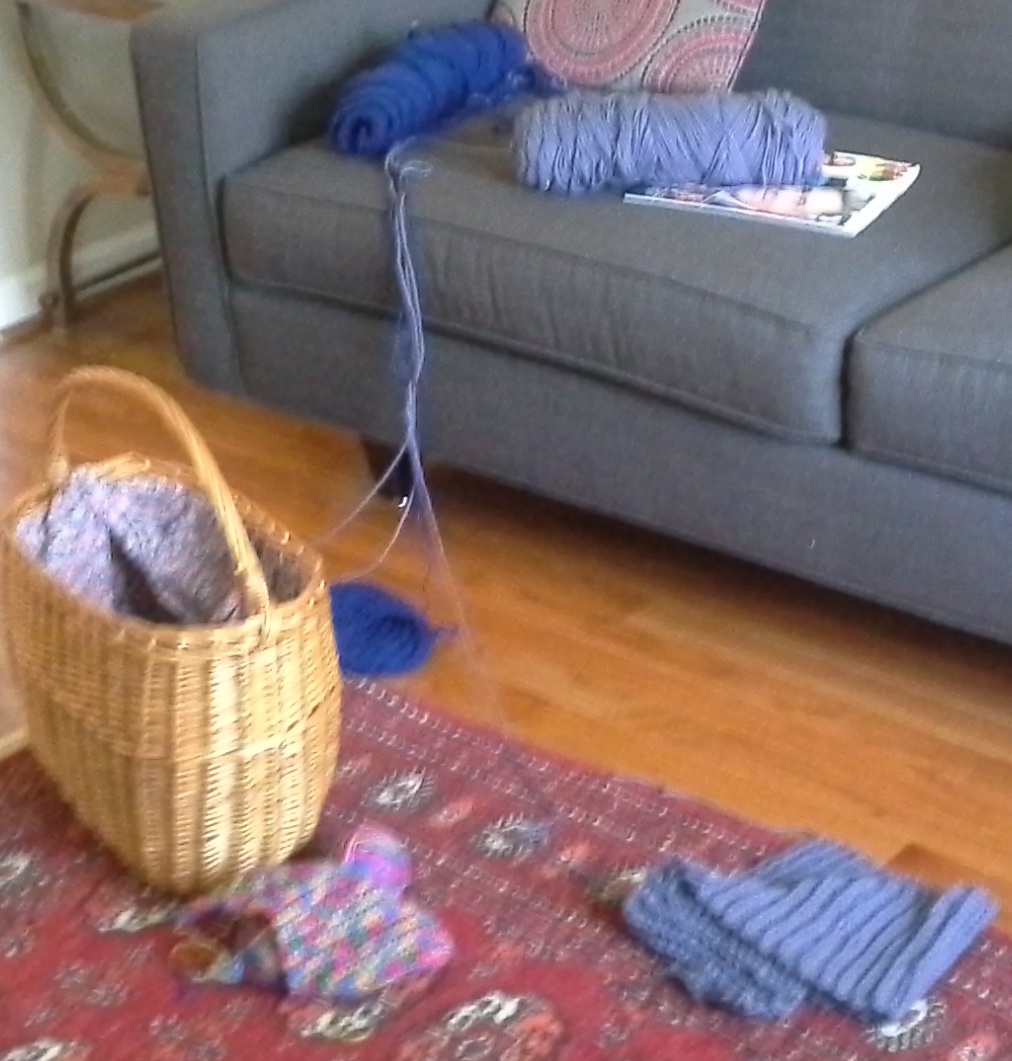
Balls of Yarn

Girl Blogger cartoon_picture_of_girl_writing

I was amazed when I finally got the first ball untangled from the mess of four different spools. First, I was surprised to see that I had two spools of the same color. After I had gotten the first two untangled, I was relieved to know that I was halfway there.

I had been a devoted crocheter a year and a half ago. Because I finally felt peace with my life, I decided to pick up crocheting again. But when I returned to crocheting, things were in a mess.

I don’t mean to dwell on the past, but the tangled yarn reminds me of my situation from long ago. After my accident, things were a mess. You can imagine how hard it was being a young athletic girl and suddenly finding out that I couldn’t walk.

Back to the yarn – once I found the end of one yarn untangled, I noticed it was the other end of the yarn that I was trying to separate! So, there I was, with only two different colors of yarn and four separate ends. I got one yarn unwound, only messily winding it on top its respective skein. The navy blue was all separated from the other colors, but it was still caught in a web of tangles. After that was finally taken care of (or I got too close to it with a pair of scissors), I vowed to sit there and wind them into balls.

Great balls of yarn – in a tangled mess

My difficulty with the yarn is a metaphor for my life after TBI. It took a while, but I eventually realized how my difficult situation was a blessing in disguise. If I had gotten the dark blue string totally unwound, I wouldn’t have had the opportunity to wind it into a ball (the other end was in the shawl that I was making), so it actually turned out to be good that I needed to cut the yarn. I could then wind the other end into a ball! The same is true about my horrible car accident. If that didn’t happen, I would not have done a lot of things that I have accomplished. My life would be completely different. I would not have chosen the field of study that I did. Being in all of that rehab helped me see that I wanted to help others in the same type of situation. I attended Longwood College because they have the best Therapeutic Recreation major. It allowed me to pursue a career. Now I work at a nursing home. If the car accident had never happened, I wouldn’t have met my husband. (We met on MySpace, the big Internet social networking site from like 10 years ago, because he had seen that we had gone to the same high school and college.) Who knows? I might have been involved with someone else, probably someone who had not gone to Longwood College. I met wonderful friends at Longwood and at my place of employment. Of course, I also became close to the older adults that I care for.

Danielle Karst pondering the complexities of living life with a Traumatic Brain Injury

Danielle Karst – pondering the complexities of living life with a Traumatic Brain Injury

So, no matter how tangled life may get, keep your mind open to see the blessings coming from the storms.

“Our real blessings often appear to us in the shape of pains, losses and disappointments; but let us have patience and we soon shall see them in their proper figures.”
Joseph Addison


Thank you, Danielle.

Disclaimer:
Any views and opinions of the Guest Blogger are purely his/her own.

Survivors SPEAK OUT! . . . . . . . . . . Stuart ‘lucky’ White


Survivors SPEAK OUT! – Stuart ‘lucky’ White

by

Donna O’Donnell Figurski


White, Stuart "lucky"

Stuart with friend, Trevor.

1. What is your name? (last name optional)

Stuart White

2. Where do you live? (city and/or state and/or country) Email (optional)

England

3. When did you have your TBI? At what age?

August 9, 1996

4. How did your TBI occur?

I was riding my bike, and I was hit by a car.

5. When did you (or someone) first realize you had a problem?

My problem was apparent as soon as the accident happened. I went straight into a coma. I was fortunate enough that a First Aider wasn’t far from me.

6. What kind of emergency treatment, if any, did you have?
(e.g., surgery,

tracheotomy, G-peg)

I was in Emergency for nine days. I’m not sure what they did to me. Sorry.

7. Were you in a coma? If so, how long?

Yes. 9 days.

8. Did you do rehab? What kind of rehab (i.e., In-patient or Out-patient and Occupational, Physical, Speech, Other)?
How long were you in rehab?

I was at the hospital for about a month and a half. Then I had a form of rehab at home, due to having a home tutor and the fact that I wasn’t able to do anything on my own. It took years for me to be back to normal.

9. What problems or disabilities, if any, resulted from your TBI?
(e.g., balance, perception, personality, etc.)

Balance, personality, couldn’t read or write, speech problems, memory loss

10. How has your life changed? Is it better? Is it worse?

My life was worse at first, but now I can finally say that, after accepting the past, I can look into the future with confidence.

11. What do you miss the most from your pre-TBI life?

I miss my teenage childhood as I had to regain a lot of things I had lost.

12. What do you enjoy most in your post-TBI life?

I realise how lucky I have been, and I enjoy that I am now able to give something back to other TBI survivors.

13. What do you like least about your TBI?

I dislike my fatigue. (It sucks.)

14. Has anything helped you to accept your TBI?

Mainly my family

15. Has your injury affected your home life and relationships and, if so, how?

My relationships have been affected a bit. It is hard to explain TBI to someone who doesn’t understand it and who thinks it has passed, so I should just get over it.

16. Has your social life been altered or changed and, if so, how?

Yes, mainly planning things. I cannot plan many things due to being sleepy a lot.

17. Who is your main caregiver? Do you understand what it takes to be a caregiver?

I would say my parents, as they helped me a lot.

18. What are your future plans? What do you expect/hope to be doing ten years from now?

I hope to be helping other survivors.

19. Are you able to provide a helpful hint that may have taken you a long time to learn, but which you wished you had known earlier? If so, please state what it is to potentially help other TBI survivors with your specific kind of TBI.

Yes. Realise that you cannot give up on yourself. TBI is very hard work, but NEVER give up. You never know what is going to happen in the future.

20. What advice would you offer to other TBI survivors? Do you have any other comments that you would like to add?

It is hard work, but accept the past. You can still look back at it, and then in the future you will realise how White, Stuart "lucky" Younger photofar you have come. Be proud of yourself no matter what others say, as you are a survivor who has fought against the odds!


Thank you, Stuart, for taking part in this interview. I hope that your experience will offer some hope, comfort, and inspiration to my readers.

(Disclaimer: The views or opinions in this post are solely that of the interviewee.)

(Photos compliments of Stuart.)

If you would like to be a part of the SPEAK OUT! project, please go to TBI Survivor Interview Questionnaire for a copy of the questions and the release form.

TBI Tales: Energizer-Ostrich

TidBits About Donna #49 Energizer-Ostrich

(Reposted from my other blog – Donna O’Donnell Figurski’s Blog Jan. 13, 2012)


What do you get when you cross a hyperactive rabbit with a pink-feathered bird on a beach? That would be ME – or in other words an Energizer-Ostrich.

I guess that warrants an explanation of sorts. But I will have to retrace my steps a bit – about seven years worth – to the source of what has changed me into a replica of an energizer bunny with her head in the sand.

Today, January 13th, seven years ago, David, my husband, suffered a Traumatic Brain Injury (TBI). If you have been following my blog, you already know this. If this is your first visit, you can learn the sordid details and do a cram course by reading the following posts. Or … you can just read on to get the Cliff Notes version.

Musings by Donna #39 TBI – Traumatic Brain Injury – One Size Does Not Fit All

TBI Tales: Bittersweet is Today


TBI Tales: A Fork in the Road to Recovery

This morning I woke with a start – at precisely 7:05 – the exact time, seven years ago that David and I began the journey of our new and unexpected life. Seven years ago we did not know what was in store for us. We didn’t even know if there was going to be an “us”. This morning, as I do each year on this day, I relived the moments of David’s TBI. From excruciating pain to a wild ambulance ride, to signing on the dotted line to taking a saw to my husband’s brain (I didn’t do that – the surgeon did.) to talking incessantly on the cell phone – arranging, arranging, arranging – flights, accommodations, squeezing David’s hand and promising him he would get better – when I wasn’t sure that he would, threatening that I would never forgive him if he didn’t fight to stay with me, telling the story over and over and over … of how he stumbled into our bedroom, his hand clutching his eye – then falling into a coma as the paramedics strapped an oxygen mask over his face.

After seven years I would have expected the intense memories to fade, but they remain vivid – with maybe just a few blurred edges. I remember many of the names of the nurses and caretakers. I remember the unwanted words of the doctor. I remember how family and friends converged on the hospital at all hours both day and … well into the night from all corners of the United States. I remember the day was one of intense fog both outdoors (and inside my brain). The outdoor fog caused airline flights to be delayed. The fog inside my brain insulated me from the tragic reality around me.

That same fog has dulled the pain over the years of watching David struggle to dress himself, to learn to feed himself again, to walk and talk. That fog blurs the hurt of seeing him hunched over his keyboard painstakingly tapping each key as he prepares another paper for publication or works on a book he’s editing for an international scientific journal or sends detailed instructions to his technicians in his lab about the next experiment to do. I welcomed the fog as I not-so-patiently waited for David to recover from a recent eye surgery.

I marvel at this man I call my husband. I’m proud of his accomplishments both before and after his trauma. I admire his patience, his persistence, his positive attitude as I watch him tackle life in the “hard” lane. He does it with grace, with no complaint, and with gentle optimism.

So, there is an “us” after TBI, though it’s a different “us.” We are not the same people we were before David’s trauma. I miss the before TBI “us.” Traumatic Brain Injury seriously changes the victim, but it also alters the spouse. TBI can rend marriages. It can tear families apart. Or it can make you stronger. See the New York Times article from January 9th 2012, When Injuries to the Brain Tear at Hearts.

David’s TBI tears my heart everyday, but each day, too, it gets glued back together with a kiss, with a smile, with a hug, with a laugh – but no tears. No, NO tears.

I still have not had a good cry. Life is too busy for tears. Besides, “Tears would make this too real – and it’s not … is it?” asked the Energizer-Ostrich.

(Clip Art compliments of Bing.)

diemodi jewelry

uniquely hand-crafted jewelry by donna

Welcome to Harmony Kent Online

The home of all things books

Pete Springer

Passionate Teacher and Future Children's Author

HOPE TBI

Helping Other People Excel - To Be Independent

For the Love of Books, Old and New

Katie Fischer, Writer and Reader of Stories

Charlie Bown

Children's Author

Jessica Hinrichs

“We write to taste life twice, in the moment and in retrospect.” ― Anais Nin

VIVIAN KIRKFIELD - Writer for Children

Picture Books Help Kids Soar

Mindy’s Writing Wonderland

For authors, parents, teachers & everyone who loves children’s books.

Kaitlyn Leann Sanchez

Literary Agent

Surviving Traumatic Brain Injury

TBI - Survivors, Caregivers, Family, and Friends

The Care Factor

Loving someone with a Traumatic Brain Injury

Brain Injury Support Group of Duluth-Extension

Brain Injury Information and SUPPORT

Brain Aneurysm Global Insight

Brain Aneurysm, cerebral hemorrhaging, hemorrhage stroke