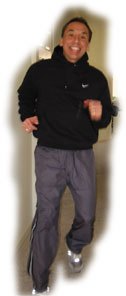
TBI – Survivors, Caregivers, Family, and Friends

Posts tagged ‘TBI Survivor Interview’

Survivors SPEAK OUT! . . . . . . . . George Visger (former NFL 49er)

SPEAK OUT! – George Visger

(former NFL SF 49er)

by

Donna O’Donnell Figurski

#74 NFL San Francisco 49er, George Visger @ 1981

#74 NFL San Francisco 49er, George Visger @ 1981

1. What is your name? (last name optional)

George Visger

2. Where do you live? (city and/or state and/or country) Email (optional)

Cypress, California, USA     visgergeorge@gmail.com

3. When did you have your TBI? At what age?

I was first injured – had surgery – at age 22 during the 1981 Super Bowl season with the San Francisco 49ers.

4. How did your TBI occur?

I had a number of concussions throughout my 12 years of playing organized football. My first serious concussion occurred at age 13, during my third year of Pop Warner. I was hospitalized on that one. My final, and most severe, concussion occurred in 1980 against the Dallas Cowboys. I suffered a major TBI in the first quarter, yet I never missed a play by the use of over 20 smelling salts during the game (or so I was told later in the week when my memory returned). I also never missed a practice. Several months later, early in the ‘81 season, I developed hydrocephalus (water on the brain) and underwent emergency VP (ventriculoperitoneal) shunt brain surgery at Stanford. I have since survived nine emergency VP shunt brain surgeries, including five in a nine-month period in ‘86-‘87 while completing my Biology degree. I have also had several gran mal seizures, and I have been on anti-seizure meds for over 30 years.

5. When did you (or someone) first realize you had a problem?

I realized I had a problem during the ‘81 season. I developed major headaches and projectile vomiting. I saw balls of light in front of each eye each night. The team doctors diagnosed me with high blood pressure and prescribed diuretics for over two weeks, until I suffered focal point paralysis of my right arm. The team doc diagnosed me in the locker room with a brain hemorrhage. I drove myself to the hospital, where I underwent emergency VP shunt brain surgery.

6. What kind of emergency treatment, if any, did you have (e.g., surgery,

tracheotomy, G-peg)?

I have had nine emergency VP shunt brain surgeries since then. They drilled a hole in my skull and installed a permanent drain tube, which runs to a pressure valve in the back of my head. They plumbed that to drain into my abdomen. I am also on Lamictil for seizures.

7. Were you in a coma? If so, how long?

Nine months after my first shunt surgery, the shunt failed while I was fishing in Mexico with my brother. It took him a day to get me home, and I was in a coma from the pressure on my brain. I had two more brain surgeries ten hours apart and was given last rites. I was 23 at the time.

8. Did you do rehab? What kind of rehab (i.e., In-patient or Out-patient and Occupational, Physical, Speech, Other)?

I was never offered rehab. In fact, I was forced to sue the 49ers for Work Compensation just to get my second and third brain surgeries paid for. Until now, it was brain surgery, out the door, and “See you next shunt failure.” I did use Vocational Rehabilitation Services when I returned to school in ‘86 to complete my Biology degree. But, I was on my own to rehab after each of the five brain surgeries that I had while finishing my degree. I discovered B.R.A.I.N. (Brain Rehabilitation And Injury Network) founded by Sue Rueb in Cypress, CA, last year while speaking at a TBI conference. I literally moved there last August to get daily treatments – first treatments I have ever had. I do neurocognitive therapy and Yoga therapy, and I counsel other TBI survivors, which helps me as well.

How long were you in rehab?

I’ve been rehabbing since August 2013.

9. What problems or disabilities, if any, resulted from your TBI (e.g., balance, perception, personality, etc.)?

I have gran mal seizures, MAJOR short-term memory issues, poor judgment, anger-management issues, loss of direction, poor concentration, problems getting my words out or thinking of the right word, numbness in extremities, constant headaches, vision problems when my shunt goes out, diminished hearing, personality changes, problems handling finances, and brain seizures from alcohol, to name a few.

10. How has your life changed? Is it better? Is it worse?

I completed a Biology degree in 1990 at age 32 after eight brain surgeries, and I followed my second dream to be a wildlife biologist. I have never let my injury define me, and I thank God for it. I wouldn’t be where I am now had I not been injured. But recently, things have begun to spiral out of control. I lost my environmental consulting business (Visger & Associates, Inc.) in 2009, and I lost our house in 2011. My wife of nearly 19 years, and the mother of my children, and I are going through a divorce. It’s been too much for her.

11. What do you miss the most from your pre-TBI life?Visger, George  2008-06-15 21.03.51

I miss my family. I miss being The Giant – the guy who “could do anything,” as my wife used to say. I miss being able to remember things. I literally do not remember numerous out-of-state bow-hunts, months of my life, kids’ activities, etc.

12. What do you enjoy most in your post-TBI life?

I enjoy being able to use my injuries to help others. I feel it is my God given mission in life now.

13. What do you like least about your TBI?

Loss of my marriage

14. Has anything helped you to accept your TBI?

I’ve been helped by my belief that God has a plan for me and that “something good comes out of everything.”

15. Has your injury affected your home life and relationships and, if so, how?

It has destroyed my marriage, and I lost my ability to provide for my family.

16. Has your social life been altered or changed and, if so, how?

Social activities were impacted, as I liked to drink back in the day. Now the only impact is that I will forget to attend a social outing. I have never been embarrassed about my injuries. I’m just as goofy now as I was before my injury.

17. Who is your main caregiver?

I was single until my late 30’s, and I have been my main caregiver ever since. My mom stepped in for a few days during surgeries, and my older brother, whom I worked with, kept an eye on me. My wife has done what she could over the years, but she has never been through a surgery with me.

Do you understand what it takes to be a caregiver?

I understand better than most what it takes to be a caregiver. I also understand what caregivers go through. I call it the “Ripple Effect.” My family members and caregivers have taken a worse beating from my TBI than I have. It is much harder on our loved ones than it is on ourselves.

18. What are your future plans? What do you expect/hope to be doing ten years from now?

I founded The Visger Group – Traumatic Brain Injury Consulting in 2010, and I have spoken all over the country. I coordinate directly with the NFL on rule changes to reduce TBIs in football at all levels. I have spoken at congressional hearings, conduct motivational talks at schools and businesses, and currently am working with our veterans suffering from TBI. I am also suffering from frontal lobe dementia, and I hope to kick a few butts and rattle a few cages while I can, in hopes of changing the way the medical field treats TBI survivors and families. In ten years, I expect to be working with government agencies, our military, academics, and sports leagues. I plan to be leading and speaking at TBI-recovery groups.

19. Are you able to provide a helpful hint that may have taken you a long time to learn, but which you wished you had known earlier? If so, please state what it is to potentially help other TBI survivors with your specific kind of TBI.
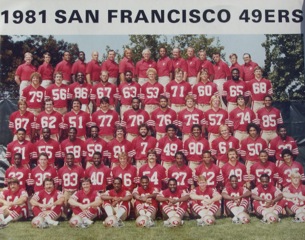
George Visger #74  4th row from bottom, 2nd from right  @ 1981

George Visger #74
4th row from bottom, 2nd from right
@ 1981

In football, there is a saying: “Short, Choppy Steps.” If you over-stride, it’s easy for someone to knock you on your butt. You want to keep your butt down, your head up, and take short, powerful 12-inch strides. Forget about breaking long touchdown runs. Get the little things done each day, and you will reach your goals. If a football team only got four yards each play – no more, no less – they would never lose a game. Think about it. They would get a first down every three plays, and they would score every time they had the ball. Life is no different. You need long-term goals for sure: score a touchdown, win the game, win the Super Bowl. But, you will NEVER get there if you don’t get your four yards a carry. We sell wrist bands on our website (www.thevisgergroup) that say “Short, Choppy Steps” and another one we give to coaches and players that says “Use your head, DON’T use your head.” Focus on small daily victories, and you’ll win the game.

20. What advice would you offer to other TBI survivors? Do you have any other comments that you would like to add?

Keep in mind everyone has a cross to bear. Carry your cross; don’t let it carry you. All of us TBI survivors have a lot to give to everyone. Turn your negative into a positive and touch people’s lives. Focus on your positives. Work hard, and put it in God’s hands. It will all work out.

That’s all anyone can do.


You can learn more about George Visger on his blog and these YouTube videos.

George Visger Blog – Life Before and After Football


George Visger talks about his life in these videos:

The Damage Done — George Visger’s Concussions

Battle Scars: Stagg High Alum, Former 49er Fights on Despite Brain Injuries


George Visger addresses specific topics in these very short videos:

Do Helmets Give Football Players a False Sense of Safety?Visger-275x300

Would This Retired NFL Player Do It Again?


Thank you, George, for taking part in this interview. I hope that your experience will offer some hope, comfort, and inspiration to my readers.

(Disclaimer: The views or opinions in this post are solely that of the interviewee.)

(Photo compliments of George.)

If you would like to be a part of this project, please go to TBI Survivor Interview Questionnaire for a copy of the questions and the release form.


Survivors SPEAK OUT! Tabbie

 SPEAK OUT! – Tabbie

by

Donna O’Donnell Figurski

Tabbie Survivor MRI Photo 050215

Tabbie on her way into the MRI


1. What is your name? (last name optional)

Tabitha! But my friends and family call me Tabbie!

2. Where do you live? (city and/or state and/or country) Email (optional)

In the U.S!

3. When did you have your TBI? At what age?

I got my TBI back in September 2012, and I was 14 years old!

4. How did your TBI occur?

My TBI occurred during the warm-ups at an away volleyball game. A girl from the opposing team purposely served a ball at my face to get me out of the game.

5. When did you (or someone) first realize you had a problem?

My mom realized the next day, but she couldn’t take me to the doctor because it was a Saturday.

6. What kind of emergency treatment, if any, did you have?
(e.g., surgery,

tracheotomy, G-peg)

I didn’t get any. The first doctor I saw said it wouldn’t be possible for me to get a concussion from a volleyball.

7. Were you in a coma? If so, how long?

I don’t think so, but I don’t remember anything after I got hit until the next day.

8. Did you do rehab? What kind of rehab (i.e., In-patient or Out-patient and Occupational, Physical, Speech, Other)?
How long were you in rehab?

I saw a psychologist, but that’s it for any type of rehab!

9. What problems or disabilities, if any, resulted from your TBI?
(e.g., balance, perception, personality, etc.)

Balance, dizziness, lightheadedness, constant severe headache/migraines, poor concentration and focus, noise/light sensitivity, tiredness, memory

10. How has your life changed? Is it better? Is it worse?

It’s been a bit of both! It’s been mostly better right now, because I can do a bit more than I could since I got hit.

11. What do you miss the most from your pre-TBI life?

My way of exercising and learning/education

12. What do you enjoy most in your post-TBI life?

The people I’ve gotten to meet, the people I’ve gotten to help, and the fact they’ve allowed me into their life/journey!

13. What do you like least about your TBI?

The amount of extreme pain I’m always in

14. Has anything helped you to accept your TBI?

Yes! Prayer, acceptance of having a TBI, and forgiving the person who had caused all of this for me!

15. Has your injury affected your home life and relationships and, if so, how?

Yes. It’s hard to relay how I’m feeling to family, and I’m constantly tired.

16. Has your social life been altered or changed and, if so, how?

It has in weird ways! My friends became distant when I was homebound, but I’ve also gained tons of support through social media.

17. Who is your main caregiver?

My parents

Do you understand what it takes to be a caregiver?

I think I do for the most part, but all I can say is “God bless them” because I know it’s hard on then too.

18. What are your future plans? What do you expect/hope to be doing ten years from now?

I just want to be able to reach out and inspire as many people as I can in awareness and happiness! I’m not sure what I’ll be doing in ten years honestly, but I know it’ll be something great!

19. What advice would you offer to other TBI survivors

Not to lose hope and to know that you’re not alone in this. It’s a bumpy journey, but what you’ll get from it and the people you’ll meet are worth it!

Tabbie

Tabbie – doing what she loves – playing volleyball

20. Do you have any other comments that you would like to add?

If you ever need someone to talk to, you can follow my twitter account: @brainyblondegal (https://twitter.com/brainyblondegal). I’m always here to help!


Thank you, Tabbie, for taking part in this interview. I hope that your experience will offer some hope, comfort, and inspiration to my readers.

(Disclaimer: The views or opinions in this post are solely that of the interviewee.)

(Photo compliments of Tabbie.)

If you would like to be a part of the SPEAK OUT! project, please go to TBI Survivor Interview Questionnaire for a copy of the questions and the release form.

SPEAK OUT! NewsBits . . . . . . . . . . . Yoga May Help TBI Survivors

Yoga May Help TBI Survivors

Newsboy th


Janna Leyde, whose father had a TBI when she was a teen, found help for herself in yoga. Later, as a yoga instructor, she decided to work with her father. They both saw that yoga seemed to bring significant benefits to him. Janna started a yoga program for people with TBIs, including many veterans. The Military is so convinced that yoga has helped soldiers returning from Iraq and Afghanistan with TBIs that they employ a yoga instructor full-time. (Full story)


Survivors SPEAK OUT! Joyce Hoffman

Joyce Hoffman – Before her TBI

SPEAK OUT! – Joyce Hoffman

by

Donna O’Donnell Figurski


1. What is your name? (last name optional)

Joyce Hoffman

2. Where do you live? (city and/or state and/or country) Email (optional)

New Jersey, USA

3. When did you have your TBI? At what age?

April 8, 2009

4. How did your TBI occur?

Hemorrhagic stroke, i.e., a blood vessel erupted

5. When did you (or someone) first realize you had a problem?

I started to convulse at 4 am. My partner saw it, and he called 911.

6. What kind of emergency treatment, if any, did you have?
(e.g., surgery, tracheotomy, G-peg)

Tracheotomy

7. Were you in a coma? If so, how long?

Yes. 8 days

8. Did you do rehab? What kind of rehab (i.e., In-patient or Out-patient and Occupational, Physical, Speech, Other)?
How long were you in rehab?

In-patient rehab for 15 weeks, and then Out-patient rehab 2 or 3 times a year

9. What problems or disabilities, if any, resulted from your TBI?
(e.g., balance, perception, personality, etc.)

Right-sided weakness. Paralyzed arm. I use a quad cane for walking.

10. How has your life changed? Is it better? Is it worse?

Better—I wrote my 2nd book, “The Tales of a Stroke Patient,” with one hand, all 265 pages, within 2 years.

Worse—I miss my career as a senior technical trainer and writer for legal applications, and I go slowly now – one step at a time.

11. What do you miss the most from your pre-TBI life?

Total independence

12. What do you enjoy most in your post-TBI life?

Reading and computing

Getting together with friends and family

13. What do you like least about your TBI?

My speaking slowly when I want to talk faster

14. Has anything helped you to accept your TBI?

Time heals all, but I’m not completely there yet.

15. Has your injury affected your home life and relationships and, if so, how?

My partner had to take over, whereas I did most everything domestic before.

16. Has your social life been altered or changed and, if so, how?

A few friends remain. Most of them headed “for the hills.”

17. Who is your main caregiver? Do you understand what it takes to be a caregiver?

Cece is my main caregiver. She understands my dilemmas.

18. What are your future plans? What do you expect/hope to be doing ten years from now?

Doing the same thing I am now—plus more time for lectures

19. What advice would you offer to other TBI survivors

Patience

20. Do you have any other comments that you would like to add?

I am starting to NOT resent people who have the ability to go the beach or to run fast. I used to be a runner. My book tells it all. Click the link to buy it

The Tales of a Stroke Patient (from the publisher)

The Tales of a Stroke Patient (from Amazon)

The Tales of a Stroke Patient (Barnes & Noble)


Joyce Hoffman - After her TBI

Joyce Hoffman – After her TBI

Thank you, Joyce, for taking part in this interview. I hope that your experience will offer some hope, comfort, and inspiration to my readers.

(Disclaimer: The views or opinions in this post are solely that of the interviewee.)


If you would like to be a part of the SPEAK OUT! project, please go to TBI Survivor Interview Questionnaire for a copy of the questions and the release form.

Survivors SPEAK OUT! Julie


SPEAK OUT! – Julie

by

Donna O’Donnell Figurski

Julie Pre-TBI

This photo was taken on Julie’s 16th birthday – one month before her accident.


1. What is your name? (last name optional)

Julie

2. Where do you live? (city and/or state and/or country) Email (optional)

Atlantic Canada

3. When did you have your TBI? At what age?

 1995 (16 years old)

4. How did your TBI occur?

MVA (motor vehicle accident)

5. When did you (or someone) first realize you had a problem?

Right away

6. What kind of emergency treatment, if any, did you have?
(e.g., surgery,

tracheotomy, G-peg)

ICU (intensive care unit)

7. Were you in a coma? If so, how long?

Yes – 2 weeks or more.

8. Did you do rehab? What kind of rehab (i.e., In-patient or Out-patient and Occupational, Physical, Speech, Other)?


Yes – pain clinic, chiropractor, acupuncture, physio, massage, meditation, etc.

How long were you in rehab?

It has become a part of life…Keep your body and mind healthy.

9. What problems or disabilities, if any, resulted from your TBI?
(e.g., balance, perception, personality, etc.)

I have balance, perception, personality, and memory problems (to name a few).

There were physical, chronic pain, arthritic, and TMJ (temporomandibular joint)problems from the accident.

Epilepsy (grand mal and petit mal) formed 10 years later.

10. How has your life changed? Is it better? Is it worse?

I was 16, so I don’t know how my life would have gone. I know I had a plan for myself, and the MVA changed it all.

11. What do you miss the most from your pre-TBI life?

Feeling normal

12. What do you enjoy most in your post-TBI life?

My family and trying to stay positive

13. What do you like least about your TBI?

It changed everything about me… but on the outside I still look the same.

14. Has anything helped you to accept your TBI?

 After almost 20 years, I suppose time made me accept it.

15. Has your injury affected your home life and relationships and, if so, how?

 I lost friends. I became extremely moody, very hateful, and difficult for a very long time. My parents split shortly afterward. The accident was just the last thing to tip things over the edge for them. Depression and anxiety ganged up on me, and everything piled up, feeding off one another, leading to an unhappy life for a very, very long time.

 16. Has your social life been altered or changed and, if so, how?

 You name it…

 17. Who is your main caregiver? Do you understand what it takes to be a caregiver?

 My husband and I work together. He helps me with learning, any physical obstacles, during/after seizures, and over the past five years or so things seem to have improved in many ways.

 18. What are your future plans? What do you expect/hope to be doing ten years from now?

 Working and enjoying life with my family

 19. What advice would you offer to other TBI survivors?

 No one knows what you are going through. No one knows how long it will last. Everyone has a different story. You are no less important than anyone else. You are still a person and still count.

 20. Do you have any other comments that you would like to add?

 Don’t let yourself get depressed. That dark place will take you nowhere fast and can keep you for a long time.

Julie Post-TBI

More recent photo. Post-TBI

Write about your feelings, draw, paint, sing, do anything you can…but be sure to get your feelings out and make peace with life and how it has gone for you.


Thank you, Julie, for taking part in this interview. I hope that your experience will offer some hope, comfort, and inspiration to my readers.

(Disclaimer: The views or opinions in this post are solely that of the interviewee.)


If you would like to be a part of the SPEAK OUT! project, please go to TBI Survivor Interview Questionnaire for a copy of the questions and the release form.
Survivors SPEAK OUT! Len

SPEAK OUT! – Len

by

Donna O’Donnell Figurski

unknown


1.    What is your name? (last name optional)

Len

2.    Where do you live? Email? (optional)

Georgetown, Ontario, Canada     tbi4life@live.ca

3.    When did you have your TBI? At what age?

April 16, 2005      38 years old

4.    How did your TBI occur?

As VP of sales for a large Fortune 500 company, I was on a sales conference trip to Costa Rica. On the 2nd day, there was an organized team-building event – an ATV ride up the mountains. During the event, I hit the back of another rider and flew off into a cliff. I fell into an 8-foot-deep hole, and the ATV came and landed on me. Luckily for me, I did have a helmet on. I had no memory of the accident or anytime after for approximately 5 weeks.

5.    When did you (or someone) first realize you had a problem?

When I came back to Canada, all the focus was on my back injury. (I shattered 5 vertebrae.) The doctors just kept telling me I was depressed, etc. … and I kept telling them I didn’t feel sad. They kept giving me meds, which I thought was the reason I was feeling so different. I went back to my job, but they kept reducing and changing my responsibilities. I suddenly felt so unbelievably lost in a world in which I was once very confident and successful.

6.    What kind of emergency treatment, if any, did you have?

Spinal fusion x 5
Induced coma

7.    Were you in a coma? If so, how long?

4 1/2 weeks – I think it was mostly induced because I kept trying to move and they were afraid I would do more damage to my spine.

8.  Did you do rehab? What kind of rehab (i.e., In-patient or Out-patient and Occupational, Physical, Speech, Other)? How long were you in rehab?

I was an Out-patient. Once I was finally diagnosed with MTBI, the nurse came to my house for over a year. However, I was still trying to work and in denial. Over time I was no longer able to work, and Out-patient services started coming again for about another year. I also saw a neuropsychologist, who I am presently seeing on a bi-weekly basis.

9.  What problems or disabilities, if any, resulted from your TBI? (e.g., balance, perception, personality, etc.)

Everything! At least that’s how it feels – my short-term memory; I have a hard time communicating what I’m thinking; I misunderstand what people are saying to me; I get stuck on things; I really struggle making decisions; I lose my temper because I misunderstand what is happening (usually when things are happening fast or loud). Sometimes I seem to mix things up in my head, and then people have a hard time convincing me I’m wrong because I feel so strongly that I am right and that they are just trying to take advantage of me.

10.  How has your life changed? Is it better? Is it worse?

My life is completely different. I am not the person I was. Now after 9 years I have a hard time explaining how I am different because the old me seems like a dream.

11. What do you miss the most from your pre-TBI life?

I was a proud professional who my kids could look up to and people would listen to. I enjoyed my career and loved helping people become successful.

12. What do you enjoy most in your post-TBI life?

I have yet to discover anything I enjoy.

13. What do you like least about your TBI?

Lack of security and not being able to give the people around me a better life

14.  Has anything helped you to accept your TBI?

Yes. I was really struggling after I was told I had a TBI, so I googled and came across some videos, such as “You Look Great” by John Byler. Watching these helped me relate how I was feeling and helped me communicate this to my family. I then started the TBI4life twitter account mostly because it gave me somewhat of a purpose.

15. Has your injury affected your home life and relationships and, if so, how?

It has been very hard on my marriage. Luckily for me, it all happened around the same time…. I mean my wife was in the process of leaving right around the time I started to accept my TBI. It was that acceptance that I believe saved our marriage. By accepting, it enabled me to explain to her why I did the things I did – that I knew I was wrong but here’s what was going on in my head, etc. My wife is now my biggest supporter, and I love her with all my heart.

16.  Has your social life been altered or changed and, if so, how?

I no longer have a social life – big change considering we used to hold parties at our house all the time and would be constantly out at events, etc.

17. Who is your main caregiver? Do you understand what it takes to be a caregiver?

My wife is my main caregiver. It takes patience … lots of patience!

18. What are your future plans? What do you expect/hope to be doing ten years from now?

My plans are unknown.  I just want to feel as if I have some sort of purpose – a life.

19. What advice would you offer to other TBI survivors?

The sooner you accept and understand this is a life-long journey, the sooner you can start to rebuild. NEVER underestimate the impact a TBI will have on your life.

20. Do you have any other comments that you would like to add?

I hope this helps others in some way, and a big THANK YOU for having the interest in our stories.


Thank you, Len, for taking part in this interview. I hope that your experience will offer some hope, comfort, and inspiration to my readers.

(Disclaimer: The views or opinions in this post are solely that of the interviewee.)


If you would like to be a part of this project, please go to TBI Survivor Interview Questionnaire for a copy of the questions and the release form.


Survivors SPEAK OUT! – Lauren

SPEAK OUT! – Lauren

by

Donna O’Donnell Figurski

Lauren - about 4 days post TBI surgery

Lauren – about 4 days post TBI surgery

1. What is your name? (last name optional)

Lauren

2. Where do you live? (city and/or state and/or country) Email address? (optional)

Belfast, Northern Ireland

3. When did you have your TBI? At what age?

September 2012. I was 35

4. How did your TBI occur?

Playing roller derby

5. When did you (or someone) first realize you had a problem?

It was very sudden, I felt something wasn’t right in my head, then my vision went and I collapsed.

6. What kind of emergency treatment, if any, did you have? (e.g., surgery, tracheotomy, G-peg)

Ambulance to Accident and Emergency.
A CT scan, then a craniotomy

7. Were you in a coma? If so, how long?

4 days. It was medically induced because I kept wanting to wake up!

8. Did you do rehab? What kind of rehab (i.e., In-patient and/or Out-patient; Occupational, Physical, Speech, and/or Other)? How long were you in rehab?

No rehab to speak of, Out-patient appointments with Neuro every few months. I’m now discharged.

9. What problems or disabilities, if any, resulted from your TBI? (e.g., balance, perception, personality, etc.)

Initially I had palsy of the left eye. Most of my problems have been psychological. I also had fatigue for a long time. (It’s still here but not as strong.)

10. How has your life changed? Is it better? Is it worse?

How do you put this into words? My life has changed in many ways, I was very independent. Now I rely on my partner a lot, mainly due to anxiety and depression.

There are things that are better – the ability to let small things slide is easy. I have an appreciation of life. I know what I DONT want anymore. My BS detector is much improved.

The bad – feeling scared for no reason. Crying a lot

11. What do you miss the most from your pre-TBI life?

My independence

12. What do you enjoy most in your post-TBI life?

The slower pace; the ability to filter stressful people

13. What do you like least about your TBI?

Anxiety anxiety anxiety

14. Has anything helped you to accept your TBI?

Time, patience, writing, lots of reading and meeting other survivors

15. Has your injury affected your home life and relationships and, if so, how?

It has made us a lot closer. It’s not an easy ride. It can get rough, but we’ve learnt to communicate in a much more meaningful and honest way.

16. Has your social life been altered or changed and, if so, how?

Yes, I’ve become more isolated. My social circle reduced a lot post-injury. That hurt at first, but I’ve accepted it now. More contact with others would be nice though.

17. Who is your main caregiver? Do you understand what it takes to be a caregiver?

My partner, he’s great. He’s put up with so much. I have an idea of what he’s been through, but I’ll never truly understand how it feels. It is difficult and tiring.

18. What are your future plans? What do you expect/hope to be doing 10 years from now?

I hope to study again. I want to complete a Psychology or counselling course so I can help others. I want to be out in the world again, and most of all I hope to have my joy back.

19. What advice would you offer to other TBI survivors?

It’s hard but it will pass
What you feel is normal
Be kind to yourself, and you will also need plenty of patience!

20. Do you have any other comments that you would like to add?

Good luck to all TBI/ABI survivors. Remember you are never alone.

Lauren celebrating her birthday about 16 months post-TBI

Lauren celebrating her birthday about 16 months post-TBI


Thank you, Lauren, for taking part in this interview. I hope that your experience will offer some hope, comfort, and inspiration to my readers.


If you would like to be a part of this project, please go to TBI Survivor Interview Questionnaire for a copy of the questions and the release form.
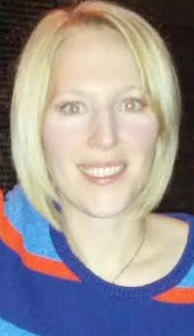
(Photos compliments of Lauren.)

Survivors SPEAK OUT! David Figurski

SPEAK OUT! – David Figurski

by

david-running-in-hall

David about 3 weeks before his TBI – in brand new running outfit. David ran about 20 miles per week.

Donna O’Donnell Figurski

1.    What is your name? (last name optional)

David Figurski

2.    Where do you live? (city and/or state) Email (optional)

Arizona           dhfdmf@aol.com

3. When did you have your TBI? At what age?

January 13, 2005           Age 57

4. How did your TBI occur?

It was induced by my doing chin-ups.

5. When did you (or someone) first realize you had a problem?

I realized I had a problem when my vision deteriorated after doing chin- ups.  I knew I had a serious problem a couple of minutes later when I was talking to my wife.  I felt fluid filling my skull, and there was a lot of pain in my face.

6. What kind of emergency treatment, if any, did you have?
(e.g., surgery, tracheotomy, G-peg)

Ambulance from a 9-1-1 call.
Three surgeries
1. to evacuate the blood
2. to remove an aneurysm that was discovered in the first surgery
3. to remove an AVM (Arterial Venous Malformation) that was discovered in the second surgery.
Tracheotomy
G-Peg

7. Were you in a coma? If so, how long?

Yes, a little more than two weeks.

8. Did you do rehab? What kind of rehab (i.e., In-patient or Out-patient and Occupational, Physical, Speech, Other)? How long were you in rehab?

In-Patient rehab for almost two months (phys., occup., speech)
Out-Patient rehab for almost sixteen months (phys., occup., speech)
Private physical therapy 2 hours/week for seven years

9. What problems or disabilities, if any, resulted from your TBI?
(e.g., balance, perception, personality, etc.)

Balance (can hobble indoors, but cannot walk outdoors unassisted)
Double vision (one image is tilted relative to the other)
Difficulty swallowing
Partly paralyzed tongue
Ataxic right arm/hand
Left arm/hand is not ataxic, but it’s not as good as it was pre-TBI
Less feeling in my right leg
Paralysis of the right side of my face

10. How has your life changed? Is it better? Is it worse?

Better –  life is slower
more time to spend with people
Worse – loss of independence
loss of mobility
unable to do things that I once did

11. What do you miss the most from your pre-TBI life?

Walking, running, driving, writing, reading, drawing

12. What do you enjoy most in your post-TBI life?

My computer, movies at home courtesy of Netflix, audiobooks

13. What do you like least about your TBI?

Because of paralysis of my mouth, I bite my lip or tongue many times each meal.

14. Has anything helped you to accept your TBI?

The positive attitude of my wife and all my doctors and therapists

15. Has your injury affected your home life and relationships and, if so, how?

My wife and I have always had a close relationship, but now I have more time to spend with her.

16. Has your social life been altered or changed and, if so, how?

Yes.  Though my wife and I go out less, we socialize a lot more at home.  I have more time now, so I have more friends.

17. Who is your main caregiver? Do you understand what it takes to be a caregiver?

My wife is my main caregiver.  She is also my cheerleader.  Yes, I know how much my wife has sacrificed to do what she does for me.

18. What are your future plans? What do you expect/hope to be doing ten years from now?

I plan to be able to walk outside unassisted.  My dream is to walk a 5K race in less than an hour.

19. What advice would you offer to other TBI survivors?

Have a positive attitude.
Be aware of the love of other people.
Do what you can.
Be patient with yourself.

20. Do you have any other comments that you would like to add?

You will probably never be able to do all that you once did, but life can be satisfying

David - 9 years and 3 months after his TBI

David – 9 years and 3 months after his TBI


Thank you, David, for taking part in this interview. I hope that your experience will offer some hope, comfort, and inspiration to my readers.


(Disclaimer: The views or opinions in this post are solely that of the interviewee.)

If you would like to be a part of this project, please go to TBI Survivor Interview Questionnaire for a copy of the questions and the release form.

(Photos compliments of ME.)

diemodi jewelry

uniquely hand-crafted jewelry by donna

Welcome to Harmony Kent Online

The home of all things books

Pete Springer

Passionate Teacher and Future Children's Author

HOPE TBI

Helping Other People Excel - To Be Independent

For the Love of Books, Old and New

Katie Fischer, Writer and Reader of Stories

Charlie Bown

Children's Author

Jessica Hinrichs

“We write to taste life twice, in the moment and in retrospect.” ― Anais Nin

VIVIAN KIRKFIELD - Writer for Children

Picture Books Help Kids Soar

Mindy’s Writing Wonderland

For authors, parents, teachers & everyone who loves children’s books.

Kaitlyn Leann Sanchez

Literary Agent

Surviving Traumatic Brain Injury

TBI - Survivors, Caregivers, Family, and Friends

The Care Factor

Loving someone with a Traumatic Brain Injury

Brain Injury Support Group of Duluth-Extension

Brain Injury Information and SUPPORT

Brain Aneurysm Global Insight

Brain Aneurysm, cerebral hemorrhaging, hemorrhage stroke