TBI – Survivors, Caregivers, Family, and Friends

Archive for the ‘Survivors SPEAK OUT!’ Category

Survivors SPEAK OUT! . . . . . . . . George Visger (former NFL 49er)

SPEAK OUT! – George Visger

(former NFL SF 49er)

by

Donna O’Donnell Figurski

#74 NFL San Francisco 49er, George Visger @ 1981

#74 NFL San Francisco 49er, George Visger @ 1981

1. What is your name? (last name optional)

George Visger

2. Where do you live? (city and/or state and/or country) Email (optional)

Cypress, California, USA     visgergeorge@gmail.com

3. When did you have your TBI? At what age?

I was first injured – had surgery – at age 22 during the 1981 Super Bowl season with the San Francisco 49ers.

4. How did your TBI occur?

I had a number of concussions throughout my 12 years of playing organized football. My first serious concussion occurred at age 13, during my third year of Pop Warner. I was hospitalized on that one. My final, and most severe, concussion occurred in 1980 against the Dallas Cowboys. I suffered a major TBI in the first quarter, yet I never missed a play by the use of over 20 smelling salts during the game (or so I was told later in the week when my memory returned). I also never missed a practice. Several months later, early in the ‘81 season, I developed hydrocephalus (water on the brain) and underwent emergency VP (ventriculoperitoneal) shunt brain surgery at Stanford. I have since survived nine emergency VP shunt brain surgeries, including five in a nine-month period in ‘86-‘87 while completing my Biology degree. I have also had several gran mal seizures, and I have been on anti-seizure meds for over 30 years.

5. When did you (or someone) first realize you had a problem?

I realized I had a problem during the ‘81 season. I developed major headaches and projectile vomiting. I saw balls of light in front of each eye each night. The team doctors diagnosed me with high blood pressure and prescribed diuretics for over two weeks, until I suffered focal point paralysis of my right arm. The team doc diagnosed me in the locker room with a brain hemorrhage. I drove myself to the hospital, where I underwent emergency VP shunt brain surgery.

6. What kind of emergency treatment, if any, did you have (e.g., surgery,

tracheotomy, G-peg)?

I have had nine emergency VP shunt brain surgeries since then. They drilled a hole in my skull and installed a permanent drain tube, which runs to a pressure valve in the back of my head. They plumbed that to drain into my abdomen. I am also on Lamictil for seizures.

7. Were you in a coma? If so, how long?

Nine months after my first shunt surgery, the shunt failed while I was fishing in Mexico with my brother. It took him a day to get me home, and I was in a coma from the pressure on my brain. I had two more brain surgeries ten hours apart and was given last rites. I was 23 at the time.

8. Did you do rehab? What kind of rehab (i.e., In-patient or Out-patient and Occupational, Physical, Speech, Other)?

I was never offered rehab. In fact, I was forced to sue the 49ers for Work Compensation just to get my second and third brain surgeries paid for. Until now, it was brain surgery, out the door, and “See you next shunt failure.” I did use Vocational Rehabilitation Services when I returned to school in ‘86 to complete my Biology degree. But, I was on my own to rehab after each of the five brain surgeries that I had while finishing my degree. I discovered B.R.A.I.N. (Brain Rehabilitation And Injury Network) founded by Sue Rueb in Cypress, CA, last year while speaking at a TBI conference. I literally moved there last August to get daily treatments – first treatments I have ever had. I do neurocognitive therapy and Yoga therapy, and I counsel other TBI survivors, which helps me as well.

How long were you in rehab?

I’ve been rehabbing since August 2013.

9. What problems or disabilities, if any, resulted from your TBI (e.g., balance, perception, personality, etc.)?

I have gran mal seizures, MAJOR short-term memory issues, poor judgment, anger-management issues, loss of direction, poor concentration, problems getting my words out or thinking of the right word, numbness in extremities, constant headaches, vision problems when my shunt goes out, diminished hearing, personality changes, problems handling finances, and brain seizures from alcohol, to name a few.

10. How has your life changed? Is it better? Is it worse?

I completed a Biology degree in 1990 at age 32 after eight brain surgeries, and I followed my second dream to be a wildlife biologist. I have never let my injury define me, and I thank God for it. I wouldn’t be where I am now had I not been injured. But recently, things have begun to spiral out of control. I lost my environmental consulting business (Visger & Associates, Inc.) in 2009, and I lost our house in 2011. My wife of nearly 19 years, and the mother of my children, and I are going through a divorce. It’s been too much for her.

11. What do you miss the most from your pre-TBI life?Visger, George  2008-06-15 21.03.51

I miss my family. I miss being The Giant – the guy who “could do anything,” as my wife used to say. I miss being able to remember things. I literally do not remember numerous out-of-state bow-hunts, months of my life, kids’ activities, etc.

12. What do you enjoy most in your post-TBI life?

I enjoy being able to use my injuries to help others. I feel it is my God given mission in life now.

13. What do you like least about your TBI?

Loss of my marriage

14. Has anything helped you to accept your TBI?

I’ve been helped by my belief that God has a plan for me and that “something good comes out of everything.”

15. Has your injury affected your home life and relationships and, if so, how?

It has destroyed my marriage, and I lost my ability to provide for my family.

16. Has your social life been altered or changed and, if so, how?

Social activities were impacted, as I liked to drink back in the day. Now the only impact is that I will forget to attend a social outing. I have never been embarrassed about my injuries. I’m just as goofy now as I was before my injury.

17. Who is your main caregiver?

I was single until my late 30’s, and I have been my main caregiver ever since. My mom stepped in for a few days during surgeries, and my older brother, whom I worked with, kept an eye on me. My wife has done what she could over the years, but she has never been through a surgery with me.

Do you understand what it takes to be a caregiver?

I understand better than most what it takes to be a caregiver. I also understand what caregivers go through. I call it the “Ripple Effect.” My family members and caregivers have taken a worse beating from my TBI than I have. It is much harder on our loved ones than it is on ourselves.

18. What are your future plans? What do you expect/hope to be doing ten years from now?

I founded The Visger Group – Traumatic Brain Injury Consulting in 2010, and I have spoken all over the country. I coordinate directly with the NFL on rule changes to reduce TBIs in football at all levels. I have spoken at congressional hearings, conduct motivational talks at schools and businesses, and currently am working with our veterans suffering from TBI. I am also suffering from frontal lobe dementia, and I hope to kick a few butts and rattle a few cages while I can, in hopes of changing the way the medical field treats TBI survivors and families. In ten years, I expect to be working with government agencies, our military, academics, and sports leagues. I plan to be leading and speaking at TBI-recovery groups.

19. Are you able to provide a helpful hint that may have taken you a long time to learn, but which you wished you had known earlier? If so, please state what it is to potentially help other TBI survivors with your specific kind of TBI.
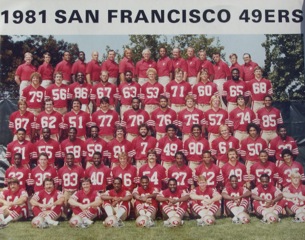
George Visger #74  4th row from bottom, 2nd from right  @ 1981

George Visger #74
4th row from bottom, 2nd from right
@ 1981

In football, there is a saying: “Short, Choppy Steps.” If you over-stride, it’s easy for someone to knock you on your butt. You want to keep your butt down, your head up, and take short, powerful 12-inch strides. Forget about breaking long touchdown runs. Get the little things done each day, and you will reach your goals. If a football team only got four yards each play – no more, no less – they would never lose a game. Think about it. They would get a first down every three plays, and they would score every time they had the ball. Life is no different. You need long-term goals for sure: score a touchdown, win the game, win the Super Bowl. But, you will NEVER get there if you don’t get your four yards a carry. We sell wrist bands on our website (www.thevisgergroup) that say “Short, Choppy Steps” and another one we give to coaches and players that says “Use your head, DON’T use your head.” Focus on small daily victories, and you’ll win the game.

20. What advice would you offer to other TBI survivors? Do you have any other comments that you would like to add?

Keep in mind everyone has a cross to bear. Carry your cross; don’t let it carry you. All of us TBI survivors have a lot to give to everyone. Turn your negative into a positive and touch people’s lives. Focus on your positives. Work hard, and put it in God’s hands. It will all work out.

That’s all anyone can do.


You can learn more about George Visger on his blog and these YouTube videos.

George Visger Blog – Life Before and After Football


George Visger talks about his life in these videos:

The Damage Done — George Visger’s Concussions

Battle Scars: Stagg High Alum, Former 49er Fights on Despite Brain Injuries


George Visger addresses specific topics in these very short videos:

Do Helmets Give Football Players a False Sense of Safety?Visger-275x300

Would This Retired NFL Player Do It Again?


Thank you, George, for taking part in this interview. I hope that your experience will offer some hope, comfort, and inspiration to my readers.

(Disclaimer: The views or opinions in this post are solely that of the interviewee.)

(Photo compliments of George.)

If you would like to be a part of this project, please go to TBI Survivor Interview Questionnaire for a copy of the questions and the release form.


Survivors SPEAK OUT! . . . . . . . . . Michael J. Kline

SPEAK OUT! – Michael J. Kline

by

Donna O’Donnell Figurski

Kline, MIchael unknown


1. What is your name? (last name optional)

Michael J. Kline

2. Where do you live? (city and/or state and/or country) Email (optional)

Franklin, Pennsylvania, USA         9lt308@gmail.com

3. When did you have your TBI? At what age?

November 18, 2011   09:35 am         Age 41

4. How did your TBI occur?

While on duty as a firefighter, I fell from a standing position to a concrete floor.

5. When did you (or someone) first realize you had a problem?

I knew immediately that there was a problem because of the sound when I hit the floor. The fall was not witnessed.

6. What kind of emergency treatment, if any, did you have (e.g., surgery,

tracheotomy, G-peg)?


I was intubated. I had induced paralysis and an induced coma due to combativeness and the need to fly me to a trauma center in Pittsburgh.

7. Were you in a coma? If so, how long?

My coma lasted 5 days.

8. Did you do rehab? What kind of rehab (i.e., In-patient or Out-patient and Occupational, Physical, Speech, Other)?
How long were you in rehab?

I had occupational therapy. I don’t recall the length. I think it was about 3 months.

9. What problems or disabilities, if any, resulted from your TBI
(e.g., balance, perception, personality, etc.)?

I have 100% loss of taste and smell, and a 40% hearing deficit in my left ear. I have positional vertigo. I am unable to control my verbal filter at times. I have personality changes – I am a rogue or “lone wolf.” I do not drop my guard, and I protect myself ferociously with my words.

10. How has your life changed? Is it better? Is it worse?

My life has changed in many ways. I enjoy the Earth much more because I do not take anything for granted like I used to. It is worse because I am very misunderstood. I look the same, but people don’t understand that the pre-injury Mike is not here anymore. I am judged by the words that I say and the way I protect myself from harm. I have a very hard time letting people close to me. I feel like everyone is out to see if I am truly different or making it up.

11. What do you miss the most from your pre-TBI life?

I miss having fear. The only thing that I am afraid of is people seeing me as disabled or a worse person because of my injury. People just cannot grasp the change that has happened and continues to happen and bothers me every morning when I wake up.

12. What do you enjoy most in your post-TBI life?

I love my new-found love for the outdoors. Everything on this Earth has a purpose, and I am able to see that now. I enjoy speaking to other survivors and caregivers. I enjoy educating others and making them aware of this relentless hidden injury.

13. What do you like least about your TBI?

I don’t like the burden that I have placed on my family and friends. I am no longer the father with an “S” on his chest, even though I try so hard. My focus and concentration are nowhere near what they used to be. I feel like I have aged 20 years because of this injury.

14. Has anything helped you to accept your TBI?

I do not accept this injury at all. I have spent my entire life helping people. It may sound selfish, but I did not deserve this. I have lived a very fulfilling life in my effort to help others. I have lost some of that ability, and it pisses me off.

15. Has your injury affected your home life and relationships and, if so, how?

I am no longer the “King of the Castle” who can solve anything quickly. I can see it in my family’s eyes. They love me unconditionally, but I can see how they view me a little differently. I want to be the bulletproof man in the house like I used to be.

16. Has your social life been altered or changed and, if so, how?

My social life has changed tremendously. I have lost many friends because they do not understand me like they used to. I have gained other friends in some of the support groups, and they are AWESOME people. I feel like I do not fit in the way I used to because I have been beaten up by this injury. I am a very positive thinker, but sometimes I have to put up a facade to prove it.

17. Who is your main caregiver? Do you understand what it takes to be a caregiver?

My wife and daughters take care of me and keep me in check when needed. I wish I knew what it is like to be in their shoes. I know I can be a bear at times, and I know that everything they do is best for me. I don’t always agree with it, but they do not give up, and I am thankful for that.

18. What are your future plans? What do you expect/hope to be doing ten years from now?

My plans are to retire from my job and become a speaker. I want to speak about my experiences to survivors, caregivers, and medical professionals. I will not give up, and I will reach that goal. Every cloud has a silver lining. Sometimes it is just very hard to see it.

19. Are you able to provide a helpful hint that may have taken you a long time to learn, but which you wished you had known earlier? If so, please state what it is to potentially help other TBI survivors with your specific kind of TBI.

I tried to rush my recovery way too much. At times, I refused to listen to anyone. That has held me back. If I would have just been patient and allowed myself time to recover without overloading my brain all of the time, I may be better off and less angry about my TBI.

20. What advice would you offer to other TBI survivors? Do you have any other comments that you would like to add?

Keep trying to improve yourself. It may be the smallest forward step ever, but it is a step. Then follow through and achieve that goal. Wake up every morning and tell yourself how you are going to be awesome that day. Do not be hard on yourself when you hit a roadblock – we all have them and always will.


Thank you, Michael, for taking part in this interview. I hope that your experience will offer some hope, comfort, and inspiration to my readers.

(Disclaimer: The views or opinions in this post are solely that of the interviewee.)

(Photo compliments of Michael.)

You can learn more about Michael on his blog, “My Fall to Life.”


If you would like to be a part of this project, please go to TBI Survivor Interview Questionnaire for a copy of the questions and the release form.


Survivors SPEAK OUT! Amy Rankin

SPEAK OUT! – Amy Rankin

by

Donna O’Donnell Figurski

Rankin, Amy Book

1. What is your name? (last name optional)

Amy Rankin

2. Where do you live? (city and/or state and/or country) Email (optional)

Auburn, New York, USA

3. When did you have your TBI? At what age?

October 30, 2004           Age 23

4. How did your TBI occur?

While walking home, I was hit by a drunk driver in a pickup.

5. When did you (or someone) first realize you had a problem?

The driver of a passing car saw the truck flipping and called 9-1-1. They found my roommate dead a ways from myself and the truck.

6. What kind of emergency treatment, if any, did you have (e.g., surgery, tracheotomy, G-peg)?

Wonderful doctors removed half my skull to relieve swelling. I had a tracheotomy and a G-tube (gastrostomy tube).

7. Were you in a coma? If so, how long?

Yes, 33 days

8. Did you do rehab? What kind of rehab (i.e., In-patient or Out-patient and Occupational, Physical, Speech, Other)?
 How long were you in rehab?

I did rehab in Baltimore (but it wasn’t great) at Kernan Hospital. After they put my skull back together, I went to St. Camillus, where I did wonderful speech, physical, and occupational therapies both as an In-patient and an Out-patient. I did other therapies after my discharge from St. Camillus as an Out-patient. I continue to work with a language pathologist.

9. What problems or disabilities, if any, resulted from your TBI 
(e.g., balance, perception, personality, etc.)?

I’ve worked very hard to overcome many of my disabilities. I’ve run a couple of 5Ks and wrote a book about never giving up – Nobody Thought I Could Do It, But I Showed Them, and So Can You! (Amazon.com). My vision continues to be trouble. I cannot recognize people. It gets embarrassing.

10. How has your life changed? Is it better? Is it worse?

Better – My faith in God has grown. I’ve met and worked with absolutely wonderful people.

Worse – I don’t like the loss of independence, the embarrassing moments, and not being with my friends as often as I’d like.

11. What do you miss the most from your pre-TBI life?

I greatly miss driving and being with friends.

12. What do you enjoy most in your post-TBI life?

I love to volunteer and to help other TBI victims or any victim. I wrote my book to help others. I met my great boyfriend, who is also a TBI survivor.

13. What do you like least about your TBI?

I don’t like being unable to drive and see friends. I’m sad that I can no longer teach Special Ed. I miss teaching very much, but I believe my book can do some teaching for me.

14. Has anything helped you to accept your TBI?

I’ve been helped by God and by the positive attitudes and support of my family and all my doctors and therapists.

15. Has your injury affected your home life and relationships and, if so, how?

We moved to a beautiful new house. I met my wonderful boyfriend. I don’t communicate with my girlfriends from college as much as I used to.

16. Has your social life been altered or changed and, if so, how?

My boyfriend also survived a TBI. We don’t see each other as much as we’d like to. When we do, it’s magical.

17. Who is your main caregiver? Do you understand what it takes to be a caregiver?

My father is my main caregiver. I dedicated my book to him. I know both my parents have given up a lot and changed dramatically. A good caregiver is caring and has love and respect for you.

18. What are your future plans? What do you expect/hope to be doing ten years from now?

I’m hoping to go back to school to become a recreational therapist and to have my book help even more people.

19. What advice would you offer to other TBI survivors

Have a positive attitude.

Be aware of the love of other people.

Do what you can.

Find something to smile about daily.

20. Do you have any other comments that you would like to add?

A TBI changes your life forever, but don’t feel disabled. Work out of it! Believe you’re a survivor!


Thank you, Amy, for taking part in this interview. I hope that your experience will offer some hope, comfort, and inspiration to my readers.

(Disclaimer: The views or opinions in this post are solely that of the interviewee.)

(Photo compliments of Amy.)


If you would like to be a part of this project, please go to TBI Survivor Interview Questionnaire for a copy of the questions and the release form.
 

Survivors SPEAK OUT! . . . . . . . . . Drew Carter

SPEAK OUT! – Drew Carter

by

Donna O’Donnell Figurski

Carter, Drew Rehab


1. What is your name? (last name optional)

Drew Carter

2. Where do you live? (city and/or state and/or country) Email (optional)

Asheville, North Carolina, USA

3. When did you have your TBI? At what age?

My TBI happened 13 years ago. I was 20 or about 21.

4. How did your TBI occur?

I was in the second semester of my first year at Western Carolina University. I was attending a party and fell off a retaining wall. I hit my head on the concrete.

5. When did you (or someone) first realize you had a problem?

I was diagnosed with ADHD (attention deficit hyperactive disorder) and a learning disability before my accident. After my TBI, they got much worse. My accident put me in a coma for five weeks. I slowly woke up from the coma, and my injuries were obvious.

6. What kind of emergency treatment, if any, did you have (e.g., surgery, tracheotomy, G-peg)?

I had a tracheotomy and a belly tube for food. When I came out of my coma at Mission Hospital, they sent me to Shepherd Center in Atlanta and then to Thomas Rehabilitation Center.  

7. Were you in a coma? If so, how long?

I was in a coma for five weeks at Mission Hospital in Asheville.

8. Did you do rehab? What kind of rehab (i.e., In-patient or Out-patient and Occupational, Physical, Speech, Other)?
How long were you in rehab?

I don’t do rehab anymore. I do exercise regularly, and I practice speaking.

9. What problems or disabilities, if any, resulted from your TBI (e.g., balance, perception, personality, etc.)?


At first, I had a lot of problems. I had to learn to swallow. My physical ability came back first, and then my mental ability returned. I’m about at a level people might say is normal. I believe that, as TBI survivors, we can continue to grow and pass what we think our limits are. It’s the TRUTH.

10. How has your life changed? Is it better? Is it worse?

For me, I would say my life is far better. Going through the ordeal made me a stronger person. After the accident, I was forced to grow up faster.

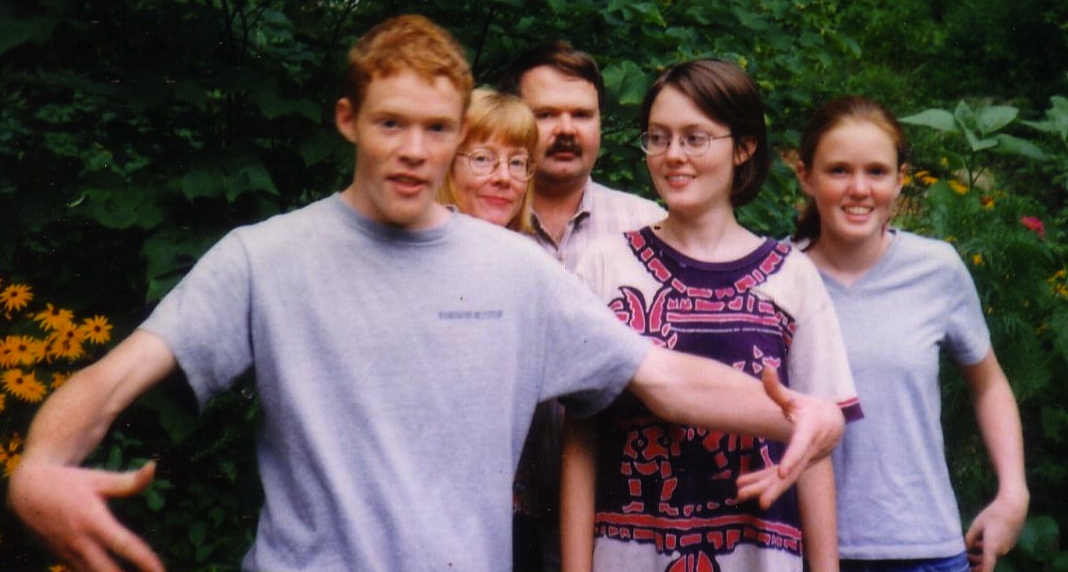
Drew Carter - before TBI with his family

Drew Carter – before TBI with his family

11. What do you miss the most from your pre-TBI life?

I miss my young, carefree life, but with more responsibility comes more freedom.

12. What do you enjoy most in your post-TBI life?

I like the idea that I might be able to help and support other survivors.

13. What do you like least about your TBI?

They call me bipolar now.

14. Has anything helped you to accept your TBI?

I was helped by my faith as a Christian.

15. Has your injury affected your home life and relationships and, if so, how?

I became closer with my mother.

16. Has your social life been altered or changed and, if so, how?

I lost lots of friends because my personality changed, and I had to relearn almost all my life-skills.

17. Who is your main caregiver? Do you understand what it takes to be a caregiver?

My main caregiver is my mother. I know that being a caregiver can be hard for a parent or loved one. I have seen lots of caregivers who believe that a survivor will not or cannot progress anymore. Sometimes the TBI recovery seems impossible to caregivers because they are watching the situation from the outside. This can affect the TBI survivor. I imagine it can be very hard for the caregiver. My recovery has caused a lot of stress for my mother.

18. What are your future plans? What do you expect/hope to be doing ten years from now?

I would like to be a successful artist. I hope to produce my own ceramics and clothing. I also want to help other TBI survivors.

19. Are you able to provide a helpful hint that may have taken you a long time to learn, but which you wished you had known earlier? If so, please state what it is to potentially help other TBI survivors with your specific kind of TBI.

Always set your goals beyond what you think is possible. Don’t just accept other people’s opinion of how much you can recover.

20. What advice would you offer to other TBI survivors? Do you have any other comments that you would like to add?

Drew Carter - after TBI

Drew Carter – after TBI

Stay strong and embrace your life.


Thank you, Drew, for taking part in this interview. I hope that your experience will offer some hope, comfort, and inspiration to my readers.


(Disclaimer: The views or opinions in this post are solely that of the interviewee.)

If you would like to be a part of this project, please go to TBI Survivor Interview Questionnaire for a copy of the questions and the release form.

(Photos compliments of Drew.)

Survivors SPEAK OUT! . . . . . . . . . Randy Davis

Survivors SPEAK OUT! – Randy Davis

by

Donna O’Donnell Figurski

Davis, Randy


1. What is your name? (last name optional)

Randy

2. Where do you live? (city and/or state and/or country) Email (optional)

Longmont, CO, USA         bikn4u@hotmail.com

3. When did you have your TBI? At what age?

November 3, 1984         age 16

4. How did your TBI occur?

I was in a target-shooting accident. I was shot in the head.

5. When did you (or someone) first realize you had a problem?

I realized I had a problem the moment the bullet impacted my head.

6. What kind of emergency treatment, if any, did you have (e.g., surgery,

tracheotomy, G-peg)?

I had emergency brain surgery to remove the bullet that penetrated into my brain and an emergency right temporal lobectomy.

7. Were you in a coma? If so, how long?

No

8. Did you do rehab? What kind of rehab (i.e., In-patient or Out-patient and Occupational, Physical, Speech, Other)?
How long were you in rehab?

I didn’t have formal therapy to learn to walk and talk again, but I had psychological and neuropsych/speech therapy on and off over a period of several years.

9. What problems or disabilities, if any, resulted from your TBI (e.g., balance, perception, personality, etc.)?

I dealt with massive PTSD (post-traumatic stress disorder) and right temporal mood-swing seizures, which were more mental than physical.

10. How has your life changed? Is it better? Is it worse?

My life has been a progression from post-TBI teenage-hood into adulthood. It took many years of trial and error to make a living and to get my TBI in order so I could move forward in life. I was eventually able to heal and to make a career in Law Enforcement and to have an 8-year career in the US Army Reserves.

11. What do you miss the most from your pre-TBI life?

I miss the innocence and vitality for living without worrying that I’d be injured again.

12. What do you enjoy most in your post-TBI life?

I’ve discovered how resilient I am to adversity and challenge.

13. What do you like least about your TBI?

I have terrible tinnitus and head pains.

14. Has anything helped you to accept your TBI?

Time

15. Has your injury affected your home life and relationships and, if so, how?

It’s been hard. I’ve let my guard down and been through three horrible marriages.

16. Has your social life been altered or changed and, if so, how?

I’m more cautious and tend not to go out and “party.” I don’t like crowds anymore.

17. Who is your main caregiver? Do you understand what it takes to be a caregiver?

N/A

18. What are your future plans? What do you expect/hope to be doing ten years from now?

I want to get into public speaking about TBI and triumphing over tragedy. I want to help our veterans from Iraq and Afghanistan deal with brain injuries. I’m also pursuing becoming an NRA Firearms Instructor, in hopes of using my story of surviving a near fatal shooting to spread safety.

19. Are you able to provide a helpful hint that may have taken you a long time to learn, but which you wished you had known earlier? If so, please state what it is to potentially help other TBI survivors with your specific kind of TBI.

It takes time to heal. Healing won’t happen overnight or even in a few weeks. It’s a lifelong journey.Davis, Randy Army Jeep

20. What advice would you offer to other TBI survivors? Do you have any other comments that you would like to add?

Never accept defeat; never quit. Things can be hard. People usually don’t understand what you’re dealing with, but if you survived the injury, you’re a survivor – a fighter.


Thank you, Randy, for taking part in this interview. I hope that your experience will offer some hope, comfort, and inspiration to my readers.

(Disclaimer: The views or opinions in this post are solely that of the interviewee.)

(Photos compliments of Randy.)

If you would like to be a part of the SPEAK OUT! project, please go to TBI Survivor Interview Questionnaire for a copy of the questions and the release form.
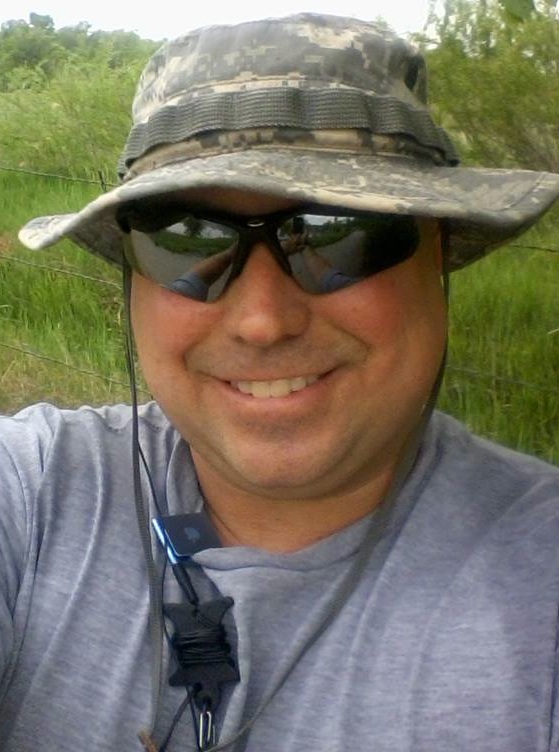
Survivors SPEAK OUT! . . . . . . . . . . Ruby Taylor

Survivors SPEAK OUT! – Ruby Taylor

by

Donna O’Donnell Figurski

Taylor, Ruby Survivor 061814


1. What is your name? (last name optional)

Ruby

2. Where do you live? (city and/or state and/or country) Email (optional)

Lancaster, Pennsylvania, but I was born and raised in The Bronx, New York. Go GIANTS! (Yes, I am a football fan.)

3. When did you have your TBI?

I had my TBI in December 2012.

4. How did your TBI occur?

I was in car accident. (My car was totaled, and the airbags went off.)

5. When did you (or someone) first realize you had a problem?

When I returned to work, my supervisor was worried. She said I was not acting like myself, and she directed me to see my doctor. I went to my doctor, and I have not been able to return to work since.

6. What kind of emergency treatment, if any, did you have?
(e.g., surgery, tracheotomy, G-peg)

I went to the Emergency Room and was released the same day.

7. Were you in a coma? If so, how long?

I did not have a coma, to my memory, but I do not remember the impact.

8. Did you do rehab? What kind of rehab (i.e., In-patient or Out-patient and Occupational, Physical, Speech, Other)?
How long were you in rehab?

I have Out-patient rehab, and I still see a neuropsychologist weekly.

9. What problems or disabilities, if any, resulted from your TBI
(e.g., balance, perception, personality, etc.)?

My personality changed. My voice changed. I have a very short fuse. I am unable to deal with excessive noise and bright lights. I become confused easily. I have balance problems, attention and impulsivity issues, fatigue, and an inability to tolerate crowds.

Also, my TBI made me curse – every other word was a curse word. There are other things that I can’t think of now. The funny thing is that my stuttering stopped.

10. How has your life changed? Is it better? Is it worse?

I am no longer able to drive long distances. I can’t work as a school social worker.

My family life is suffering because my TBI overwhelms me. I can’t spend time with my family, like I once did. My life is not worse or better. It’s just different, and I am learning to live with the differences.

11. What do you miss the most from your pre-TBI life?

I miss jumping in my car and going to visit my family or taking a trip for the weekend. I also miss having my dog live with me. My fatigue and short fuse made it impossible for me to care for my dog, so my dog is now living with my parents in another state.

12. What do you enjoy most in your post-TBI life?

It is giving me an opportunity to slow down, to think about me, and to consider how great and awesome God is.

13. What do you like least about your TBI?

It stopped my career, and I can’t drive wherever I want to anymore.

14. Has anything helped you to accept your TBI?

Yes. Therapy, medicine, prayer, faith, and God through Christ Jesus

15. Has your injury affected your home life and relationships and, if so, how?

Yes. Sometimes my family becomes upset because I go off, but they are trying to understand and work with me. No matter how tired I am, my nieces and nephew still think I am the same Aunt Ruby, but it’s hard to see their disappointment when I can’t do what they want me to do.

16. Has your social life been altered or changed and, if so, how?

Dating is on hold for now. I realized who my true friends really are, and those relationships became stronger. Other relationships ended.

17. Who is your main caregiver? Do you understand what it takes to be a caregiver?

My mother would make my meals, freeze them for me, and bring them to me. My parents also took my dog off my hands. My caregivers were myself, my neighbors, my friends, and God. It takes a huge dose of love, patience, and compassion to care for a TBI survivor.

18. What are your future plans? What do you expect/hope to be doing ten years from now?

I plan to continue healing and to make films. I created Compassion Pictures (http://CompassionPictures.net) to help change the way brain-injury survivors are viewed and treated, one film at a time. Ten years from now, I hope to be an award-winning filmmaker and a brain-injury advocate.

19. Are you able to provide a helpful hint that may have taken you a long time to learn, but which you wished you had known earlier? If so, please state what it is to potentially help other TBI survivors with your specific kind of TBI.

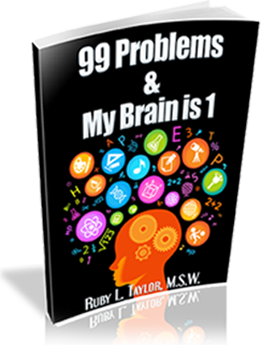
bookcover

Get Ruby’s free book here. http://compassionpictures.net/ourstory/

Grieve the old Ruby, and stop fighting to get her to return. It was very stressful not being who I used to be prior to my TBI and who I strived to go back to. If I could do things differently, I would have grieved earlier and released myself from being someone I was no more, and I would embrace who I am.

20. What advice would you offer to other TBI survivors? Do you have any other comments that you would like to add?

Ask for help. Keep asking until you receive the help you need.

Don’t be afraid of “NO.” A “NO” means you are one step closer to a “YES.”

Life gets better. It takes a very long time, but it will get better. You will be able to smile, laugh, and enjoy the simple things in life. Just keep living.


Thank you, Ruby, for taking part in this interview. I hope that your experience will offer some hope, comfort, and inspiration to my readers.

(Disclaimer: The views or opinions in this post are solely that of the interviewee.)

(Photos compliments of Ruby.)

If you would like to be a part of the SPEAK OUT! project, please go to TBI Survivor Interview Questionnaire for a copy of the questions and the release form.


Survivors SPEAK OUT! . . . . . . . . . . Stuart ‘lucky’ White


Survivors SPEAK OUT! – Stuart ‘lucky’ White

by

Donna O’Donnell Figurski


White, Stuart "lucky"

Stuart with friend, Trevor.

1. What is your name? (last name optional)

Stuart White

2. Where do you live? (city and/or state and/or country) Email (optional)

England

3. When did you have your TBI? At what age?

August 9, 1996

4. How did your TBI occur?

I was riding my bike, and I was hit by a car.

5. When did you (or someone) first realize you had a problem?

My problem was apparent as soon as the accident happened. I went straight into a coma. I was fortunate enough that a First Aider wasn’t far from me.

6. What kind of emergency treatment, if any, did you have?
(e.g., surgery,

tracheotomy, G-peg)

I was in Emergency for nine days. I’m not sure what they did to me. Sorry.

7. Were you in a coma? If so, how long?

Yes. 9 days.

8. Did you do rehab? What kind of rehab (i.e., In-patient or Out-patient and Occupational, Physical, Speech, Other)?
How long were you in rehab?

I was at the hospital for about a month and a half. Then I had a form of rehab at home, due to having a home tutor and the fact that I wasn’t able to do anything on my own. It took years for me to be back to normal.

9. What problems or disabilities, if any, resulted from your TBI?
(e.g., balance, perception, personality, etc.)

Balance, personality, couldn’t read or write, speech problems, memory loss

10. How has your life changed? Is it better? Is it worse?

My life was worse at first, but now I can finally say that, after accepting the past, I can look into the future with confidence.

11. What do you miss the most from your pre-TBI life?

I miss my teenage childhood as I had to regain a lot of things I had lost.

12. What do you enjoy most in your post-TBI life?

I realise how lucky I have been, and I enjoy that I am now able to give something back to other TBI survivors.

13. What do you like least about your TBI?

I dislike my fatigue. (It sucks.)

14. Has anything helped you to accept your TBI?

Mainly my family

15. Has your injury affected your home life and relationships and, if so, how?

My relationships have been affected a bit. It is hard to explain TBI to someone who doesn’t understand it and who thinks it has passed, so I should just get over it.

16. Has your social life been altered or changed and, if so, how?

Yes, mainly planning things. I cannot plan many things due to being sleepy a lot.

17. Who is your main caregiver? Do you understand what it takes to be a caregiver?

I would say my parents, as they helped me a lot.

18. What are your future plans? What do you expect/hope to be doing ten years from now?

I hope to be helping other survivors.

19. Are you able to provide a helpful hint that may have taken you a long time to learn, but which you wished you had known earlier? If so, please state what it is to potentially help other TBI survivors with your specific kind of TBI.

Yes. Realise that you cannot give up on yourself. TBI is very hard work, but NEVER give up. You never know what is going to happen in the future.

20. What advice would you offer to other TBI survivors? Do you have any other comments that you would like to add?

It is hard work, but accept the past. You can still look back at it, and then in the future you will realise how White, Stuart "lucky" Younger photofar you have come. Be proud of yourself no matter what others say, as you are a survivor who has fought against the odds!


Thank you, Stuart, for taking part in this interview. I hope that your experience will offer some hope, comfort, and inspiration to my readers.

(Disclaimer: The views or opinions in this post are solely that of the interviewee.)

(Photos compliments of Stuart.)

If you would like to be a part of the SPEAK OUT! project, please go to TBI Survivor Interview Questionnaire for a copy of the questions and the release form.

Survivors SPEAK OUT! . . . . . . . . Danielle (Houston) Karst

                                        Survivors SPEAK OUT! – Danielle (Houston) Karst

                                    by

                                     Donna O’Donnell Figurski

Danielle after her Traumatic Brain Injury

Danielle after her Traumatic Brain Injury


1. What is your name? (last name optional)

Danielle (Houston) Karst

2. Where do you live? (city and/or state and/or country) Email (optional)

Burke, VA, USA         daniellekarst920@gmail.com

3. When did you have your TBI? At what age?

September 1997          16 years old

4. How did your TBI occur?

I was in a car accident.

5. When did you (or someone) first realize you had a problem?

Upon impact (I was unconscious and taken to the hospital.)

6. What kind of emergency treatment, if any, did you have (e.g., surgery,

tracheotomy, G-peg)?


G-tube (gastrostomy tube – a feeding tube that is inserted through the abdomen into the stomach)

7. Were you in a coma? If so, how long?

Yes, 2 ½ months

8. Did you do rehab? What kind of rehab (i.e., In-patient or Out-patient and Occupational, Physical, Speech, Other)?
How long were you in rehab?

Yes. I had In-patient therapy (physical, speech, and occupational) for 5 months at the University of Virginia Children’s Hospital in Charlottesville, Virginia; In-patient therapy, but sleeping at home, by Mount Vernon Hospital in Northern Virginia; and Out-patient physical therapy at Mount Vernon Hospital.

9. What problems or disabilities, if any, resulted from your TBI (e.g., balance, perception, personality, etc.)?


Balance, a little perception, a little vision, handwriting, slow speech and typing, easily fatigued, seizures (though controlled by medication and calming techniques), anxiety

10. How has your life changed? Is it better? Is it worse?

It drastically changed. I have a fabulous life now – a husband, a dog, a townhouse, and a wonderful part-time job.

11. What do you miss the most from your pre-TBI life?

I miss my athleticism and the freedom to have an independent social life. (I don’t drive, so I can’t really jump up and meet people anywhere.)

12. What do you enjoy most in your post-TBI life?

Happiness, my life, my work at a nursing home (helping with activities on the Special Care Unit)

13. What do you like least about your TBI?

I try not to think about what could have been.

14. Has anything helped you to accept your TBI?

I have a supportive family and friends. I am helped by thinking, “Yeah, this sucks, but what can I do with it to move past it and improve my quality of life?”

15. Has your injury affected your home life and relationships and, if so, how?

Yes, my old friends couldn’t see me getting better and didn’t want to wait around for me.

16. Has your social life been altered or changed and, if so, how?

Yes. Pre accident, I was very social. Post accident, I hung out with my parents on weekends.

17. Who is your main caregiver? Do you understand what it takes to be a caregiver?

My parents were my main caregivers for 10 years – until my marriage. Now my husband is my main caregiver, with my parents consulting or giving their opinions when asked.

18. What are your future plans? What do you expect/hope to be doing ten years from now?

I hope to continue the work I am doing – helping in the nursing home and interacting with the residents, providing joy, and helping all those in need of care. Meanwhile, I will continue to advocate for people with TBIs, while writing my story and helpful ways to handle TBI.

19. Are you able to provide a helpful hint that may have taken you a long time to learn, but which you wished you had known earlier? If so, please state what it is to potentially help other TBI survivors with your specific kind of TBI.

Yeah, this sucks. Try to accept what happened. Move forward and better your life. LISTEN, and don’t shut out others’ advice.

20. What advice would you offer to other TBI survivors? Do you have any other comments that you would like to add?

Never give up or get discouraged. God does have a purpose for doing this. Turn your crappy situation into a positive one. Listen to your parents and elders – they are only trying to help.

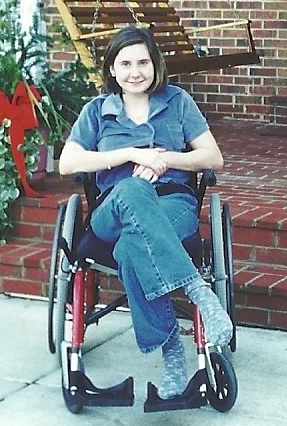
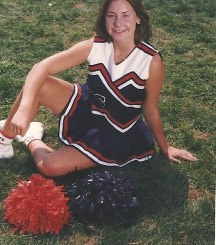
Danielle before TBI – on the Cheering Squad


Thank you, Danielle, for taking part in this interview. I hope that your experience will offer some hope, comfort, and inspiration to my readers.

(Disclaimer: The views or opinions in this post are solely that of the interviewee.)

(Photos compliments of Danielle.)

You can read more about Danielle on her blog at Inside Danielle’s Mind.

If you would like to be a part of the SPEAK OUT! project, please go to TBI Survivor Interview Questionnaire for a copy of the questions and the release form.
Survivors SPEAK OUT! . . . . . . . . . Cheri R. Hicks

Hicks, Cheri Aftrer TBI 050914

Survivors SPEAK OUT! – Cheri R. Hicks

by

Donna O’Donnell Figurski


1. What is your name? (last name optional)

Cheri H.

2. Where do you live? (city and/or state and/or country) Email (optional)

Jackson, MS, USA

3. When did you have your TBI? At what age?

February 28, 2014     Age 37

4. How did your TBI occur?

Hemorrhagic stroke as a result of elevated blood pressure from postpartum eclampsia (10 days postpartum)

5. When did you (or someone) first realize you had a problem?

While at home, I felt what seemed like a bomb was going off in my head, and my neck became very stiff. The pain radiated down my spine. I was disoriented and unable to put words together. While being treated for suspected eclampsia at the hospital (I had recently delivered our second child), my nurse noticed one-sided weakness when she asked me to smile.

6. What kind of emergency treatment, if any, did you have?
(e.g., surgery,

tracheotomy, G-peg)

There were two ambulance rides. (The first facility thought it was an aneurysm, and they were not equipped to repair it.) I had multiple CT scans, a decompressive craniectomy, post-op ventilation, and nasogastric feedings.

7. Were you in a coma? If so, how long?

No

8. Did you do rehab? What kind of rehab (i.e., In-patient or Out-patient and Occupational, Physical, Speech, Other)?
How long were you in rehab?

I did 30 days of In-patient therapy [physical (PT), occupational (OT), and speech (ST)]. I am currently doing Out-patient rehab three times a week (3 hours a session for PT, OT, and ST).

9. What problems or disabilities, if any, resulted from your TBI?
(e.g., balance, perception, personality, etc.)

Left neglect, balance issues, blurred vision

10. How has your life changed? Is it better? Is it worse?

I can’t do what I want when I want. But, I guess my life is better. I don’t really know why though. I guess it’s better because I realize how short and precious life is. Also, through this whole process, I’ve made some really good friends and met some really great people whom I would have never met otherwise.

11. What do you miss the most from your pre-TBI life?

I miss picking my son up from school, being independent, and being able to drive.

12. What do you enjoy most in your post-TBI life?

I love challenging myself and seeing how strong I really am.

13. What do you like least about your TBI?

There are so many things. I especially dislike having to rely on others to do things for me and waiting for the things I once took for granted to come back.

14. Has anything helped you to accept your TBI?

I don’t know. My TBI does not define who I am. I will become the whole person I was before and settle for nothing less.

15. Has your injury affected your home life and relationships and, if so, how?

Yes. I can’t be the stay-at-home mom I once was and care for my own children.

16. Has your social life been altered or changed and, if so, how?

Yes, but I also had our second child (two under 2) ten days before my TBI.

17. Who is your main caregiver? Do you understand what it takes to be a caregiver?

My husband is my main caregiver. I only know physically what it takes to be a caregiver.

18. What are your future plans? What do you expect/hope to be doing ten years from now?

I intend to have a full recovery and become the same person I was before my TBI. I hope to travel to interesting places with my family.

19. What advice would you offer to other TBI survivors

Find a way to keep a positive attitude, and give 100% of yourself to your therapy. Also, find someone to talk with about how you’re feeling, and never give up!

20. Do you have any other comments that you would like to add?

There will be bad days, but each new day will also bring new advances and victories. Time is both a healer Hicks, Cheri Before Tbi 050914and your enemy. You need it to heal, but you can’t wait for the long days to pass until you are better. You will be a stronger person because of your experience, and nothing will ever scare you again.


Thank you, Cheri, for taking part in this interview. I hope that your experience will offer some hope, comfort, and inspiration to my readers.

(Disclaimer: The views or opinions in this post are solely that of the interviewee.)

(Photos compliments of Cheri.)

If you would like to be a part of the SPEAK OUT! project, please go to TBI Survivor Interview Questionnaire for a copy of the questions and the release form.

Survivors SPEAK OUT! Tabbie

 SPEAK OUT! – Tabbie

by

Donna O’Donnell Figurski

Tabbie Survivor MRI Photo 050215

Tabbie on her way into the MRI


1. What is your name? (last name optional)

Tabitha! But my friends and family call me Tabbie!

2. Where do you live? (city and/or state and/or country) Email (optional)

In the U.S!

3. When did you have your TBI? At what age?

I got my TBI back in September 2012, and I was 14 years old!

4. How did your TBI occur?

My TBI occurred during the warm-ups at an away volleyball game. A girl from the opposing team purposely served a ball at my face to get me out of the game.

5. When did you (or someone) first realize you had a problem?

My mom realized the next day, but she couldn’t take me to the doctor because it was a Saturday.

6. What kind of emergency treatment, if any, did you have?
(e.g., surgery,

tracheotomy, G-peg)

I didn’t get any. The first doctor I saw said it wouldn’t be possible for me to get a concussion from a volleyball.

7. Were you in a coma? If so, how long?

I don’t think so, but I don’t remember anything after I got hit until the next day.

8. Did you do rehab? What kind of rehab (i.e., In-patient or Out-patient and Occupational, Physical, Speech, Other)?
How long were you in rehab?

I saw a psychologist, but that’s it for any type of rehab!

9. What problems or disabilities, if any, resulted from your TBI?
(e.g., balance, perception, personality, etc.)

Balance, dizziness, lightheadedness, constant severe headache/migraines, poor concentration and focus, noise/light sensitivity, tiredness, memory

10. How has your life changed? Is it better? Is it worse?

It’s been a bit of both! It’s been mostly better right now, because I can do a bit more than I could since I got hit.

11. What do you miss the most from your pre-TBI life?

My way of exercising and learning/education

12. What do you enjoy most in your post-TBI life?

The people I’ve gotten to meet, the people I’ve gotten to help, and the fact they’ve allowed me into their life/journey!

13. What do you like least about your TBI?

The amount of extreme pain I’m always in

14. Has anything helped you to accept your TBI?

Yes! Prayer, acceptance of having a TBI, and forgiving the person who had caused all of this for me!

15. Has your injury affected your home life and relationships and, if so, how?

Yes. It’s hard to relay how I’m feeling to family, and I’m constantly tired.

16. Has your social life been altered or changed and, if so, how?

It has in weird ways! My friends became distant when I was homebound, but I’ve also gained tons of support through social media.

17. Who is your main caregiver?

My parents

Do you understand what it takes to be a caregiver?

I think I do for the most part, but all I can say is “God bless them” because I know it’s hard on then too.

18. What are your future plans? What do you expect/hope to be doing ten years from now?

I just want to be able to reach out and inspire as many people as I can in awareness and happiness! I’m not sure what I’ll be doing in ten years honestly, but I know it’ll be something great!

19. What advice would you offer to other TBI survivors

Not to lose hope and to know that you’re not alone in this. It’s a bumpy journey, but what you’ll get from it and the people you’ll meet are worth it!

Tabbie

Tabbie – doing what she loves – playing volleyball

20. Do you have any other comments that you would like to add?

If you ever need someone to talk to, you can follow my twitter account: @brainyblondegal (https://twitter.com/brainyblondegal). I’m always here to help!


Thank you, Tabbie, for taking part in this interview. I hope that your experience will offer some hope, comfort, and inspiration to my readers.

(Disclaimer: The views or opinions in this post are solely that of the interviewee.)

(Photo compliments of Tabbie.)

If you would like to be a part of the SPEAK OUT! project, please go to TBI Survivor Interview Questionnaire for a copy of the questions and the release form.
diemodi jewelry

uniquely hand-crafted jewelry by donna

Welcome to Harmony Kent Online

The home of all things books

Pete Springer

Passionate Teacher and Future Children's Author

HOPE TBI

Helping Other People Excel - To Be Independent

For the Love of Books, Old and New

Katie Fischer, Writer and Reader of Stories

Charlie Bown

Children's Author

Jessica Hinrichs

“We write to taste life twice, in the moment and in retrospect.” ― Anais Nin

VIVIAN KIRKFIELD - Writer for Children

Picture Books Help Kids Soar

Mindy’s Writing Wonderland

For authors, parents, teachers & everyone who loves children’s books.

Kaitlyn Leann Sanchez

Literary Agent

Surviving Traumatic Brain Injury

TBI - Survivors, Caregivers, Family, and Friends

The Care Factor

Loving someone with a Traumatic Brain Injury

Brain Injury Support Group of Duluth-Extension

Brain Injury Information and SUPPORT

Brain Aneurysm Global Insight

Brain Aneurysm, cerebral hemorrhaging, hemorrhage stroke