Survivors SPEAK OUT! Rob Baugh
Survivors SPEAK OUT! Rob Baugh
presented by
Donna O’Donnell Figurski

1. What is your name? (last name optional)
Rob Baugh
2. Where do you live? (city and/or state and/or country) Email (optional)
Home: Clarksville, Indiana, USA Email: Rob.Baugh@outlook.com
3. On what date did you have your brain injury? At what age?
Date: July 21, 2020 Age: 45
4. How did your brain injury occur?
I knocked myself out opening a screen door. I suffered a 3-inch laceration to my skull, which required five stitches.

5. When did you (or someone) first realize you had a problem?
Immediately. The after-effects began right away, and we knew I needed medical treatment.
6. What kind of emergency treatment, if any, did you have?
I went to the Emergency Room of the hospital. They put five staples into my head and did a CAT scan (CT or CAT = computed tomography) and X-rays.
7. Were you in a coma? If so, how long?
No
8. Did you do rehab? What kind of rehab (i.e., inpatient or outpatient and occupational and/or physical and/or speech and/or other)? How long were you in rehab?
I did speech and cognitive (outpatient) therapies.
9. What problems or disabilities, if any, resulted from your brain injury (e.g., balance, perception, personality, etc.)?

I have personality changes. (I don’t pick up on sarcasm very well.) I have had a headache since the day I hit my head, and it never goes away. I also have anxiety, depression, memory issues, and stress.
10. How has your life changed? Is it better? Is it worse?
In some ways, my life is better, but it’s also worse. I have become more of a home-body. I don’t like loud noises and crowds. So being at home is my safe place. I still mourn my old self. But I have also made so many friends since my brain injury that it is kind of a blessing in that fact.
11. What do you miss the most from your pre-brain-injury life?
I used to sing and play piano at church, but I can’t do that anymore because of the stress of being in front of people.
12. What do you enjoy most in your post-brain-injury life?
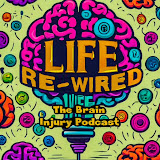
I enjoy doing the brain-injury podcast that I started to help spread awareness and give a platform to other survivors to use to tell their stories.
13. What do you like least about your brain injury?
I dislike my constant pain and my memory issues.
14. Has anything helped you to accept your brain injury?
I think being in a brain-injury support group and learning that I am not alone in this journey have helped me the most.
15. Has your injury affected your home life and relationships and, if so, how?
My brain injury has caused more stress on my wife. She misses the old me, and she does have to carry much more of the load than she should have to. She doesn’t complain about having to do more, but I know it has to be very stressful for her.
16. Has your social life been altered or changed and, if so, how?
Yes, it has. I don’t do a lot of things outside my home. I don’t visit people like I want to or get to do things that involve big crowds.
17. Who is your main caregiver? Do you understand what it takes to be a caregiver?
My wife and I do understand what it takes. I call all caregivers “unsung heroes.”
18. What are your plans? What do you expect/hope to be doing ten years from now?
I hope in ten years that I will have grown my platform so big that everyone who hears my name will think “brain injury” and will know what a brain injury is. I am a big advocate for survivors, and I want to educate as many people as I can.
19. Are you able to provide a helpful hint that may have taken you a long time to learn, but which you wished you had known earlier? If so, please state what it is to potentially help other survivors with your specific kind of brain injury.
What I wish I would have done from day one is to get myself into a support group. My having a support group has helped me so much. It took me almost three years to join one. I felt like I was too weak to be joining a support group, but being part of a support group is totally necessary for survivors – and caregivers as well.
20. What advice would you offer to other brain-injury survivors? Do you have any other comments that you would like to add?
Surround yourself with positive people. Understand that the people you felt like you could count on when life gets tough will more than likely disappoint you. Don’t give into that or feel bad for relationships lost. You cannot heal if you are swimming in a toxic negative environment.
*****
Get Your Copy Now!
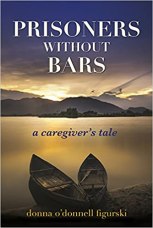
Read It! Listen to It! Review It!
Click Links under Book
AUDIO BOOK Listen to it Now!
Stay Safe and Healthy!
Clip Art compliments of Bing.)
(Photos compliments of contributor.)
As I say after each post:
Please leave a comment by clicking the blue words “Leave a Comment” below this post.
Feel free to follow my blog. Click on “Follow” on the upper right sidebar.
If you like my blog, share it intact with your friends. It’s easy! Click the “Share” buttons below


 Raising Awareness of Traumatic Brain Injury - one view at a time. Thanks for visiting my blog
 Surviving Traumatic Brain Injury
Recent Comments