TBI – Survivors, Caregivers, Family, and Friends

Posts tagged ‘TBI’

Caregivers SPEAK OUT! . . . . . . . . . Kristin Olliney

 SPEAK OUT! – Kristin Olliney

by

Donna O’Donnell Figurski

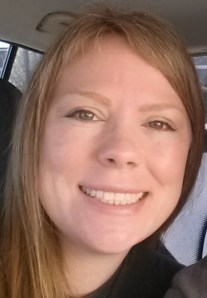
Kristin Olliney with her daughter, Isabella, (age 4 1/2) on the day Isabella woke up from her coma. Kristin says, “It was the happiest and best day of my life.”


1. What is your name? (last name optional)

Kristin Olliney

2. Where do you live? (city and/or state and/or country)     Email? (optional)

Just south of Boston, Massachusetts, USA

3. What caused your survivor’s TBI?

Sudden acute encephalitis of unknown etiology

4. On what date did you begin care for your TBI survivor? Are you the main caregiver?

Our journey began on November 25, 2010 (Thanksgiving night).

How old were you when you began care?

I was 31 years old, and Isabella was 4.5 years old

5. Were you caring for anyone else at that time (e.g., children, parents, etc.)?

No, I was a single parent to Isabella.

6. Were you employed at the time of your survivor’s TBI?

No, I was laid off about 18 months before Isabella got sick.

If so, were you able to continue working?

N/A

7. Did you have any help? If so, what kind and for how long?

I was a single parent from the day Isabella was born. I have always been her sole caregiver.

8. When did your support of the survivor begin (e.g., immediately – in hospital, when survivor returned home, etc.)?

Isabella was 4.5 years old at the time, so I was already supporting her.

9. Was your survivor in a coma?

Yes, Isabella was in a drug-induced coma and then her own coma. The total time was 6 days. On the 7th day, she woke up. That was the best day of my entire life.

If so, what did you do at that time?

I never left Isabella’s side. I spent the first 73 hours without sleep because, if she was going to die (which she was supposed to), I didn’t want to miss a single second. I eventually collapsed, and I was forced to sleep. After that, I lived off coffee, and I took sporadic naps.

10. Did your survivor have rehab? If so, what kind of rehab? (i.e., In-patient and/or Out-patient and Occupational, Physical, Speech, and/or Other) How long was the rehab? Where were you when this was happening?

Yes, Isabella went to In-patient rehab [occupational therapy (OT), physical therapy (PT), and speech therapy (ST)] for 15 days post brain injury. She was there for only 13 days, due to my insurance. I was with her the entire time. Isabella is currently still receiving Out-patient rehab for OT and ST. Her PT ended last summer. Isabella also did aquatics therapy for a few months.

11. What problems or disabilities of your TBI survivor required your care, if any?

Isabella requires 24/7 care due to her extensive medical needs. She has a cognitive disorder due to her brain injury. Isabella has debilitating hallucinations (not psychotic) and anxiety, which causes multiple panic attacks every single day. She has migraines and tics. Isabella has sensory issues and Obsessive-Compulsive Disorder (OCD). She has learning difficulties. Isabella has aggression due to her inability to control or regulate her mood, emotions, and behavior. Isabella has speech difficulties, especially in word retrieval and expressing herself. Isabella also needs help with daily living skills, such as using the bathroom, getting dressed, showering, using the stairs, teeth brushing, etc. Isabella also suffers from various types of seizures and many other things that require around-the-clock care.

12. How has your life changed since you became a caregiver?

I was already Isabella’s caregiver. Prior to her brain injury, she had some medical issues, including life-threatening allergies to food, an immune deficiency (and another more serious one diagnosed post brain injury), and a few other conditions. Once Isabella got sick though, everything changed because I was parenting and caring for an entirely different child. It was like completely starting over.

Is it better? Is it worse?

It is different. It is challenging. It is amazing. It is heartbreaking. I wouldn’t want to be anywhere else. I want to be the one caring for my child. She needs me more now than ever before.

13. What do you miss the most from pre-TBI life?

I miss the Isabella that I used to have, although I love the Isabella I have now more than I ever knew was possible. I miss our carefree, social, active life. Isabella is worth it though.

14. What do you enjoy most in post-TBI life?

I have learned the value of life and how in an instant it can all change. It is both a blessing and a curse to know how fragile life really is. I appreciate the small things that most can’t value unless they have come close to losing it all. I cherish each laugh, each silly joke, the smiles, hugs, and kisses, and hearing Isabella say “Mommy,” and I notice things like the sunset (or, in our case, the sunrise too), the way flowers smell, etc.

15. What do you like least about TBI?

It’s the one of the most rewarding, yet most heartbreaking, journeys that you can go on. I hate that it has robbed Isabella of the life she was meant to have. This journey is also extremely isolating. I chose to focus on the positive and the blessing that I have, which is Isabella’s still being here.

16. Has anything helped you to accept your survivor’s TBI?

I have always been a single parent, so I had no choice but to accept it from the start. I think that was a blessing. Writing my bi-monthly blog, “Mommy of a Miracle,” for the Brain Injury Association of Massachusetts has helped me give a voice to our journey. I also started a Facebook support group, “Parents of Children with Brain Injuries,” which has helped me know that I am not alone. I knew statistically speaking that I was not the only parent with a child who has a brain injury, and yet I couldn’t find anyone.  This group has been the most amazing support for me.

17. Has your survivor’s injury affected your home life and relationships and, if so, how?

Yes, how could it not? Brain injury changes not only the survivor but also the caregiver as well. Our home life is very structured and centered completely around what helps Isabella be successful. It has changed my relationships tremendously. In the face of a life-altering event, you learn quickly who is going to be there and who isn’t. I would rather have a few people whom I know I can count on than a whole lot of people who will just disappoint.

18. Has your social life been altered or changed and, if so, how?

Yes. Isabella and I had a very active social life. We were never home. Friends and family were always a huge part of our life. Now it is not possible, due to the extensive care that she requires and her instability. I no longer have the time to invest in one-sided friendships. We are not able to attend parties, get-togethers, events, and the like. Phone conversations are no longer possible. I only get to see a friend or a family member if he or she comes by at night when Isabella is asleep in bed.

19. What are your plans?

I live day-by-day. I take each day as it comes. Looking beyond that is too difficult.

What do you expect/hope to be doing ten years from now?

I hope that Isabella is doing better and stable. I hope that we are able to enjoy more things in life. Personally, I want to have a nonprofit organization to specifically help parents of children with brain injuries. I hope to be on the floor of congress advocating for change, for funding for research, and for additional resources for brain injury survivors and their caregivers.

20. What advice would you offer other TBI survivor caregivers?

Always follow your gut-instinct. You are your survivor’s biggest advocate. Stand your ground. Your survivor is not ever going to be who he or she once was. The faster you are able to come to that realization, the better off you will be. This is a journey, not a race. Take life one day at a time.  You are not alone.

Do you have any other comments that you would like to add?

Kristin Olliney with her lovely daughter, Isabella – 8 years old. 2014

Thank you for this amazing opportunity to tell people a little bit more about our journey.


Check out my blog: In An Instant Your Life Can Change Forever: Brain Injury Association of Massachusetts Blog – Mommy of a Miracle

Check out this video for Brain Injury Awareness.


Thank you, Kristin, for taking part in this interview. I hope that your experience will offer some hope, comfort, and inspiration to my readers.

If you would like to be a part of this project, please go to TBI Caregiver Interview Questionnaire for a copy of the questions and the release form.

(Photo compliments of Kristin.)

Disclaimer: The views or opinions in this post are solely that of the interviewee.

Survivors SPEAK OUT! . . . . . . . . . Cheri R. Hicks

Hicks, Cheri Aftrer TBI 050914

Survivors SPEAK OUT! – Cheri R. Hicks

by

Donna O’Donnell Figurski


1. What is your name? (last name optional)

Cheri H.

2. Where do you live? (city and/or state and/or country) Email (optional)

Jackson, MS, USA

3. When did you have your TBI? At what age?

February 28, 2014     Age 37

4. How did your TBI occur?

Hemorrhagic stroke as a result of elevated blood pressure from postpartum eclampsia (10 days postpartum)

5. When did you (or someone) first realize you had a problem?

While at home, I felt what seemed like a bomb was going off in my head, and my neck became very stiff. The pain radiated down my spine. I was disoriented and unable to put words together. While being treated for suspected eclampsia at the hospital (I had recently delivered our second child), my nurse noticed one-sided weakness when she asked me to smile.

6. What kind of emergency treatment, if any, did you have?
(e.g., surgery,

tracheotomy, G-peg)

There were two ambulance rides. (The first facility thought it was an aneurysm, and they were not equipped to repair it.) I had multiple CT scans, a decompressive craniectomy, post-op ventilation, and nasogastric feedings.

7. Were you in a coma? If so, how long?

No

8. Did you do rehab? What kind of rehab (i.e., In-patient or Out-patient and Occupational, Physical, Speech, Other)?
How long were you in rehab?

I did 30 days of In-patient therapy [physical (PT), occupational (OT), and speech (ST)]. I am currently doing Out-patient rehab three times a week (3 hours a session for PT, OT, and ST).

9. What problems or disabilities, if any, resulted from your TBI?
(e.g., balance, perception, personality, etc.)

Left neglect, balance issues, blurred vision

10. How has your life changed? Is it better? Is it worse?

I can’t do what I want when I want. But, I guess my life is better. I don’t really know why though. I guess it’s better because I realize how short and precious life is. Also, through this whole process, I’ve made some really good friends and met some really great people whom I would have never met otherwise.

11. What do you miss the most from your pre-TBI life?

I miss picking my son up from school, being independent, and being able to drive.

12. What do you enjoy most in your post-TBI life?

I love challenging myself and seeing how strong I really am.

13. What do you like least about your TBI?

There are so many things. I especially dislike having to rely on others to do things for me and waiting for the things I once took for granted to come back.

14. Has anything helped you to accept your TBI?

I don’t know. My TBI does not define who I am. I will become the whole person I was before and settle for nothing less.

15. Has your injury affected your home life and relationships and, if so, how?

Yes. I can’t be the stay-at-home mom I once was and care for my own children.

16. Has your social life been altered or changed and, if so, how?

Yes, but I also had our second child (two under 2) ten days before my TBI.

17. Who is your main caregiver? Do you understand what it takes to be a caregiver?

My husband is my main caregiver. I only know physically what it takes to be a caregiver.

18. What are your future plans? What do you expect/hope to be doing ten years from now?

I intend to have a full recovery and become the same person I was before my TBI. I hope to travel to interesting places with my family.

19. What advice would you offer to other TBI survivors

Find a way to keep a positive attitude, and give 100% of yourself to your therapy. Also, find someone to talk with about how you’re feeling, and never give up!

20. Do you have any other comments that you would like to add?

There will be bad days, but each new day will also bring new advances and victories. Time is both a healer Hicks, Cheri Before Tbi 050914and your enemy. You need it to heal, but you can’t wait for the long days to pass until you are better. You will be a stronger person because of your experience, and nothing will ever scare you again.

 

Thank you, Cheri, for taking part in this interview. I hope that your experience will offer some hope, comfort, and inspiration to my readers.

(Disclaimer: The views or opinions in this post are solely that of the interviewee.)

(Photos compliments of Cheri.)

If you would like to be a part of the SPEAK OUT! project, please go to TBI Survivor Interview Questionnaire for a copy of the questions and the release form.

SPEAK OUT! NewsBit . . . . . . . . Finding May Lead to Better Screening of Brain Aneurysms

Newsboy thFinding May Lead to Better Screening of Brain Aneurysms

An international team of scientists has found that a major structural protein of cerebral blood vessels in aneurysms is significantly younger than thought. They used radioactive carbon dating to determine the age of a protein, type I collagen. The team found that samples from people with risk factors for stroke (e.g., smoking, high blood pressure) had type I collagen that was far younger than it was in samples from people with no risk factors. The finding of new type I collagen contradicts the widely held assumption that the protein in cerebral aneurysms is long-lived. The scientists feel that the difference in the ages of type I collagen could lead to a screen for aneurysms that could rupture yet be early enough to take measures that would prevent a hemorrhage from happening. (Full story)

SPEAK OUT! NewsBit . . . . . . . . White House Concussion Summit

Newsboy thWhite House Concussion Summit


Parents, coaches, teachers, and others are becoming increasingly concerned that youth sports can affect children’s brains and in many cases cause life-altering injuries (see “Children’s Brains at Risk,” in my “So Whaddya Think?” category, May 28, 2014). To address this epidemic-like problem and to increase awareness of the hazards of concussions, President Obama held the Healthy Kids & Safe Sports Concussion Summit today. The President called for more research into the brain and in better equipment. Several organizations, both commercial and publically funded, have made commitments of money and effort to find a solution to this “invisible crisis.” The goal is a national plan that will cover all youth sports. (Story 1 with video, story 2, story 3, and the White House fact sheet)


As I say after each post:

Feel free to leave a comment by clicking the blue words “Leave a Comment” below this post.

Please follow my blog. Click on “Follow Me Via eMail” on the right sidebar of your screen.anim0014-1_e0-1

If you like my blog, click the “Like” button under this post.

If you REALLY like my blog, share it with your friends. It’s easy! Click the “Share” buttons below.

If you don’t like my blog, “Share” it with your enemies. That works for me too!


(Clip Art compliments of Bing.)


So Whaddya Think? . . . . . . . Children’s Brains at Risk

So . . . what do you think? Is there something you are passionate about in this TBI world? Do you want to be heard? Your opinion matters! You can SPEAK OUT! on “So Whaddya Think?”

Simply send me your opinion, and I will format it for publication. Posts may be short, but please send no more than 1,000 words. Send to donnaodonnellfigurski@gmail.com

I hope to HEAR from you soon.

So Whaddya Think Brain th-4Children’s Brains at Risk

 by
Donna O’Donnell Figurski
and
David Figurski

Parents, coaches, and other adults are inadvertently exposing many children to grave harm. There are two major reasons: (1) a lack of awareness of the fragility of the brain and (2) ignorance of the life-altering changes that come from a brain injury. As parents and children learn about the risks, some children have elected not to play certain sports (SPEAK OUT! NewsBit: To Play or NOT to Play, May 23, 2014).

There are many very good reasons for young people to play sports, including raising self-esteem, being part of a team, learning responsibility, and understanding competitiveness. But, studies are showing that some sports have a real possibility of danger associated with them.

One of us (Donna) taught first and third grades and coached a soccer team of 6- to 8-year-olds. We know how trusting young people are of adults. No adult would willingly put a young child or teenager in danger, but most are ignorant of the potential consequences of a brain injury. Only now are we beginning to understand how easy it is to injure the brain and just how dire the result can be. There is a desperate need to speak out to educate other adults of what we know.

A great deal of research is going on, but our knowledge of the brain is just beginning. Our hope is that there will not only be better treatments and therapy, but also that steps can be taken to greatly lessen the possibility of brain injury in the first place.

The danger is very real. A 1999 study published by the Journal of the American Medical Association examined mild TBIs in 10 high-school sports over 3 years. Over 1200 concussions were documented. Football, by far, was responsible for the highest percentage of concussions. The percentage of concussions caused by playing football was almost double the percentage of concussions from the remaining sports combined. A recent study showed that playing football, even without a concussion, may affect behavior and brain structure (SPEAK OUT! NewsBit: Football – Is It Dangerous to Your Brain? May 23, 2014). Keep in mind that players often do not report symptoms for fear of not being allowed to continue to play (video). In addition, having another concussion without recovering from the first can be deadly.

Heading in soccer is the primary cause of concussions in that sport. The percentage of soccer-caused concussions ranks #3 in boys’ sports and #1 in girls’ sports. Changes are beginning to happen with the new knowledge. A Connecticut youth soccer league has made heading illegal.

Just how ignorant of brain injury is the medical profession has already become apparent in the interviews. It’s common for a brain-injured patient to be treated for all other wounds, but little thought is given to the brain. Only later is the brain injury recognized as the basis for some of the symptoms. We were taken by Tabbie’s statement (Survivors SPEAK OUT! Tabbie, May 25, 2014) that a doctor assured her that it was not possible to get a concussion from a volleyball. Meanwhile, 0.5% of concussions were found to occur from volleyball in the 1999 JAMA study. Although volleyball ranked 10th, it did register. Ask Tabbie if it’s possible to have a brain injury from volleyball.

For motivation, we recommend watching the documentary Head Games, which is available online. Here is the trailer and the description. No one wants to put children at risk. There is no doubt the consequences of brain injury can be severe (Video Part 1 and Video Part 2), but there needs to be more awareness of the danger and consequences.

What can be done? In the short term, (1) we can speak out to make more people aware of brain injury. (2) We can promote the re-examination of rules and, where safety is concerned, lobby for their change. A Connecticut soccer league is already doing this by banning heading in soccer. As another example, if a football player uses his helmet to “spear” another player, maybe he should be ejected from the game. (3) No one should tolerate a violent act to win. Who promoted the idea that it was acceptable for a player of the opposing team to take Tabbie out of the game? There is no place for winning-at-all-costs. In the long term, there needs to be better equipment for the safety of players. This will take research. Legislation of rule changes will cause everyone to be protected. Nebraska’s legislature has already made laws for youth sports.

Our youth look to us. Let’s not fail them.

As I say after each post:

Feel free to leave a comment by clicking the blue words “Leave a Comment” below this post.

Please follow my blog. Click on “Follow Me Via eMail” on the right sidebar of your screen.anim0014-1_e0-1

If you like my blog, click the “Like” button under this post.

If you REALLY like my blog, share it with your friends. It’s easy! Click the “Share” buttons below.

If you don’t like my blog, “Share” it with your enemies. That works for me too!

(Clip Art compliments of Bing.)

Brain Injury Resources . . . . . . . . . . The Diving Bell and the Butterfly

      The Diving Bell and the ButterflyThe Diving Bell and the Butterfly

by

Jean-Dominique Bauby


The Diving Bell and the Butterfly was written by ELLE editor, Jean-Dominique Bauby who survived his stroke with a totally paralyzed body. His only functional part was his left eye. With this eye and a system of blinks, (ex.: 2 blinks for A, 3 for B) he wrote the account of his stroke. He died shortly after his book was published.


As I say after each post:

Feel free to leave a comment by clicking the blue words “Leave a Comment” below this post.

Please follow my blog. Click on “Follow Me Via eMail” on the right sidebar of your screen.anim0014-1_e0-1

If you like my blog, click the “Like” button under this post.

If you REALLY like my blog, share it with your friends. It’s easy! Click the “Share” buttons below.

If you don’t like my blog, “Share” it with your enemies. That works for me too!


(Clip Art compliments of Bing.)

SPEAK OUT! NewsBit . . . . . . . . . . . Military and Traumatic Brain Injury

The Military and Traumatic Brain Injury


Newsboy thIt has been said that traumatic brain injury is the signature wound of troops returning from the wars in Iraq and Afghanistan. Mild TBIs (mTBIs), many of which are concussions, constitute the majority of TBIs. Often an mTBI is invisible. Even the injured soldier may not be aware that he/she has an mTBI. Treatment, if it is obtained at all, is sometimes sought weeks or months later. mTBIs are common, but they can have serious consequences. The Military has increased its awareness of TBI. For example, they are supporting research to develop a hand-held eye-tracking device that will enable a troop with an mTBI to be diagnosed quickly in the field. It will help soldiers get immediate treatment, and it will prevent those troops from being sent back into the field. Here are two powerful videos (parts 1 and 2) of returning soldiers with a TBI and their families discussing their new lives. I have also provided a link to the Department of Defense’s material on TBI. (Videos Part 1 and Part 2) (DoD page)


SPEAK OUT! NewsBit . . . . . . . . . . The Silent Epidemic

Newsboy th


The Silent Epidemic


Here’s a months-old YouTube video released originally to increase awareness of TBI. The event advertised has passed, but this short (5 min 33 sec) video is still moving. It’s worth watching. (Video)


Survivors SPEAK OUT! Tabbie

 SPEAK OUT! – Tabbie

by

Donna O’Donnell Figurski

Tabbie Survivor MRI Photo 050215

Tabbie on her way into the MRI


1. What is your name? (last name optional)

Tabitha! But my friends and family call me Tabbie!

2. Where do you live? (city and/or state and/or country) Email (optional)

In the U.S!

3. When did you have your TBI? At what age?

I got my TBI back in September 2012, and I was 14 years old!

4. How did your TBI occur?

My TBI occurred during the warm-ups at an away volleyball game. A girl from the opposing team purposely served a ball at my face to get me out of the game.

5. When did you (or someone) first realize you had a problem?

My mom realized the next day, but she couldn’t take me to the doctor because it was a Saturday.

6. What kind of emergency treatment, if any, did you have?
(e.g., surgery,

tracheotomy, G-peg)

I didn’t get any. The first doctor I saw said it wouldn’t be possible for me to get a concussion from a volleyball.

7. Were you in a coma? If so, how long?

I don’t think so, but I don’t remember anything after I got hit until the next day.

8. Did you do rehab? What kind of rehab (i.e., In-patient or Out-patient and Occupational, Physical, Speech, Other)?
How long were you in rehab?

I saw a psychologist, but that’s it for any type of rehab!

9. What problems or disabilities, if any, resulted from your TBI?
(e.g., balance, perception, personality, etc.)

Balance, dizziness, lightheadedness, constant severe headache/migraines, poor concentration and focus, noise/light sensitivity, tiredness, memory

10. How has your life changed? Is it better? Is it worse?

It’s been a bit of both! It’s been mostly better right now, because I can do a bit more than I could since I got hit.

11. What do you miss the most from your pre-TBI life?

My way of exercising and learning/education

12. What do you enjoy most in your post-TBI life?

The people I’ve gotten to meet, the people I’ve gotten to help, and the fact they’ve allowed me into their life/journey!

13. What do you like least about your TBI?

The amount of extreme pain I’m always in

14. Has anything helped you to accept your TBI?

Yes! Prayer, acceptance of having a TBI, and forgiving the person who had caused all of this for me!

15. Has your injury affected your home life and relationships and, if so, how?

Yes. It’s hard to relay how I’m feeling to family, and I’m constantly tired.

16. Has your social life been altered or changed and, if so, how?

It has in weird ways! My friends became distant when I was homebound, but I’ve also gained tons of support through social media.

17. Who is your main caregiver?

My parents

Do you understand what it takes to be a caregiver?

I think I do for the most part, but all I can say is “God bless them” because I know it’s hard on then too.

18. What are your future plans? What do you expect/hope to be doing ten years from now?

I just want to be able to reach out and inspire as many people as I can in awareness and happiness! I’m not sure what I’ll be doing in ten years honestly, but I know it’ll be something great!

19. What advice would you offer to other TBI survivors

Not to lose hope and to know that you’re not alone in this. It’s a bumpy journey, but what you’ll get from it and the people you’ll meet are worth it!

Tabbie

Tabbie – doing what she loves – playing volleyball

20. Do you have any other comments that you would like to add?

If you ever need someone to talk to, you can follow my twitter account: @brainyblondegal (https://twitter.com/brainyblondegal). I’m always here to help!


Thank you, Tabbie, for taking part in this interview. I hope that your experience will offer some hope, comfort, and inspiration to my readers.

(Disclaimer: The views or opinions in this post are solely that of the interviewee.)

(Photo compliments of Tabbie.)

If you would like to be a part of the SPEAK OUT! project, please go to TBI Survivor Interview Questionnaire for a copy of the questions and the release form.

SPEAK OUT! NewsBit . . . . . . . . . . Men Take Longer to Recover From Concussions Than Women

Men Take Longer to Recover From Concussions Than Women


Newsboy thConcussions are common mild TBIs. With time, the brain often heals. A recent study showed that recovery from concussion was substantially shorter (average=26 days) in women than in men (average=67 days), regardless of the severity of the symptoms. Concussions affect the white matter of the brain. The neurologists used a special MRI scan to “see” the white matter. They found that men had more abnormalities in their white matter. The recovery time increased with the number of abnormalities. Why women have fewer abnormalities is not known. (Full story)


diemodi jewelry

uniquely hand-crafted jewelry by donna

Welcome to Harmony Kent Online

The home of all things books

Pete Springer

Passionate Teacher and Future Children's Author

HOPE TBI

Helping Other People Excel - To Be Independent

For the Love of Books, Old and New

Katie Fischer, Writer and Reader of Stories

Charlie Bown

Children's Author

Jessica Hinrichs

“We write to taste life twice, in the moment and in retrospect.” ― Anais Nin

VIVIAN KIRKFIELD - Writer for Children

Picture Books Help Kids Soar

Mindy’s Writing Wonderland

For authors, parents, teachers & everyone who loves children’s books.

Kaitlyn Leann Sanchez

Literary Agent

Surviving Traumatic Brain Injury

TBI - Survivors, Caregivers, Family, and Friends

The Care Factor

Loving someone with a Traumatic Brain Injury

Brain Injury Support Group of Duluth-Extension

Brain Injury Information and SUPPORT

Brain Aneurysm Global Insight

Brain Aneurysm, cerebral hemorrhaging, hemorrhage stroke