TBI – Survivors, Caregivers, Family, and Friends

Posts tagged ‘motor vehicle accident’

Survivors SPEAK OUT! . . . . . . . . . . Ruby Taylor

Survivors SPEAK OUT! – Ruby Taylor

by

Donna O’Donnell Figurski

Taylor, Ruby Survivor 061814


1. What is your name? (last name optional)

Ruby

2. Where do you live? (city and/or state and/or country) Email (optional)

Lancaster, Pennsylvania, but I was born and raised in The Bronx, New York. Go GIANTS! (Yes, I am a football fan.)

3. When did you have your TBI?

I had my TBI in December 2012.

4. How did your TBI occur?

I was in car accident. (My car was totaled, and the airbags went off.)

5. When did you (or someone) first realize you had a problem?

When I returned to work, my supervisor was worried. She said I was not acting like myself, and she directed me to see my doctor. I went to my doctor, and I have not been able to return to work since.

6. What kind of emergency treatment, if any, did you have?
(e.g., surgery, tracheotomy, G-peg)

I went to the Emergency Room and was released the same day.

7. Were you in a coma? If so, how long?

I did not have a coma, to my memory, but I do not remember the impact.

8. Did you do rehab? What kind of rehab (i.e., In-patient or Out-patient and Occupational, Physical, Speech, Other)?
How long were you in rehab?

I have Out-patient rehab, and I still see a neuropsychologist weekly.

9. What problems or disabilities, if any, resulted from your TBI
(e.g., balance, perception, personality, etc.)?

My personality changed. My voice changed. I have a very short fuse. I am unable to deal with excessive noise and bright lights. I become confused easily. I have balance problems, attention and impulsivity issues, fatigue, and an inability to tolerate crowds.

Also, my TBI made me curse – every other word was a curse word. There are other things that I can’t think of now. The funny thing is that my stuttering stopped.

10. How has your life changed? Is it better? Is it worse?

I am no longer able to drive long distances. I can’t work as a school social worker.

My family life is suffering because my TBI overwhelms me. I can’t spend time with my family, like I once did. My life is not worse or better. It’s just different, and I am learning to live with the differences.

11. What do you miss the most from your pre-TBI life?

I miss jumping in my car and going to visit my family or taking a trip for the weekend. I also miss having my dog live with me. My fatigue and short fuse made it impossible for me to care for my dog, so my dog is now living with my parents in another state.

12. What do you enjoy most in your post-TBI life?

It is giving me an opportunity to slow down, to think about me, and to consider how great and awesome God is.

13. What do you like least about your TBI?

It stopped my career, and I can’t drive wherever I want to anymore.

14. Has anything helped you to accept your TBI?

Yes. Therapy, medicine, prayer, faith, and God through Christ Jesus

15. Has your injury affected your home life and relationships and, if so, how?

Yes. Sometimes my family becomes upset because I go off, but they are trying to understand and work with me. No matter how tired I am, my nieces and nephew still think I am the same Aunt Ruby, but it’s hard to see their disappointment when I can’t do what they want me to do.

16. Has your social life been altered or changed and, if so, how?

Dating is on hold for now. I realized who my true friends really are, and those relationships became stronger. Other relationships ended.

17. Who is your main caregiver? Do you understand what it takes to be a caregiver?

My mother would make my meals, freeze them for me, and bring them to me. My parents also took my dog off my hands. My caregivers were myself, my neighbors, my friends, and God. It takes a huge dose of love, patience, and compassion to care for a TBI survivor.

18. What are your future plans? What do you expect/hope to be doing ten years from now?

I plan to continue healing and to make films. I created Compassion Pictures (http://CompassionPictures.net) to help change the way brain-injury survivors are viewed and treated, one film at a time. Ten years from now, I hope to be an award-winning filmmaker and a brain-injury advocate.

19. Are you able to provide a helpful hint that may have taken you a long time to learn, but which you wished you had known earlier? If so, please state what it is to potentially help other TBI survivors with your specific kind of TBI.
bookcover

Get Ruby’s free book here. http://compassionpictures.net/ourstory/

Grieve the old Ruby, and stop fighting to get her to return. It was very stressful not being who I used to be prior to my TBI and who I strived to go back to. If I could do things differently, I would have grieved earlier and released myself from being someone I was no more, and I would embrace who I am.

20. What advice would you offer to other TBI survivors? Do you have any other comments that you would like to add?

Ask for help. Keep asking until you receive the help you need.

Don’t be afraid of “NO.” A “NO” means you are one step closer to a “YES.”

Life gets better. It takes a very long time, but it will get better. You will be able to smile, laugh, and enjoy the simple things in life. Just keep living.


Thank you, Ruby, for taking part in this interview. I hope that your experience will offer some hope, comfort, and inspiration to my readers.

(Disclaimer: The views or opinions in this post are solely that of the interviewee.)

(Photos compliments of Ruby.)

If you would like to be a part of the SPEAK OUT! project, please go to TBI Survivor Interview Questionnaire for a copy of the questions and the release form.
 

Survivors SPEAK OUT! . . . . . . . . Danielle (Houston) Karst

                                        Survivors SPEAK OUT! – Danielle (Houston) Karst

                                    by

                                     Donna O’Donnell Figurski

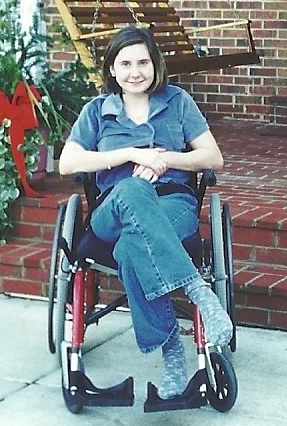
Danielle after her Traumatic Brain Injury

Danielle after her Traumatic Brain Injury


1. What is your name? (last name optional)

Danielle (Houston) Karst

2. Where do you live? (city and/or state and/or country) Email (optional)

Burke, VA, USA         daniellekarst920@gmail.com

3. When did you have your TBI? At what age?

September 1997          16 years old

4. How did your TBI occur?

I was in a car accident.

5. When did you (or someone) first realize you had a problem?

Upon impact (I was unconscious and taken to the hospital.)

6. What kind of emergency treatment, if any, did you have (e.g., surgery,

tracheotomy, G-peg)?


G-tube (gastrostomy tube – a feeding tube that is inserted through the abdomen into the stomach)

7. Were you in a coma? If so, how long?

Yes, 2 ½ months

8. Did you do rehab? What kind of rehab (i.e., In-patient or Out-patient and Occupational, Physical, Speech, Other)?
How long were you in rehab?

Yes. I had In-patient therapy (physical, speech, and occupational) for 5 months at the University of Virginia Children’s Hospital in Charlottesville, Virginia; In-patient therapy, but sleeping at home, by Mount Vernon Hospital in Northern Virginia; and Out-patient physical therapy at Mount Vernon Hospital.

9. What problems or disabilities, if any, resulted from your TBI (e.g., balance, perception, personality, etc.)?


Balance, a little perception, a little vision, handwriting, slow speech and typing, easily fatigued, seizures (though controlled by medication and calming techniques), anxiety

10. How has your life changed? Is it better? Is it worse?

It drastically changed. I have a fabulous life now – a husband, a dog, a townhouse, and a wonderful part-time job.

11. What do you miss the most from your pre-TBI life?

I miss my athleticism and the freedom to have an independent social life. (I don’t drive, so I can’t really jump up and meet people anywhere.)

12. What do you enjoy most in your post-TBI life?

Happiness, my life, my work at a nursing home (helping with activities on the Special Care Unit)

13. What do you like least about your TBI?

I try not to think about what could have been.

14. Has anything helped you to accept your TBI?

I have a supportive family and friends. I am helped by thinking, “Yeah, this sucks, but what can I do with it to move past it and improve my quality of life?”

15. Has your injury affected your home life and relationships and, if so, how?

Yes, my old friends couldn’t see me getting better and didn’t want to wait around for me.

16. Has your social life been altered or changed and, if so, how?

Yes. Pre accident, I was very social. Post accident, I hung out with my parents on weekends.

17. Who is your main caregiver? Do you understand what it takes to be a caregiver?

My parents were my main caregivers for 10 years – until my marriage. Now my husband is my main caregiver, with my parents consulting or giving their opinions when asked.

18. What are your future plans? What do you expect/hope to be doing ten years from now?

I hope to continue the work I am doing – helping in the nursing home and interacting with the residents, providing joy, and helping all those in need of care. Meanwhile, I will continue to advocate for people with TBIs, while writing my story and helpful ways to handle TBI.

19. Are you able to provide a helpful hint that may have taken you a long time to learn, but which you wished you had known earlier? If so, please state what it is to potentially help other TBI survivors with your specific kind of TBI.

Yeah, this sucks. Try to accept what happened. Move forward and better your life. LISTEN, and don’t shut out others’ advice.

20. What advice would you offer to other TBI survivors? Do you have any other comments that you would like to add?

Never give up or get discouraged. God does have a purpose for doing this. Turn your crappy situation into a positive one. Listen to your parents and elders – they are only trying to help.

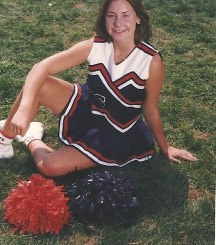
Danielle before TBI – on the Cheering Squad


Thank you, Danielle, for taking part in this interview. I hope that your experience will offer some hope, comfort, and inspiration to my readers.

(Disclaimer: The views or opinions in this post are solely that of the interviewee.)

(Photos compliments of Danielle.)

You can read more about Danielle on her blog at Inside Danielle’s Mind.

If you would like to be a part of the SPEAK OUT! project, please go to TBI Survivor Interview Questionnaire for a copy of the questions and the release form.
Survivors SPEAK OUT! . . . . . . . . . . . Carmen Kumm

SPEAK OUT! – Carmen Kumm

by

Donna O’Donnell Figurski

Kumm, Carmen 050514

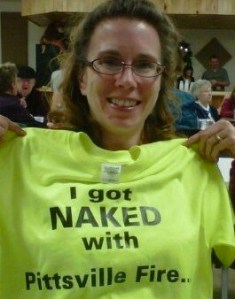
Carmen with a T-shirt from the firefighters who helped to save her life

1. What is your name? (last name optional)

Carmen Kumm

2. Where do you live? (city and/or state and/or country) Email (optional)

Pittsville, WI, USA    cjkumm87@gmail.com

3. When did you have your TBI? At what age?

July 19, 2010     Age 41

4. How did your TBI occur?

I was T-boned in a car accident.

5. When did you (or someone) first realize you had a problem?

When I was in the hospital

6. What kind of emergency treatment, if any, did you have?
(e.g., surgery,

tracheotomy, G-peg)

I was airlifted to Marshfield hospital. I was treated for broken bones, but I’m not sure about surgery. I had a tracheotomy, and I was in a drug-induced coma.

7. Were you in a coma? If so, how long?

I was unable to respond or know who I was for about 2 ½ months.

8. Did you do rehab? What kind of rehab (i.e., In-patient or Out-patient and Occupational, Physical, Speech, Other)?
How long were you in rehab?

I did In-patient and Out-patient therapy. I had occupational, physical, and speech therapies. I think it was about 8 months after my accident.

9. What problems or disabilities, if any, resulted from your TBI?
(e.g., balance, perception, personality, etc.)

Memory, personality, temperament

10. How has your life changed? Is it better? Is it worse?

I worked so hard to be a high-school Spanish teacher again. That’s what I believe got me to how well I’m doing now. On May 2, 2013, I hit a student (sophomore boy) because he was “egging” me on, and he knew it. Then he reported me to the administration. Rather than let them fire me, I resigned after 25 years – 2 ½ years post-accident. I was so very angry afterwards. I believe up until about 6 months ago I was still angry, but now I love my life. There are days when I struggle, but, if I choose to take care of myself first, I get better.

11. What do you miss the most from your pre-TBI life?

My ability to do more than one thing at a time

12. What do you enjoy most in your post-TBI life?

I enjoy my family much more.

13. What do you like least about your TBI?

Fatigue

14. Has anything helped you to accept your TBI?

Honestly, God has done so much in my life as of late, or maybe I’m listening now.

15. Has your injury affected your home life and relationships and, if so, how?

My youngest daughter was 10 when my accident happened, and I wasn’t a very nice person for a long time. Our relationship struggled, but as of late it has improved. My eldest daughter had taken much of the responsibility for my three other kids, so I had to make sure she was reminded that she no longer needed to be the mom. That has greatly improved as of late – I don’t think I’ve had to tell her that in about 3 months. My youngest son was only 4 at the time, and we struggled too. I was so mean for a couple of years that he didn’t trust me, but that is returning too.

16. Has your social life been altered or changed and, if so, how?

No, I still have all the friends I had before and maybe more.

17. Who is your main caregiver? Do you understand what it takes to be a caregiver?

My husband is my main caregiver. My parents even moved for about 4 months to be closer to me.

18. What are your future plans? What do you expect/hope to be doing ten years from now?

I am working part-time at a local post office. In 10 years I will be 55. I’m not sure what my plans are. I hope to have an almost empty nest.

19. What advice would you offer to other TBI survivors

Accept that you now have a new life to start and rejoice in it. Plan your days and plan for disaster and what you will do if it doesn’t go as planned. Have a back-up plan. Always assume it won’t go well so that you will know what to do if it doesn’t work.

20. Do you have any other comments that you would like to add?

Depression is something that I didn’t allow myself to acknowledge. Now I know it’s an issue for me, so I’m constantly working to keep it at bay. I try not to worry about things that I don’t have control over. I can’t waste my energy on that. It’s a commodity that needs to be saved. I know when I’m struggling too much that I need to stop and put myself first, and others will follow suit. For example, I’m too tired tonight, and my morning will be hard, so I’m taking care of myself tonight and my son is making his lunch for tomorrow.


Thank you, Carmen, for taking part in this interview. I hope that your experience will offer some hope, comfort, and inspiration to my readers.

(Disclaimer: The views or opinions in this post are solely that of the interviewee.)


If you would like to be a part of the SPEAK OUT! project, please go to TBI Survivor Interview Questionnaire for a copy of the questions and the release form.

 

SPEAK OUT! NewsBits …………… TBI Survivor Graduates College

Newsboy thShawn Spencer, now 30 years old, was a high-school dropout and a gang member. An accident from speeding gave him a TBI and left him disabled. He turned his life around and will graduate from college in a couple of weeks. He’s been meeting with high school teens to warn them against speeding.   (Full story with video)


Survivors SPEAK OUT! Julie


SPEAK OUT! – Julie

by

Donna O’Donnell Figurski

Julie Pre-TBI

This photo was taken on Julie’s 16th birthday – one month before her accident.


1. What is your name? (last name optional)

Julie

2. Where do you live? (city and/or state and/or country) Email (optional)

Atlantic Canada

3. When did you have your TBI? At what age?

 1995 (16 years old)

4. How did your TBI occur?

MVA (motor vehicle accident)

5. When did you (or someone) first realize you had a problem?

Right away

6. What kind of emergency treatment, if any, did you have?
(e.g., surgery,

tracheotomy, G-peg)

ICU (intensive care unit)

7. Were you in a coma? If so, how long?

Yes – 2 weeks or more.

8. Did you do rehab? What kind of rehab (i.e., In-patient or Out-patient and Occupational, Physical, Speech, Other)?


Yes – pain clinic, chiropractor, acupuncture, physio, massage, meditation, etc.

How long were you in rehab?

It has become a part of life…Keep your body and mind healthy.

9. What problems or disabilities, if any, resulted from your TBI?
(e.g., balance, perception, personality, etc.)

I have balance, perception, personality, and memory problems (to name a few).

There were physical, chronic pain, arthritic, and TMJ (temporomandibular joint)problems from the accident.

Epilepsy (grand mal and petit mal) formed 10 years later.

10. How has your life changed? Is it better? Is it worse?

I was 16, so I don’t know how my life would have gone. I know I had a plan for myself, and the MVA changed it all.

11. What do you miss the most from your pre-TBI life?

Feeling normal

12. What do you enjoy most in your post-TBI life?

My family and trying to stay positive

13. What do you like least about your TBI?

It changed everything about me… but on the outside I still look the same.

14. Has anything helped you to accept your TBI?

 After almost 20 years, I suppose time made me accept it.

15. Has your injury affected your home life and relationships and, if so, how?

 I lost friends. I became extremely moody, very hateful, and difficult for a very long time. My parents split shortly afterward. The accident was just the last thing to tip things over the edge for them. Depression and anxiety ganged up on me, and everything piled up, feeding off one another, leading to an unhappy life for a very, very long time.

 16. Has your social life been altered or changed and, if so, how?

 You name it…

 17. Who is your main caregiver? Do you understand what it takes to be a caregiver?

 My husband and I work together. He helps me with learning, any physical obstacles, during/after seizures, and over the past five years or so things seem to have improved in many ways.

 18. What are your future plans? What do you expect/hope to be doing ten years from now?

 Working and enjoying life with my family

 19. What advice would you offer to other TBI survivors?

 No one knows what you are going through. No one knows how long it will last. Everyone has a different story. You are no less important than anyone else. You are still a person and still count.

 20. Do you have any other comments that you would like to add?

 Don’t let yourself get depressed. That dark place will take you nowhere fast and can keep you for a long time.

Julie Post-TBI

More recent photo. Post-TBI

Write about your feelings, draw, paint, sing, do anything you can…but be sure to get your feelings out and make peace with life and how it has gone for you.


Thank you, Julie, for taking part in this interview. I hope that your experience will offer some hope, comfort, and inspiration to my readers.

(Disclaimer: The views or opinions in this post are solely that of the interviewee.)


If you would like to be a part of the SPEAK OUT! project, please go to TBI Survivor Interview Questionnaire for a copy of the questions and the release form.

Brain Injury Resources . . . . . . . . . . I’ll Carry the Fork

I'll Carry the Fork thI’ll Carry the Fork

by

Kara Swanson


Kara Swanson’s life was changed forever the day a minivan ran a red light and struck her car. This accident left Kara confused and frightened and with a Traumatic Brain Injury. Her TBI will impact her for the rest of her life. Kara’s book, “I’ll Carry the Fork” tells of the hardships that Kara endured as she struggled through her injury trying to regain her life. Kara approaches this serious topic with humor and hopes that her story will help other survivors and their families and friends understand the process of healing and recovering from a Traumatic Brain Injury.

You can learn more about Kara Swanson on her blog at Kara Swanson’s Brain Injury Blog.


As I say after each post:

Feel free to leave a comment by clicking the blue words “Leave a Comment” below this post.

Please follow my blog. Click on “Follow Me Via eMail” on the right sidebar of your screen.

If you like my blog, click the “Like” button under this post.

If you REALLY like my blog, share it with your friends. It’s easy! Click the “Share” buttons below.

If you don’t like my blog, “Share” it with your enemies. That works for me too!anim0014-1_e0-1


(Clip Art compliments of Bing.)


diemodi jewelry

uniquely hand-crafted jewelry by donna

Welcome to Harmony Kent Online

The home of all things books

Pete Springer

Passionate Teacher and Future Children's Author

HOPE TBI

Helping Other People Excel - To Be Independent

For the Love of Books, Old and New

Katie Fischer, Writer and Reader of Stories

Charlie Bown

Children's Author

Jessica Hinrichs

“We write to taste life twice, in the moment and in retrospect.” ― Anais Nin

VIVIAN KIRKFIELD - Writer for Children

Picture Books Help Kids Soar

Mindy’s Writing Wonderland

For authors, parents, teachers & everyone who loves children’s books.

Kaitlyn Leann Sanchez

Literary Agent

Surviving Traumatic Brain Injury

TBI - Survivors, Caregivers, Family, and Friends

The Care Factor

Loving someone with a Traumatic Brain Injury

Brain Injury Support Group of Duluth-Extension

Brain Injury Information and SUPPORT

Brain Aneurysm Global Insight

Brain Aneurysm, cerebral hemorrhaging, hemorrhage stroke