TBI – Survivors, Caregivers, Family, and Friends

Archive for the ‘Survivors SPEAK OUT!’ Category

Survivors SPEAK OUT! . . . . . . . . . . . Carmen Kumm

SPEAK OUT! – Carmen Kumm

by

Donna O’Donnell Figurski
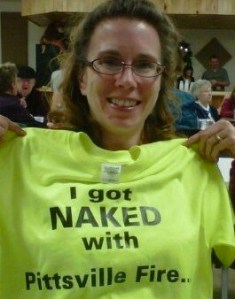
Kumm, Carmen 050514

Carmen with a T-shirt from the firefighters who helped to save her life

1. What is your name? (last name optional)

Carmen Kumm

2. Where do you live? (city and/or state and/or country) Email (optional)

Pittsville, WI, USA    cjkumm87@gmail.com

3. When did you have your TBI? At what age?

July 19, 2010     Age 41

4. How did your TBI occur?

I was T-boned in a car accident.

5. When did you (or someone) first realize you had a problem?

When I was in the hospital

6. What kind of emergency treatment, if any, did you have?
(e.g., surgery,

tracheotomy, G-peg)

I was airlifted to Marshfield hospital. I was treated for broken bones, but I’m not sure about surgery. I had a tracheotomy, and I was in a drug-induced coma.

7. Were you in a coma? If so, how long?

I was unable to respond or know who I was for about 2 ½ months.

8. Did you do rehab? What kind of rehab (i.e., In-patient or Out-patient and Occupational, Physical, Speech, Other)?
How long were you in rehab?

I did In-patient and Out-patient therapy. I had occupational, physical, and speech therapies. I think it was about 8 months after my accident.

9. What problems or disabilities, if any, resulted from your TBI?
(e.g., balance, perception, personality, etc.)

Memory, personality, temperament

10. How has your life changed? Is it better? Is it worse?

I worked so hard to be a high-school Spanish teacher again. That’s what I believe got me to how well I’m doing now. On May 2, 2013, I hit a student (sophomore boy) because he was “egging” me on, and he knew it. Then he reported me to the administration. Rather than let them fire me, I resigned after 25 years – 2 ½ years post-accident. I was so very angry afterwards. I believe up until about 6 months ago I was still angry, but now I love my life. There are days when I struggle, but, if I choose to take care of myself first, I get better.

11. What do you miss the most from your pre-TBI life?

My ability to do more than one thing at a time

12. What do you enjoy most in your post-TBI life?

I enjoy my family much more.

13. What do you like least about your TBI?

Fatigue

14. Has anything helped you to accept your TBI?

Honestly, God has done so much in my life as of late, or maybe I’m listening now.

15. Has your injury affected your home life and relationships and, if so, how?

My youngest daughter was 10 when my accident happened, and I wasn’t a very nice person for a long time. Our relationship struggled, but as of late it has improved. My eldest daughter had taken much of the responsibility for my three other kids, so I had to make sure she was reminded that she no longer needed to be the mom. That has greatly improved as of late – I don’t think I’ve had to tell her that in about 3 months. My youngest son was only 4 at the time, and we struggled too. I was so mean for a couple of years that he didn’t trust me, but that is returning too.

16. Has your social life been altered or changed and, if so, how?

No, I still have all the friends I had before and maybe more.

17. Who is your main caregiver? Do you understand what it takes to be a caregiver?

My husband is my main caregiver. My parents even moved for about 4 months to be closer to me.

18. What are your future plans? What do you expect/hope to be doing ten years from now?

I am working part-time at a local post office. In 10 years I will be 55. I’m not sure what my plans are. I hope to have an almost empty nest.

19. What advice would you offer to other TBI survivors

Accept that you now have a new life to start and rejoice in it. Plan your days and plan for disaster and what you will do if it doesn’t go as planned. Have a back-up plan. Always assume it won’t go well so that you will know what to do if it doesn’t work.

20. Do you have any other comments that you would like to add?

Depression is something that I didn’t allow myself to acknowledge. Now I know it’s an issue for me, so I’m constantly working to keep it at bay. I try not to worry about things that I don’t have control over. I can’t waste my energy on that. It’s a commodity that needs to be saved. I know when I’m struggling too much that I need to stop and put myself first, and others will follow suit. For example, I’m too tired tonight, and my morning will be hard, so I’m taking care of myself tonight and my son is making his lunch for tomorrow.


Thank you, Carmen, for taking part in this interview. I hope that your experience will offer some hope, comfort, and inspiration to my readers.

(Disclaimer: The views or opinions in this post are solely that of the interviewee.)


If you would like to be a part of the SPEAK OUT! project, please go to TBI Survivor Interview Questionnaire for a copy of the questions and the release form.


Survivors SPEAK OUT! . . . . . . . . . . . Marty Salo

SPEAK OUT! – Marty Salo

by

Donna O’Donnell Figurski

051614 Salo, Marty Photo for Interview


1. What is your name? (last name optional)

Marty Salo

2. Where do you live? (city and/or state and/or country) Email (optional)

Tampa, FL, USA     msalo@verizon.net

3. When did you have your TBI? At what age?

April 7, 1982      Age 11

4. How did your TBI occur?

Bike/motor vehicle accident

5. When did you (or someone) first realize you had a problem?

Immediately. I was medivacked to Children’s Hospital of the Kings Daughters in Norfolk, Virginia

6. What kind of emergency treatment, if any, did you have?
(e.g., surgery,

tracheotomy, G-peg)

I had an intracranial pressure monitor and I assume some other tubes. The divot in my head is still visible after all these years when the hair is cut very short.

7. Were you in a coma? If so, how long?

I was officially in a coma for something like 53 days. I was brought home on Day 49, but I had been in pediatric ICU for 14 days.

8. Did you do rehab? What kind of rehab (i.e., In-patient or Out-patient and Occupational, Physical, Speech, Other)?
How long were you in rehab?

I did most of the recovery at home. I was tutored by a 5th grade teacher over summer, and I progressed through Catholic primary school. I had some speech therapy at public school. I had help from vocational rehabilitation to get training leading to a job.

9. What problems or disabilities, if any, resulted from your TBI?
(e.g., balance, perception, personality, etc.)

Fortunately, I had been brilliant as a child, and much of the brilliance continued. There were memory problems, I guess, as well as balance problems and the need to re-master skills from traumatic amnesia. I read more online. I’ve been excited about the Internet from my days in college – even before then. I had been excited about my Apple 2c with a 300-baud modem, which allowed me to communicate to others through asynchronous communications.

10. How has your life changed? Is it better? Is it worse?

I adapted. I chose easier courses, changed majors at the university, graduated with an undergraduate degree in Religious Studies, and continued to get my Master’s Degree in Library and Information Science. There are still situations where I can get overwhelmed, I suppose.

11. What do you miss the most from your pre-TBI life?

I don’t really have much memory of my pre-TBI life. I have only vague, fleeting memories of childhood.

12. What do you enjoy most in your post-TBI life?

I like having fun. I like going to EPCOT and Disney World. I enjoy being around other happy people.

13. What do you like least about your TBI?

I’ve been different from others, but I didn’t really understanding how different from others I was. I just knew that things were not as easy for me. I have adapted by not driving, after an accident at age 19 or so.

14. Has anything helped you to accept your TBI?

My father is in AA. He exposed me to the Serenity Prayer: “God, grant me the serenity to accept the things I cannot change, courage to change the things I can, and wisdom to know the difference.”

15. Has your injury affected your home life and relationships and, if so, how?

From childhood, there is no comparison. Fortunately, I met a woman who would later become my wife. She has been very beneficial to me and my experiences.

16. Has your social life been altered or changed and, if so, how?

Again, childhood and adulthood are largely incomparable, but I’d venture to say that as a financially minded individual, I don’t spend a lot of money on alcohol or cigarettes. We have a pretty happy life, even if not much time is spent out drinking with fellas, or whatever. Other usual socialization patterns exist.

17. Who is your main caregiver? Do you understand what it takes to be a caregiver?

My mother, then my wife. My wife is not so much of a caregiver as a partner, but she does drive.

18. What are your future plans? What do you expect/hope to be doing ten years from now?

It’d be very nice if I were somehow able to get something going where I work at the VA Hospital – doing something to help others with computers and expanding awareness. But, I’m happy enough continuing to work with computers, getting them ready for issuance to providers.

19. What advice would you offer to other TBI survivors

Keep on progressing. Life gets better if you allow it to get better. Most people probably want to see you succeed. Some bosses might not have patience, but your progress is more important. Do not compare yourself to peers who are doing more than you are. Compare yourself to where you have been. Appreciate what you have overcome to get where you are.

20. Do you have any other comments that you would like to add?

So many things. Realize that you are not alone. Realize that others have had similar journeys. Realize that others probably would like to see you succeed. Your success builds collective good will, and helps people feel better.  http://martysalo.wordpress.com/ is a website I maintain. I have some TBI-related stuff there as well.051614 Salo, Marty Photo 2 for Interview


Thank you, Marty, for taking part in this interview. I hope that your experience will offer some hope, comfort, and inspiration to my readers.

(Disclaimer: The views or opinions in this post are solely that of the interviewee.)


If you would like to be a part of the SPEAK OUT! project, please go to TBI Survivor Interview Questionnaire for a copy of the questions and the release form.

Survivors SPEAK OUT! Joyce Hoffman

Joyce Hoffman – Before her TBI

SPEAK OUT! – Joyce Hoffman

by

Donna O’Donnell Figurski


1. What is your name? (last name optional)

Joyce Hoffman

2. Where do you live? (city and/or state and/or country) Email (optional)

New Jersey, USA

3. When did you have your TBI? At what age?

April 8, 2009

4. How did your TBI occur?

Hemorrhagic stroke, i.e., a blood vessel erupted

5. When did you (or someone) first realize you had a problem?

I started to convulse at 4 am. My partner saw it, and he called 911.

6. What kind of emergency treatment, if any, did you have?
(e.g., surgery, tracheotomy, G-peg)

Tracheotomy

7. Were you in a coma? If so, how long?

Yes. 8 days

8. Did you do rehab? What kind of rehab (i.e., In-patient or Out-patient and Occupational, Physical, Speech, Other)?
How long were you in rehab?

In-patient rehab for 15 weeks, and then Out-patient rehab 2 or 3 times a year

9. What problems or disabilities, if any, resulted from your TBI?
(e.g., balance, perception, personality, etc.)

Right-sided weakness. Paralyzed arm. I use a quad cane for walking.

10. How has your life changed? Is it better? Is it worse?

Better—I wrote my 2nd book, “The Tales of a Stroke Patient,” with one hand, all 265 pages, within 2 years.

Worse—I miss my career as a senior technical trainer and writer for legal applications, and I go slowly now – one step at a time.

11. What do you miss the most from your pre-TBI life?

Total independence

12. What do you enjoy most in your post-TBI life?

Reading and computing

Getting together with friends and family

13. What do you like least about your TBI?

My speaking slowly when I want to talk faster

14. Has anything helped you to accept your TBI?

Time heals all, but I’m not completely there yet.

15. Has your injury affected your home life and relationships and, if so, how?

My partner had to take over, whereas I did most everything domestic before.

16. Has your social life been altered or changed and, if so, how?

A few friends remain. Most of them headed “for the hills.”

17. Who is your main caregiver? Do you understand what it takes to be a caregiver?

Cece is my main caregiver. She understands my dilemmas.

18. What are your future plans? What do you expect/hope to be doing ten years from now?

Doing the same thing I am now—plus more time for lectures

19. What advice would you offer to other TBI survivors

Patience

20. Do you have any other comments that you would like to add?

I am starting to NOT resent people who have the ability to go the beach or to run fast. I used to be a runner. My book tells it all. Click the link to buy it

The Tales of a Stroke Patient (from the publisher)

The Tales of a Stroke Patient (from Amazon)

The Tales of a Stroke Patient (Barnes & Noble)


Joyce Hoffman - After her TBI

Joyce Hoffman – After her TBI

Thank you, Joyce, for taking part in this interview. I hope that your experience will offer some hope, comfort, and inspiration to my readers.

(Disclaimer: The views or opinions in this post are solely that of the interviewee.)


If you would like to be a part of the SPEAK OUT! project, please go to TBI Survivor Interview Questionnaire for a copy of the questions and the release form.
Survivors SPEAK OUT! Pauline Southern

SPEAK OUT! – Pauline Southern

by

Donna O’Donnell Figurski

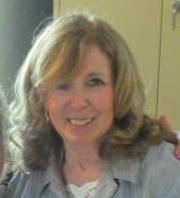
Pauline with her TBI


1. What is your name? (last name optional)

Pauline

2. Where do you live? (city and/or state and/or country) Email (optional)

South Carolina, USA

3. When did you have your TBI? At what age?

6/22/2012    52 years old

4. How did your TBI occur?

Another 18-wheeler hit the 18-wheeler my husband was driving. I was asleep in the sleeper in the back and got tossed around like a rag doll.

5. When did you (or someone) first realize you had a problem?

I’m not sure who first realized it. Just to name a few issues – I had a problem remembering old friends, finding words, and doing math. I had a shortened attention span and a panic attack every time I got into a car. I was distracted all the time and slept a lot. There is much more. I just can’t remember them all.

6. What kind of emergency treatment, if any, did you have?
(e.g., surgery,

tracheotomy, G-peg)

I was taken by ambulance to an emergency room in a little town in Iowa. I don’t have much of a memory of what went on, other than that I was treated for nausea and for pain for rib injuries. I don’t remember anything else.

7. Were you in a coma? If so, how long?

No

8. Did you do rehab? What kind of rehab (i.e., In-patient or Out-patient and Occupational, Physical, Speech, Other)?
How long were you in rehab?

Yes. I did Out-patient physical therapy, occupational therapy, and speech therapy. I spoke with a psychologist. Now I am doing PTSD (post-traumatic stress disorder) therapy. I’ve also had vision therapy for double vision and blurry vision. It’s been a year and counting.

9. What problems or disabilities, if any, resulted from your TBI?
(e.g., balance, perception, personality, etc.)

I can’t control angry outbursts. I have no patience, have panic attacks in the car, cannot tolerate people who don’t understand what I’m going through. I have balance and vision problems. I cannot multitask. I have memory loss (short-term and some long-term). I can’t read more than one chapter in a book, and then I don’t remember what I read. I used to be able to cook for hundreds of people, and now I have trouble cooking for two.

10. How has your life changed? Is it better? Is it worse?

I’m not able to do things I used to do – bookkeeping, quilting, reading. I can’t drive a car for more than one hour. I need a GPS to find my way to my destination and back home.

11. What do you miss the most from your pre-TBI life?

Happiness, laughing, and my friends

12. What do you enjoy most in your post-TBI life?

Nothing yet. I’m still trying to find something I like.

13. What do you like least about your TBI?

The way that it has changed my personality. I used to be fun-loving, happy, and

smiling. Now I’m sad and angry all the time.

14. Has anything helped you to accept your TBI?

Not yet. I’m still trying to accept it.

15. Has your injury affected your home life and relationships and, if so, how?

Yes. It has brought me closer to my husband. He is my caregiver, and my love for him has grown tremendously. But on the other hand, it has put a distance between me and the rest of the family. They don’t understand me. They get angry with me, and I get very angry with them for not wanting to understand me.

16. Has your social life been altered or changed and, if so, how?

Yes. Because of the accident, we have lost our home and had to move to a new state. I have no friends – no one who I can hang out with and do things with. I don’t like to go out in public. I feel very alone. I cannot follow conversations, and I don’t like crowds, loud noises, or lights.

17. Who is your main caregiver? Do you understand what it takes to be a caregiver?

My husband. He does a great job. I don’t think I understand how he does it. He is a very strong person and helps me with my memory. He goes to doctor appointments because I don’t remember what was said during those discussions. I have no idea what it takes to be a caregiver to someone like me. I used to be a caregiver for my elderly in-laws, so I know what it takes to be a caregiver – but not for someone as bad as me.

18. What are your future plans? What do you expect/hope to be doing ten years from now?

To learn more about the loss of the old me and to accept the new me. To have a life again.

19. What advice would you offer to other TBI survivors?

Sit back. Buckle your seatbelt. It’s a long, bumpy road ahead. It will have highs and lows and good and bad days. Just hang in there. Don’t give up. There’s a reason we were given these injuries. Find your purpose in life.

20. Do you have any other comments that you would like to add?

I wish there was more interest and more programs that teach non-TBI survivors what it’s like to be in our heads. I guess I’m trying to say I would like the rest of the world to understand we are still people. We just do things differently.

Pauline before her TBI

Thank you, Pauline, for taking part in this interview. I hope that your experience will offer some hope, comfort, and inspiration to my readers.

(Disclaimer: The views or opinions in this post are solely that of the interviewee.)


If you would like to be a part of the SPEAK OUT! project, please go to TBI Survivor Interview Questionnaire for a copy of the questions and the release form.

Survivors SPEAK OUT! Julie


SPEAK OUT! – Julie

by

Donna O’Donnell Figurski

Julie Pre-TBI

This photo was taken on Julie’s 16th birthday – one month before her accident.


1. What is your name? (last name optional)

Julie

2. Where do you live? (city and/or state and/or country) Email (optional)

Atlantic Canada

3. When did you have your TBI? At what age?

 1995 (16 years old)

4. How did your TBI occur?

MVA (motor vehicle accident)

5. When did you (or someone) first realize you had a problem?

Right away

6. What kind of emergency treatment, if any, did you have?
(e.g., surgery,

tracheotomy, G-peg)

ICU (intensive care unit)

7. Were you in a coma? If so, how long?

Yes – 2 weeks or more.

8. Did you do rehab? What kind of rehab (i.e., In-patient or Out-patient and Occupational, Physical, Speech, Other)?


Yes – pain clinic, chiropractor, acupuncture, physio, massage, meditation, etc.

How long were you in rehab?

It has become a part of life…Keep your body and mind healthy.

9. What problems or disabilities, if any, resulted from your TBI?
(e.g., balance, perception, personality, etc.)

I have balance, perception, personality, and memory problems (to name a few).

There were physical, chronic pain, arthritic, and TMJ (temporomandibular joint)problems from the accident.

Epilepsy (grand mal and petit mal) formed 10 years later.

10. How has your life changed? Is it better? Is it worse?

I was 16, so I don’t know how my life would have gone. I know I had a plan for myself, and the MVA changed it all.

11. What do you miss the most from your pre-TBI life?

Feeling normal

12. What do you enjoy most in your post-TBI life?

My family and trying to stay positive

13. What do you like least about your TBI?

It changed everything about me… but on the outside I still look the same.

14. Has anything helped you to accept your TBI?

 After almost 20 years, I suppose time made me accept it.

15. Has your injury affected your home life and relationships and, if so, how?

 I lost friends. I became extremely moody, very hateful, and difficult for a very long time. My parents split shortly afterward. The accident was just the last thing to tip things over the edge for them. Depression and anxiety ganged up on me, and everything piled up, feeding off one another, leading to an unhappy life for a very, very long time.

 16. Has your social life been altered or changed and, if so, how?

 You name it…

 17. Who is your main caregiver? Do you understand what it takes to be a caregiver?

 My husband and I work together. He helps me with learning, any physical obstacles, during/after seizures, and over the past five years or so things seem to have improved in many ways.

 18. What are your future plans? What do you expect/hope to be doing ten years from now?

 Working and enjoying life with my family

 19. What advice would you offer to other TBI survivors?

 No one knows what you are going through. No one knows how long it will last. Everyone has a different story. You are no less important than anyone else. You are still a person and still count.

 20. Do you have any other comments that you would like to add?

 Don’t let yourself get depressed. That dark place will take you nowhere fast and can keep you for a long time.

Julie Post-TBI

More recent photo. Post-TBI

Write about your feelings, draw, paint, sing, do anything you can…but be sure to get your feelings out and make peace with life and how it has gone for you.


Thank you, Julie, for taking part in this interview. I hope that your experience will offer some hope, comfort, and inspiration to my readers.

(Disclaimer: The views or opinions in this post are solely that of the interviewee.)


If you would like to be a part of the SPEAK OUT! project, please go to TBI Survivor Interview Questionnaire for a copy of the questions and the release form.

Survivors SPEAK OUT! Len

SPEAK OUT! – Len

by

Donna O’Donnell Figurski

unknown


1.    What is your name? (last name optional)

Len

2.    Where do you live? Email? (optional)

Georgetown, Ontario, Canada     tbi4life@live.ca

3.    When did you have your TBI? At what age?

April 16, 2005      38 years old

4.    How did your TBI occur?

As VP of sales for a large Fortune 500 company, I was on a sales conference trip to Costa Rica. On the 2nd day, there was an organized team-building event – an ATV ride up the mountains. During the event, I hit the back of another rider and flew off into a cliff. I fell into an 8-foot-deep hole, and the ATV came and landed on me. Luckily for me, I did have a helmet on. I had no memory of the accident or anytime after for approximately 5 weeks.

5.    When did you (or someone) first realize you had a problem?

When I came back to Canada, all the focus was on my back injury. (I shattered 5 vertebrae.) The doctors just kept telling me I was depressed, etc. … and I kept telling them I didn’t feel sad. They kept giving me meds, which I thought was the reason I was feeling so different. I went back to my job, but they kept reducing and changing my responsibilities. I suddenly felt so unbelievably lost in a world in which I was once very confident and successful.

6.    What kind of emergency treatment, if any, did you have?

Spinal fusion x 5
Induced coma

7.    Were you in a coma? If so, how long?

4 1/2 weeks – I think it was mostly induced because I kept trying to move and they were afraid I would do more damage to my spine.

8.  Did you do rehab? What kind of rehab (i.e., In-patient or Out-patient and Occupational, Physical, Speech, Other)? How long were you in rehab?

I was an Out-patient. Once I was finally diagnosed with MTBI, the nurse came to my house for over a year. However, I was still trying to work and in denial. Over time I was no longer able to work, and Out-patient services started coming again for about another year. I also saw a neuropsychologist, who I am presently seeing on a bi-weekly basis.

9.  What problems or disabilities, if any, resulted from your TBI? (e.g., balance, perception, personality, etc.)

Everything! At least that’s how it feels – my short-term memory; I have a hard time communicating what I’m thinking; I misunderstand what people are saying to me; I get stuck on things; I really struggle making decisions; I lose my temper because I misunderstand what is happening (usually when things are happening fast or loud). Sometimes I seem to mix things up in my head, and then people have a hard time convincing me I’m wrong because I feel so strongly that I am right and that they are just trying to take advantage of me.

10.  How has your life changed? Is it better? Is it worse?

My life is completely different. I am not the person I was. Now after 9 years I have a hard time explaining how I am different because the old me seems like a dream.

11. What do you miss the most from your pre-TBI life?

I was a proud professional who my kids could look up to and people would listen to. I enjoyed my career and loved helping people become successful.

12. What do you enjoy most in your post-TBI life?

I have yet to discover anything I enjoy.

13. What do you like least about your TBI?

Lack of security and not being able to give the people around me a better life

14.  Has anything helped you to accept your TBI?

Yes. I was really struggling after I was told I had a TBI, so I googled and came across some videos, such as “You Look Great” by John Byler. Watching these helped me relate how I was feeling and helped me communicate this to my family. I then started the TBI4life twitter account mostly because it gave me somewhat of a purpose.

15. Has your injury affected your home life and relationships and, if so, how?

It has been very hard on my marriage. Luckily for me, it all happened around the same time…. I mean my wife was in the process of leaving right around the time I started to accept my TBI. It was that acceptance that I believe saved our marriage. By accepting, it enabled me to explain to her why I did the things I did – that I knew I was wrong but here’s what was going on in my head, etc. My wife is now my biggest supporter, and I love her with all my heart.

16.  Has your social life been altered or changed and, if so, how?

I no longer have a social life – big change considering we used to hold parties at our house all the time and would be constantly out at events, etc.

17. Who is your main caregiver? Do you understand what it takes to be a caregiver?

My wife is my main caregiver. It takes patience … lots of patience!

18. What are your future plans? What do you expect/hope to be doing ten years from now?

My plans are unknown.  I just want to feel as if I have some sort of purpose – a life.

19. What advice would you offer to other TBI survivors?

The sooner you accept and understand this is a life-long journey, the sooner you can start to rebuild. NEVER underestimate the impact a TBI will have on your life.

20. Do you have any other comments that you would like to add?

I hope this helps others in some way, and a big THANK YOU for having the interest in our stories.


Thank you, Len, for taking part in this interview. I hope that your experience will offer some hope, comfort, and inspiration to my readers.

(Disclaimer: The views or opinions in this post are solely that of the interviewee.)


If you would like to be a part of this project, please go to TBI Survivor Interview Questionnaire for a copy of the questions and the release form.


Survivors SPEAK OUT! Matthew Davis

SPEAK OUT! – Matthew Davis

by

Donna O’Donnell Figurski

Matt Alta


1. What is your name? (last name optional)

Matthew

2. Where do you live? (city and/or state and/or country)

Stamford, CT, USA

3. When did you have your TBI? At what age?

1996/97         age 25

4. How did your TBI occur?

skiing

5. When did you (or someone) first realize you had a problem?  

CT scan

6. What kind of emergency treatment, if any, did you have? (e.g., surgery, tracheotomy, G-peg)

cranial surgery to pull out compression fracture and hold in place with small plates

 7. Were you in a coma? If so, how long?

no

 8. Did you do rehab? What kind of rehab (i.e., In-patient or Out-patient and Occupational, Physical, Speech, Other)? How long were you in rehab?

out-patient,  2 months

 9. What problems or disabilities, if any, resulted from your TBI?  (e.g., balance, perception, personality, etc.)

mood issues – easily overwhelmed

irritability

attention span

 10. How has your life changed? Is it better? Is it worse?

just different

 11. What do you miss the most from your pre-TBI life?  

clarity of thought

 12. What do you enjoy most in your post-TBI life?

being alive

 13. What do you like least about your TBI?  

not knowing what effects are from the TBI or age, etc.

 14. Has anything helped you to accept your TBI?

the book Brainlash 

 15. Has your injury affected your home life and relationships and, if so, how?  

have to be careful not to snap at people

 16. Has your social life been altered or changed and, if so, how?

not as much patience

 17. Who is your main caregiver? Do you understand what it takes to be a caregiver?

wife (she is recent)

 18. What are your future plans? What do you expect/hope to be doing ten years from now?

being a dad

holding a job

 19. What advice would you offer to other TBI survivors?  

be patient; understand its normal to feel these things


Thank you, Matthew, for taking part in this interview. I hope that your experience will offer some hope, comfort, and inspiration to my readers.

(Disclaimer: The views or opinions in this post are solely that of the interviewee.)

If you would like to be a part of this project, please go to TBI Survivor Interview Questionnaire for a copy of the questions and the release form.
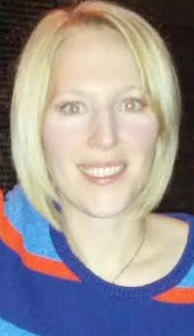
(Photo compliments of Matthew.)

Survivors SPEAK OUT! – Lauren

SPEAK OUT! – Lauren

by

Donna O’Donnell Figurski

Lauren - about 4 days post TBI surgery

Lauren – about 4 days post TBI surgery

1. What is your name? (last name optional)

Lauren

2. Where do you live? (city and/or state and/or country) Email address? (optional)

Belfast, Northern Ireland

3. When did you have your TBI? At what age?

September 2012. I was 35

4. How did your TBI occur?

Playing roller derby

5. When did you (or someone) first realize you had a problem?

It was very sudden, I felt something wasn’t right in my head, then my vision went and I collapsed.

6. What kind of emergency treatment, if any, did you have? (e.g., surgery, tracheotomy, G-peg)

Ambulance to Accident and Emergency.
A CT scan, then a craniotomy

7. Were you in a coma? If so, how long?

4 days. It was medically induced because I kept wanting to wake up!

8. Did you do rehab? What kind of rehab (i.e., In-patient and/or Out-patient; Occupational, Physical, Speech, and/or Other)? How long were you in rehab?

No rehab to speak of, Out-patient appointments with Neuro every few months. I’m now discharged.

9. What problems or disabilities, if any, resulted from your TBI? (e.g., balance, perception, personality, etc.)

Initially I had palsy of the left eye. Most of my problems have been psychological. I also had fatigue for a long time. (It’s still here but not as strong.)

10. How has your life changed? Is it better? Is it worse?

How do you put this into words? My life has changed in many ways, I was very independent. Now I rely on my partner a lot, mainly due to anxiety and depression.

There are things that are better – the ability to let small things slide is easy. I have an appreciation of life. I know what I DONT want anymore. My BS detector is much improved.

The bad – feeling scared for no reason. Crying a lot

11. What do you miss the most from your pre-TBI life?

My independence

12. What do you enjoy most in your post-TBI life?

The slower pace; the ability to filter stressful people

13. What do you like least about your TBI?

Anxiety anxiety anxiety

14. Has anything helped you to accept your TBI?

Time, patience, writing, lots of reading and meeting other survivors

15. Has your injury affected your home life and relationships and, if so, how?

It has made us a lot closer. It’s not an easy ride. It can get rough, but we’ve learnt to communicate in a much more meaningful and honest way.

16. Has your social life been altered or changed and, if so, how?

Yes, I’ve become more isolated. My social circle reduced a lot post-injury. That hurt at first, but I’ve accepted it now. More contact with others would be nice though.

17. Who is your main caregiver? Do you understand what it takes to be a caregiver?

My partner, he’s great. He’s put up with so much. I have an idea of what he’s been through, but I’ll never truly understand how it feels. It is difficult and tiring.

18. What are your future plans? What do you expect/hope to be doing 10 years from now?

I hope to study again. I want to complete a Psychology or counselling course so I can help others. I want to be out in the world again, and most of all I hope to have my joy back.

19. What advice would you offer to other TBI survivors?

It’s hard but it will pass
What you feel is normal
Be kind to yourself, and you will also need plenty of patience!

20. Do you have any other comments that you would like to add?

Good luck to all TBI/ABI survivors. Remember you are never alone.

Lauren celebrating her birthday about 16 months post-TBI

Lauren celebrating her birthday about 16 months post-TBI


Thank you, Lauren, for taking part in this interview. I hope that your experience will offer some hope, comfort, and inspiration to my readers.


If you would like to be a part of this project, please go to TBI Survivor Interview Questionnaire for a copy of the questions and the release form.

(Photos compliments of Lauren.)

Survivors SPEAK OUT! David Figurski

SPEAK OUT! – David Figurski

by

david-running-in-hall

David about 3 weeks before his TBI – in brand new running outfit. David ran about 20 miles per week.

Donna O’Donnell Figurski

1.    What is your name? (last name optional)

David Figurski

2.    Where do you live? (city and/or state) Email (optional)

Arizona           dhfdmf@aol.com

3. When did you have your TBI? At what age?

January 13, 2005           Age 57

4. How did your TBI occur?

It was induced by my doing chin-ups.

5. When did you (or someone) first realize you had a problem?

I realized I had a problem when my vision deteriorated after doing chin- ups.  I knew I had a serious problem a couple of minutes later when I was talking to my wife.  I felt fluid filling my skull, and there was a lot of pain in my face.

6. What kind of emergency treatment, if any, did you have?
(e.g., surgery, tracheotomy, G-peg)

Ambulance from a 9-1-1 call.
Three surgeries
1. to evacuate the blood
2. to remove an aneurysm that was discovered in the first surgery
3. to remove an AVM (Arterial Venous Malformation) that was discovered in the second surgery.
Tracheotomy
G-Peg

7. Were you in a coma? If so, how long?

Yes, a little more than two weeks.

8. Did you do rehab? What kind of rehab (i.e., In-patient or Out-patient and Occupational, Physical, Speech, Other)? How long were you in rehab?

In-Patient rehab for almost two months (phys., occup., speech)
Out-Patient rehab for almost sixteen months (phys., occup., speech)
Private physical therapy 2 hours/week for seven years

9. What problems or disabilities, if any, resulted from your TBI?
(e.g., balance, perception, personality, etc.)

Balance (can hobble indoors, but cannot walk outdoors unassisted)
Double vision (one image is tilted relative to the other)
Difficulty swallowing
Partly paralyzed tongue
Ataxic right arm/hand
Left arm/hand is not ataxic, but it’s not as good as it was pre-TBI
Less feeling in my right leg
Paralysis of the right side of my face

10. How has your life changed? Is it better? Is it worse?

Better –  life is slower
more time to spend with people
Worse – loss of independence
loss of mobility
unable to do things that I once did

11. What do you miss the most from your pre-TBI life?

Walking, running, driving, writing, reading, drawing

12. What do you enjoy most in your post-TBI life?

My computer, movies at home courtesy of Netflix, audiobooks

13. What do you like least about your TBI?

Because of paralysis of my mouth, I bite my lip or tongue many times each meal.

14. Has anything helped you to accept your TBI?

The positive attitude of my wife and all my doctors and therapists

15. Has your injury affected your home life and relationships and, if so, how?

My wife and I have always had a close relationship, but now I have more time to spend with her.

16. Has your social life been altered or changed and, if so, how?

Yes.  Though my wife and I go out less, we socialize a lot more at home.  I have more time now, so I have more friends.

17. Who is your main caregiver? Do you understand what it takes to be a caregiver?

My wife is my main caregiver.  She is also my cheerleader.  Yes, I know how much my wife has sacrificed to do what she does for me.

18. What are your future plans? What do you expect/hope to be doing ten years from now?

I plan to be able to walk outside unassisted.  My dream is to walk a 5K race in less than an hour.

19. What advice would you offer to other TBI survivors?

Have a positive attitude.
Be aware of the love of other people.
Do what you can.
Be patient with yourself.

20. Do you have any other comments that you would like to add?

You will probably never be able to do all that you once did, but life can be satisfying

David - 9 years and 3 months after his TBI

David – 9 years and 3 months after his TBI


Thank you, David, for taking part in this interview. I hope that your experience will offer some hope, comfort, and inspiration to my readers.


(Disclaimer: The views or opinions in this post are solely that of the interviewee.)

If you would like to be a part of this project, please go to TBI Survivor Interview Questionnaire for a copy of the questions and the release form.

(Photos compliments of ME.)

diemodi jewelry

uniquely hand-crafted jewelry by donna

Welcome to Harmony Kent Online

The home of all things books

Pete Springer

Passionate Teacher and Future Children's Author

HOPE TBI

Helping Other People Excel - To Be Independent

For the Love of Books, Old and New

Katie Fischer, Writer and Reader of Stories

Charlie Bown

Children's Author

Jessica Hinrichs

“We write to taste life twice, in the moment and in retrospect.” ― Anais Nin

VIVIAN KIRKFIELD - Writer for Children

Picture Books Help Kids Soar

Mindy’s Writing Wonderland

For authors, parents, teachers & everyone who loves children’s books.

Kaitlyn Leann Sanchez

Literary Agent

Surviving Traumatic Brain Injury

TBI - Survivors, Caregivers, Family, and Friends

The Care Factor

Loving someone with a Traumatic Brain Injury

Brain Injury Support Group of Duluth-Extension

Brain Injury Information and SUPPORT

Brain Aneurysm Global Insight

Brain Aneurysm, cerebral hemorrhaging, hemorrhage stroke