TBI – Survivors, Caregivers, Family, and Friends

Posts tagged ‘SPEAK OUT!’

Survivors SPEAK OUT! Joyce Hoffman

Joyce Hoffman – Before her TBI

SPEAK OUT! – Joyce Hoffman

by

Donna O’Donnell Figurski


1. What is your name? (last name optional)

Joyce Hoffman

2. Where do you live? (city and/or state and/or country) Email (optional)

New Jersey, USA

3. When did you have your TBI? At what age?

April 8, 2009

4. How did your TBI occur?

Hemorrhagic stroke, i.e., a blood vessel erupted

5. When did you (or someone) first realize you had a problem?

I started to convulse at 4 am. My partner saw it, and he called 911.

6. What kind of emergency treatment, if any, did you have?
(e.g., surgery, tracheotomy, G-peg)

Tracheotomy

7. Were you in a coma? If so, how long?

Yes. 8 days

8. Did you do rehab? What kind of rehab (i.e., In-patient or Out-patient and Occupational, Physical, Speech, Other)?
How long were you in rehab?

In-patient rehab for 15 weeks, and then Out-patient rehab 2 or 3 times a year

9. What problems or disabilities, if any, resulted from your TBI?
(e.g., balance, perception, personality, etc.)

Right-sided weakness. Paralyzed arm. I use a quad cane for walking.

10. How has your life changed? Is it better? Is it worse?

Better—I wrote my 2nd book, “The Tales of a Stroke Patient,” with one hand, all 265 pages, within 2 years.

Worse—I miss my career as a senior technical trainer and writer for legal applications, and I go slowly now – one step at a time.

11. What do you miss the most from your pre-TBI life?

Total independence

12. What do you enjoy most in your post-TBI life?

Reading and computing

Getting together with friends and family

13. What do you like least about your TBI?

My speaking slowly when I want to talk faster

14. Has anything helped you to accept your TBI?

Time heals all, but I’m not completely there yet.

15. Has your injury affected your home life and relationships and, if so, how?

My partner had to take over, whereas I did most everything domestic before.

16. Has your social life been altered or changed and, if so, how?

A few friends remain. Most of them headed “for the hills.”

17. Who is your main caregiver? Do you understand what it takes to be a caregiver?

Cece is my main caregiver. She understands my dilemmas.

18. What are your future plans? What do you expect/hope to be doing ten years from now?

Doing the same thing I am now—plus more time for lectures

19. What advice would you offer to other TBI survivors

Patience

20. Do you have any other comments that you would like to add?

I am starting to NOT resent people who have the ability to go the beach or to run fast. I used to be a runner. My book tells it all. Click the link to buy it

The Tales of a Stroke Patient (from the publisher)

The Tales of a Stroke Patient (from Amazon)

The Tales of a Stroke Patient (Barnes & Noble)
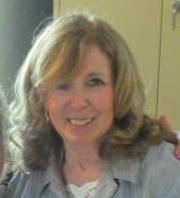
 

Joyce Hoffman - After her TBI

Joyce Hoffman – After her TBI

Thank you, Joyce, for taking part in this interview. I hope that your experience will offer some hope, comfort, and inspiration to my readers.

(Disclaimer: The views or opinions in this post are solely that of the interviewee.)


If you would like to be a part of the SPEAK OUT! project, please go to TBI Survivor Interview Questionnaire for a copy of the questions and the release form.

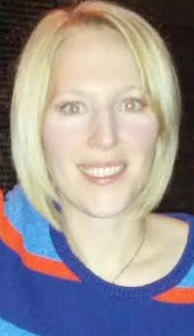
Survivors SPEAK OUT! Julie


SPEAK OUT! – Julie

by

Donna O’Donnell Figurski

Julie Pre-TBI

This photo was taken on Julie’s 16th birthday – one month before her accident.


1. What is your name? (last name optional)

Julie

2. Where do you live? (city and/or state and/or country) Email (optional)

Atlantic Canada

3. When did you have your TBI? At what age?

 1995 (16 years old)

4. How did your TBI occur?

MVA (motor vehicle accident)

5. When did you (or someone) first realize you had a problem?

Right away

6. What kind of emergency treatment, if any, did you have?
(e.g., surgery,

tracheotomy, G-peg)

ICU (intensive care unit)

7. Were you in a coma? If so, how long?

Yes – 2 weeks or more.

8. Did you do rehab? What kind of rehab (i.e., In-patient or Out-patient and Occupational, Physical, Speech, Other)?


Yes – pain clinic, chiropractor, acupuncture, physio, massage, meditation, etc.

How long were you in rehab?

It has become a part of life…Keep your body and mind healthy.

9. What problems or disabilities, if any, resulted from your TBI?
(e.g., balance, perception, personality, etc.)

I have balance, perception, personality, and memory problems (to name a few).

There were physical, chronic pain, arthritic, and TMJ (temporomandibular joint)problems from the accident.

Epilepsy (grand mal and petit mal) formed 10 years later.

10. How has your life changed? Is it better? Is it worse?

I was 16, so I don’t know how my life would have gone. I know I had a plan for myself, and the MVA changed it all.

11. What do you miss the most from your pre-TBI life?

Feeling normal

12. What do you enjoy most in your post-TBI life?

My family and trying to stay positive

13. What do you like least about your TBI?

It changed everything about me… but on the outside I still look the same.

14. Has anything helped you to accept your TBI?

 After almost 20 years, I suppose time made me accept it.

15. Has your injury affected your home life and relationships and, if so, how?

 I lost friends. I became extremely moody, very hateful, and difficult for a very long time. My parents split shortly afterward. The accident was just the last thing to tip things over the edge for them. Depression and anxiety ganged up on me, and everything piled up, feeding off one another, leading to an unhappy life for a very, very long time.

 16. Has your social life been altered or changed and, if so, how?

 You name it…

 17. Who is your main caregiver? Do you understand what it takes to be a caregiver?

 My husband and I work together. He helps me with learning, any physical obstacles, during/after seizures, and over the past five years or so things seem to have improved in many ways.

 18. What are your future plans? What do you expect/hope to be doing ten years from now?

 Working and enjoying life with my family

 19. What advice would you offer to other TBI survivors?

 No one knows what you are going through. No one knows how long it will last. Everyone has a different story. You are no less important than anyone else. You are still a person and still count.

 20. Do you have any other comments that you would like to add?

 Don’t let yourself get depressed. That dark place will take you nowhere fast and can keep you for a long time.

Julie Post-TBI

More recent photo. Post-TBI

Write about your feelings, draw, paint, sing, do anything you can…but be sure to get your feelings out and make peace with life and how it has gone for you.


Thank you, Julie, for taking part in this interview. I hope that your experience will offer some hope, comfort, and inspiration to my readers.

(Disclaimer: The views or opinions in this post are solely that of the interviewee.)


If you would like to be a part of the SPEAK OUT! project, please go to TBI Survivor Interview Questionnaire for a copy of the questions and the release form.

SPEAK OUT! Guest Blogger * Lauren

                                 SPEAK OUT! Guest Blogger *Lauren*

Girl Blogger cartoon_picture_of_girl_writing


It’s been 18 months since I acquired my TBI and I want to give you an overview of those 18 months in this post. It’s of course impossible to include everything (that would take up a book!), but I hope that there’s something in what I write that resonates with you or comforts you or helps you understand what you or your loved one may be going through.

My journey started in October 2012 when I woke up in hospital. I had no idea why I was there or even where I was. It turns out I’d been in a medical coma for 4 days, which would explain my confusion about what day it was! I’d had a subdural bleed whilst I was playing roller derby. It happened very suddenly and I was rushed off to hospital. I’d had a craniotomy and I spent 9 days in hospital in total, which I believe is pretty quick for TBI admission. I just wanted to get home. I was bored in hospital and was utterly convinced everything was fine.

I got home and carried on as usual. I went for nights out. I travelled to see my family in England. (I had just moved to Belfast, Northern Ireland, at this point.) I figured all I’d need would be a few good nights sleep and I’d be OK again. This stage, which I now recognise as denial, lasted for about 8 months. I was in reality quite sick. I looked dreadful, but there was no way anyone could tell me that. I just didn’t believe it.

It was about 8 months post-op that things started to feel “not right.” I started feeling incredibly tired all the time. I was starting to get scared and anxious and avoiding people. I stopped leaving the house. Luckily, I have an excellent GP who I went to see, and he referred me to the Community Brain Injury Team, something that I didn’t even know existed. I was never told about this on discharge from hospital. Through the Brain Injury team, I got access to a neuropsychologist and an occupational therapist, as well as a physiotherapist, who would be a great help later in my journey. This set the scene for what was to become the hardest 10 months of my life so far. I became very low and depressed, very anxious and spent many days crying and wanting to not exist anymore. I had a stage where I didn’t get out of bed for a month. I couldn’t; I was scared of “out there.” Everything felt so overwhelming and hopeless I thought I would never get better. I got very bad health anxiety where I was convinced every sniffle and ache was cancer or some incurable disease. I was incredibly lost and alone. This didn’t just affect me; it affected my partner too, who lost his independent and busy girlfriend.

The thing with TBI is that it’s a traumatic event. You lose who you are; you completely disappear overnight. What I was experiencing was a grieving process. I was grieving the loss of my hopes, my health, and my beliefs about the world. That is a huge blow and takes a long time to process. I cannot adequately describe the rollercoaster that I have been through, but if you have experienced a TBI, you will know exactly what I’m talking about.

Where am I now 18 months later? Well, my energy is still not 100%, but it’s better than it was. I can stay up past 4 pm now! I am able to leave the house without my heart pounding and without my bursting into tears. I’m starting to think about reinventing my life again. I still get a little anxious at times. I still cry (not every day anymore), but the difference is now I can see that it’s OK to feel sad. It’s OK to cry. It’s OK to get angry, to be mad at the world sometimes because this is all part of the process and to truly heal you need to GO THROUGH these feelings. They hurt like heck and they can make your day a bit less fun, but if you don’t go to those dark places, when you feel them they will be suppressed and pop up another time. What else did I do to help myself? I read. A lot – books about trauma, grief, mindfulness, gratitude and neuroscience. I wanted to understand my enemy. I started to meditate daily; it gave me a place to calm the mind and just let those thoughts and feelings drift on by. I leant on my partner and family. I forced myself to face those fears about the scary outside. I now hope to study again. I want to learn to be a Counsellor or Psychologist and help others through trauma and grief.

TBI recovery is not a straight road. It goes backwards and forwards and up and down. You need heaps of patience and to learn to be kind to yourself. You have to know there will be slip-ups and stumbles, but remember the most important thing I tell myself nearly every day:

THIS IS NORMAL AND IT WILL PASS.Vandal, Lauren Blogger Photo IMG_20131024_132051

BIO:

Lauren is 37 and lives in Northern Ireland. She is currently finding her way back to the big wide world and writes about her TBI journey at Braingirl and Next Doors Cat.


Thank you, Lauren.

Disclaimer:
Any views and opinions of the Guest Blogger are purely his/her own.


diemodi jewelry

uniquely hand-crafted jewelry by donna

Welcome to Harmony Kent Online

The home of all things books

Pete Springer

Passionate Teacher and Future Children's Author

HOPE TBI

Helping Other People Excel - To Be Independent

For the Love of Books, Old and New

Katie Fischer, Writer and Reader of Stories

Charlie Bown

Children's Author

Jessica Hinrichs

“We write to taste life twice, in the moment and in retrospect.” ― Anais Nin

VIVIAN KIRKFIELD - Writer for Children

Picture Books Help Kids Soar

Mindy’s Writing Wonderland

For authors, parents, teachers & everyone who loves children’s books.

Kaitlyn Leann Sanchez

Literary Agent

Surviving Traumatic Brain Injury

TBI - Survivors, Caregivers, Family, and Friends

The Care Factor

Loving someone with a Traumatic Brain Injury

Brain Injury Support Group of Duluth-Extension

Brain Injury Information and SUPPORT

Brain Aneurysm Global Insight

Brain Aneurysm, cerebral hemorrhaging, hemorrhage stroke